
Why Is My Sourdough So Sticky?
Sticky sourdough dough is one of the most common challenges for beginner and experienced bakers. While sourdough naturally has a softer and more hydrated texture than regular bread dough, excessive stickiness can make shaping difficult and often leads to a flat or dense loaf.
A little stickiness is normal because sourdough dough contains a high amount of water and relies on gluten development and fermentation to build structure. However, if the dough feels impossible to handle, spreads out easily, or sticks heavily to your hands and work surface, there may be an issue with hydration, fermentation, flour choice, or technique.
Understanding the cause of sticky dough is the first step toward creating a beautifully shaped sourdough loaf with a crisp crust and airy crumb.
4 Common Sourdough Mistakes That Cause Sticky Dough
1. Too Much Water in the Dough
One of the most common reasons sourdough becomes overly sticky is using too much water compared with the amount of flour.
Higher hydration doughs create a more open crumb and softer texture, but they can also become challenging to handle, especially for beginners.
How to Fix It:
- Reduce the amount of water slightly in your next recipe.
- Start with a lower hydration sourdough recipe.
- Increase water gradually as you become more comfortable handling dough.
A beginner-friendly sourdough hydration level is often easier to manage and shape.
2. Not Enough Gluten Development
Gluten gives sourdough dough its strength and elasticity. If gluten has not developed properly, the dough may feel loose, weak, and sticky.
This can happen when the dough is not mixed enough or when it does not receive enough stretch-and-folds during fermentation.
How to Fix It:
Try:
- Mixing the dough thoroughly during the initial stage.
- Performing regular stretch-and-folds.
- Allowing enough resting time for gluten development.
Stretch-and-fold techniques help strengthen the dough without traditional kneading.
3. Over-Fermentation
Over-fermented dough is another major reason sourdough becomes sticky and difficult to shape.
During fermentation, the natural acids and enzymes in sourdough slowly break down the gluten structure. If the dough ferments for too long, it can lose strength and become wet, sticky, and hard to handle.
Signs of Over-Fermented Dough:
- Dough spreads out instead of holding its shape.
- Dough feels weak and overly soft.
- It has a very strong sour smell.
- It becomes difficult to create surface tension.
How to Fix It:
- Reduce fermentation time.
- Use a slightly cooler fermentation environment.
- Monitor the dough instead of relying only on the clock.
4. Using the Wrong Flour
The type of flour you use can greatly affect sourdough texture.
Low-protein flour may not create enough gluten strength, resulting in sticky and weak dough.
Best Flour Choices for Sourdough:
- Bread flour
- Strong white flour
- Whole wheat flour blended with bread flour
Whole grain flours absorb more water but may require adjustments to the recipe.
How to Handle Sticky Sourdough Dough
Wet Your Hands
Instead of adding extra flour, lightly wet your hands before touching the dough.
This prevents sticking while keeping the dough’s hydration balanced.
Use a Dough Scraper
A bench scraper makes shaping and transferring sticky dough much easier.
Avoid Adding Too Much Flour
Adding excessive flour during shaping can create a dense loaf and change the intended recipe balance.
Use only a light dusting when needed.
Give the Dough Time
Many sourdough problems improve as you learn the timing and behavior of your starter and dough.
Frequently Asked Questions About Sticky Sourdough
Why is my sourdough starter sticky?
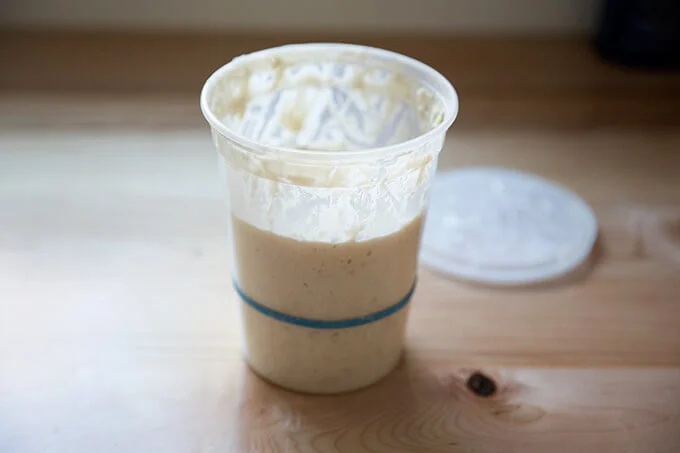
A sourdough starter naturally has a thick, sticky texture because it contains fermented flour and water. However, if it becomes unusually runny, it may need a feeding adjustment.
Try using a slightly higher flour ratio during feeding to create a thicker starter.
Should sourdough dough be sticky?
Yes. Sourdough dough is usually slightly sticky because it contains more water than many traditional bread doughs.
The goal is not to make it completely dry but to create a dough that is soft, elastic, and manageable.
How do I make sourdough less sticky?
To reduce stickiness:
- Lower hydration.
- Use stronger flour.
- Improve gluten development.
- Avoid over-fermentation.
- Use proper shaping techniques.
Why does my sourdough stick to the banneton?
Dough can stick to a banneton if it contains too much moisture or if the basket is not prepared properly.
Solutions:
- Dust the banneton generously with rice flour.
- Avoid placing very wet dough directly into the basket.
- Make sure the dough has enough structure before proofing.
Why is my sourdough flat after baking?
A flat sourdough loaf can happen because of:
- Weak starter
- Over-proofing
- Underdeveloped gluten
- Poor shaping technique
- Excess hydration
Building starter strength and improving fermentation timing usually solves this problem.
Can I save sticky sourdough dough?
Yes, depending on the problem.
If the dough is slightly sticky, continue with shaping and baking.
If it is extremely loose due to over-fermentation, you can turn it into:
- Flatbread
- Focaccia
- Crackers
- Pizza dough
Tips for Better Sourdough Every Time
Keep Your Starter Strong
A healthy starter is the foundation of good sourdough bread.
Feed it regularly and use it when it is active and bubbly.
Learn Your Dough
Every kitchen environment is different. Temperature, humidity, flour, and fermentation time all affect dough behavior.
Practice Makes Perfect
Sourdough baking requires patience. Each loaf teaches you more about fermentation, shaping, and timing.
Final Thoughts
Sticky sourdough is a common problem, but it is usually easy to fix once you understand the cause. By adjusting hydration, improving gluten development, choosing the right flour, and controlling fermentation, you can create stronger dough and consistently bake beautiful sourdough bread at home.
