
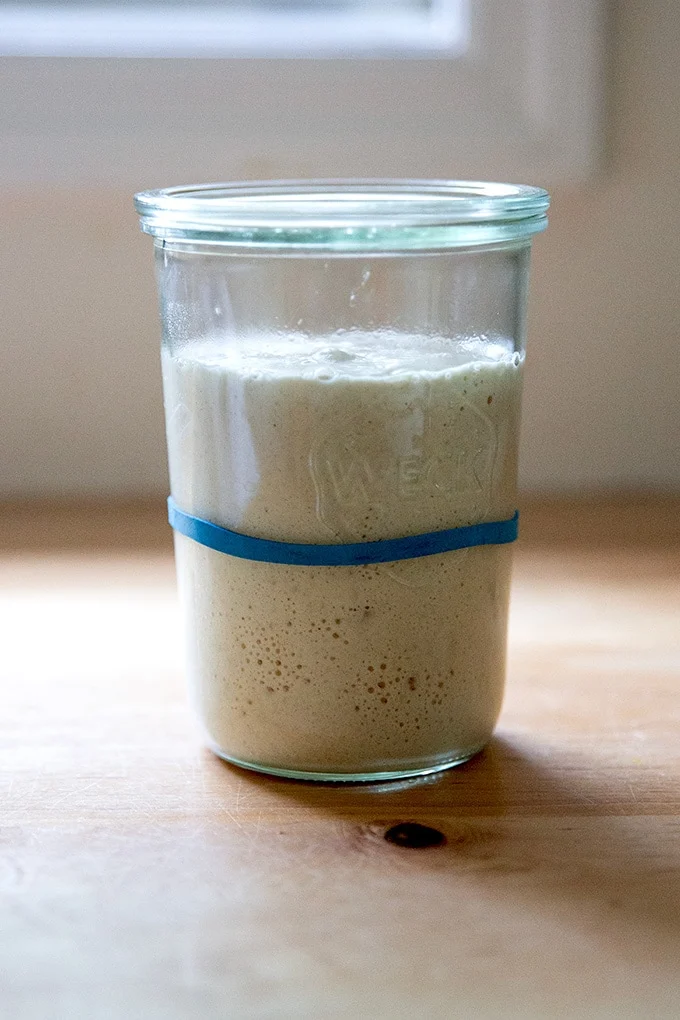
What Is a Sourdough Starter?
A sourdough starter is a fermented mixture of flour and water containing wild yeast and beneficial bacteria. These microorganisms naturally exist in flour and the surrounding environment.
The wild yeast helps dough rise, while the bacteria create natural acids that give sourdough bread its unique flavor and aroma.
A mature starter should be:
- Bubbly and active
- Able to rise after feeding
- Pleasantly sour-smelling
- Thick and creamy in texture
Once established, a sourdough starter becomes a reusable natural leaven that can be maintained indefinitely with regular feeding.
Why Make a Sourdough Starter?
There are many reasons to create your own sourdough starter:
- Natural fermentation: Uses wild yeast instead of commercial yeast.
- Better flavor: Creates a deeper and more complex taste.
- Simple ingredients: Requires only flour and water.
- Long-lasting: Can be maintained for years with proper care.
- Versatile baking ingredient: Works for bread, pizza dough, pancakes, crackers, and more.
Ingredients
Day 1 Starter Mixture
- ½ cup whole wheat flour (about 60g)
- ½ cup room-temperature water (about 60g)
Daily Feeding Ingredients
For each feeding:
- ¼ cup starter
- ½ cup flour (about 60g)
- ¼ cup water (about 60g)
Best Flour Choices
For a strong starter, use:
- Whole wheat flour
- Rye flour
- Unbleached all-purpose flour
- Bread flour
Whole grain flours often help starters become active faster because they contain more natural nutrients.
Equipment Needed
- Clean glass jar (1-quart size)
- Measuring cups or kitchen scale
- Spoon or spatula
- Loose lid or clean cloth
- Rubber band (optional for tracking growth)
Do not seal the jar tightly because fermentation produces gases that need space to escape.
Step-by-Step Sourdough Starter Process
Day 1: Mix the Starter
Add whole wheat flour and water to a clean glass jar.
Mix until all the flour is fully hydrated and no dry spots remain. The mixture should have a thick batter-like consistency.
Cover the jar loosely and place it in a warm area at room temperature.
Let it rest for 24 hours.
What Happens?
During the first day, microorganisms begin multiplying. You may notice a few small bubbles, but major activity is not expected yet.
Day 2: First Feeding
Check your starter. You may notice bubbles or a slightly sour aroma.
Remove about half of the starter.
Add:
- ½ cup flour
- ¼ cup water
Mix well and cover loosely.
Allow it to rest for another 24 hours.
Day 3: Continue Feeding
Your starter may begin showing more signs of activity.
Look for:
- Small bubbles
- Slight expansion
- A stronger fermented smell
Repeat the feeding process:
- Remove half of the starter.
- Add fresh flour and water.
- Mix thoroughly.
- Leave it at room temperature.
Days 4–7: Build Strength
Continue feeding your starter every day.
During this stage, the starter should become more predictable. It may rise after feeding and then slowly fall as it uses up the available food.
A healthy starter will:
- Double in size after feeding
- Have bubbles throughout
- Smell pleasantly sour
- Become light and airy
Some starters become ready within 7 days, while others may take up to 14 days.
How to Know Your Starter Is Ready
Your sourdough starter is ready for baking when it shows these signs:
It Doubles in Size
After feeding, an active starter should rise significantly within about 4–8 hours.
It Contains Bubbles
A mature starter should have bubbles throughout the mixture, showing active fermentation.
It Smells Pleasant
A healthy starter may smell:
- Tangy
- Fruity
- Slightly sour
- Similar to yogurt
Optional Float Test
Place a small amount of starter into water. If it floats, it may be ready to use.
However, rising ability and consistent activity are better indicators than the float test alone.
How to Maintain Your Sourdough Starter
Keeping Starter at Room Temperature
If you bake frequently:
- Keep the starter on the counter.
- Feed it daily.
- Maintain regular feeding ratios.
Keeping Starter in the Refrigerator
If you bake occasionally:
- Store the starter in the refrigerator.
- Feed it every 1–2 weeks.
- Bring it back to room temperature before baking.
How to Feed a Sourdough Starter
A common feeding ratio is:
1:1:1 ratio
- 1 part starter
- 1 part flour
- 1 part water
Example:
- 50g starter
- 50g flour
- 50g water
Mix well and allow it to ferment until active.
Common Sourdough Starter Problems
Starter Is Not Bubbling
Possible reasons:
- Room temperature is too cold
- Starter needs more time
- Flour lacks nutrients
- Feeding schedule is inconsistent
Solution:
Keep feeding regularly and place the jar in a warmer location.
Starter Smells Too Sour
A strong sour smell usually means the starter needs more food.
Remove some starter and feed it with fresh flour and water.
Liquid Appears on Top
A dark liquid layer called “hooch” means the starter is hungry.
Stir it in or pour it off, then feed the starter.
Starter Is Not Rising
Check that:
- The yeast is active
- The flour is fresh
- The temperature is suitable
- The starter has had enough time to mature
Tips for a Strong Sourdough Starter
Use Quality Flour
Fresh, high-quality flour often produces better fermentation.
Measure Ingredients Accurately
Using a kitchen scale gives more consistent results.
Keep the Jar Clean
A clean container makes it easier to monitor activity.
Be Patient
Every sourdough starter develops differently depending on temperature, flour, and environment.
Save the Discard
Extra starter can be used to make:
- Crackers
- Pancakes
- Waffles
- Muffins
- Pizza dough
Frequently Asked Questions
Can I make sourdough starter with all-purpose flour?
Yes. All-purpose flour works well, although whole wheat and rye flour often activate faster.
How long can a sourdough starter survive?
A properly maintained starter can survive for many years and can be passed down through generations.
Can I use tap water?
Yes, but filtered water may work better if your tap water contains high levels of chlorine.
Why do I need to discard starter?
Discarding keeps the starter balanced and prevents it from becoming too large while maintaining proper fermentation conditions.
Can I make a gluten-free sourdough starter?
Yes. Gluten-free flours such as brown rice flour, buckwheat flour, or sorghum flour can be used.
Final Thoughts
Building a sourdough starter from scratch is a rewarding process that connects you with traditional bread-making. With only flour, water, and patience, you can create a living culture capable of producing flavorful homemade bread.
Once your starter becomes active, you will have a natural ingredient ready for baking delicious sourdough loaves and many other homemade recipes for years to come.
