
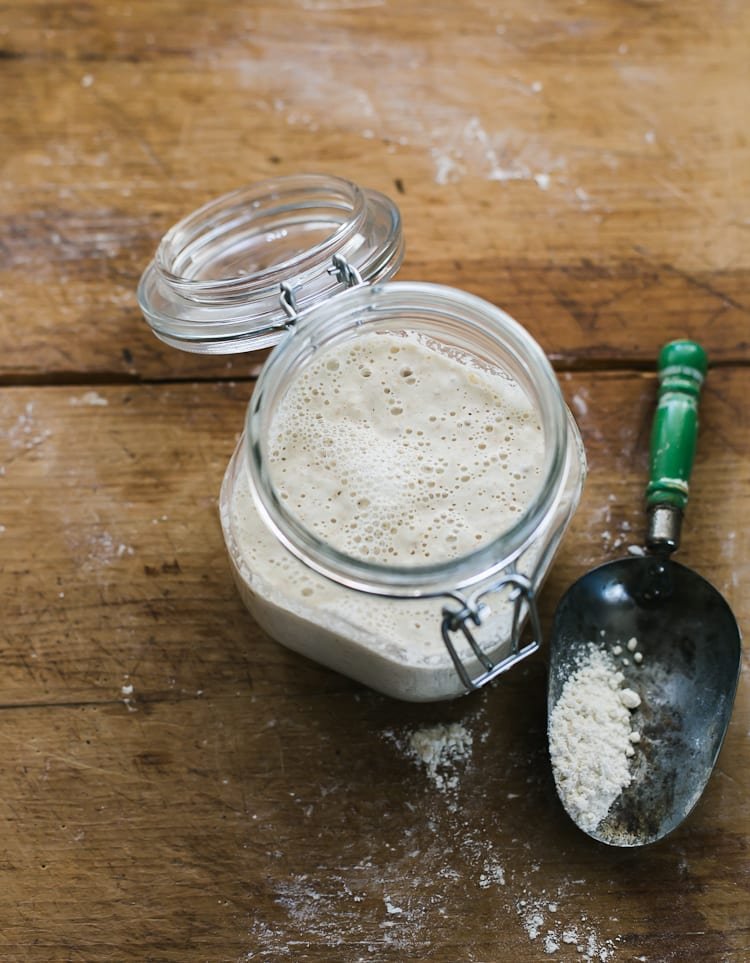
1. Glass Mason Jar
A glass Mason jar is one of the most popular choices for maintaining a sourdough starter.
Why It’s Great
- Transparent sides make it easy to monitor rise and activity.
- Non-reactive material won’t affect fermentation.
- Wide-mouth jars are easy to stir and clean.
- Durable and reusable.
- Measurement markings on some jars help track growth.
Best Size
A 24–32-ounce (700–950 ml) Mason jar provides plenty of room for most starters.
Pros
- Easy to see bubbles and fermentation.
- Dishwasher safe.
- Readily available.
- Doesn’t absorb odors or stains.
Cons
- Can break if dropped.
- Heavier than plastic containers.
2. Food-Grade Plastic Container
Food-grade plastic containers are lightweight and practical, making them a favorite for bakers who feed their starter frequently.
Why It’s Great
- Lightweight and easy to handle.
- Less likely to break than glass.
- Wide openings make mixing simple.
- Affordable and easy to replace.
Best Size
Choose a container that holds at least 1 quart (about 1 liter) to allow for expansion.
Pros
- Durable.
- Easy to transport.
- Great for travel or frequent use.
- Available in many sizes.
Cons
- Can become scratched over time.
- May absorb odors or discolor with long-term use.
3. Ceramic Crock
A ceramic crock is a traditional option that has been used for bread making for generations.
Why It’s Great
- Thick walls help reduce rapid temperature changes.
- Attractive enough to leave on the countertop.
- Durable and stable.
Best Size
A 1-quart ceramic crock works well for most home bakers.
Pros
- Classic appearance.
- Stable on the counter.
- Helps maintain a consistent environment.
Cons
- Heavy.
- Often opaque, making it difficult to see the starter’s rise without opening the lid.
4. Straight-Sided Glass Storage Container
Straight-sided glass storage containers combine visibility with easy access.
Why It’s Great
- Wide opening makes feeding and cleaning easier.
- Straight sides help measure rise accurately.
- Suitable for both countertop storage and refrigeration.
- Often comes with reusable lids.
Pros
- Excellent visibility.
- Easy to scrape down the sides.
- Versatile for everyday use.
- Resistant to stains and odors.
Cons
- Heavier than plastic.
- Can break if handled roughly.
Features to Look for in a Sourdough Starter Container
No matter which type you choose, look for these helpful features:
- Non-reactive material (glass, food-grade plastic, or glazed ceramic)
- Wide opening for easy feeding and cleaning
- Capacity at least twice the size of your starter
- Smooth interior for easy mixing
- Stable base to reduce tipping
- Lightweight lid or breathable cover
Should You Use an Airtight Lid?
It’s generally best to avoid sealing a sourdough starter with an airtight lid while it’s actively fermenting. As the starter produces carbon dioxide, pressure can build inside a tightly sealed container.
Instead, use:
- A loosely fitted lid
- A glass lid resting on top
- A breathable cloth secured with a rubber band
- A paper towel held in place with a band
If storing a mature starter in the refrigerator, a loosely closed lid is usually sufficient while still allowing minimal gas exchange.
How Big Should the Container Be?
Your container should allow enough room for your starter to at least double, and preferably triple, in volume after feeding.
For example:
- Small starter (50–100g): 16-ounce (475 ml) container
- Medium starter (100–200g): 24–32-ounce (700–950 ml) container
- Large starter (200g+): 1-quart (1-liter) or larger container
Leaving extra headspace helps prevent messy overflows.
Cleaning Tips
Keeping your starter container clean encourages healthy fermentation.
- Wash containers thoroughly between deep cleanings.
- Remove dried starter from the rim after each feeding.
- Use warm, soapy water and rinse well.
- Let containers dry completely before reuse.
- Rotate between two containers if you feed your starter regularly.
Frequently Asked Questions
Can I keep my starter in a bowl?
Yes, but a tall container is usually a better choice because it’s easier to monitor how much the starter rises and less likely to spill.
Is glass better than plastic?
Both work well. Glass is non-reactive, doesn’t absorb odors, and makes it easy to see fermentation, while food-grade plastic is lighter and more resistant to breakage.
Can I use a metal container?
Stainless steel is generally considered non-reactive and can be used, but many bakers prefer glass, ceramic, or food-grade plastic because they’re easier to monitor and are the most common choices for long-term starter maintenance.
Do I need a special sourdough jar?
No. Any clean, food-safe, non-reactive container with enough room for expansion can work well.
Final Thoughts
The best container for your sourdough starter is one that keeps maintenance simple and fits your baking routine. Glass Mason jars are a favorite for their visibility, food-grade plastic containers offer lightweight convenience, ceramic crocks provide a traditional look, and straight-sided glass storage containers make feeding and cleaning especially easy. Whichever you choose, giving your starter enough room to grow and using a non-reactive container will help keep it active, healthy, and ready for your next loaf.
