
Ingredients
Basic 1:1:1 Feeding Ratio
- 50 g mature sourdough starter
- 50 g all-purpose flour or bread flour
- 50 g water (room temperature)
(This creates a 100% hydration starter.)
Equipment
- Clean glass jar
- Kitchen scale (recommended)
- Spoon or spatula
- Loose lid or cloth cover
- Rubber band (optional, to mark growth)
Instructions
Step 1: Check Your Starter
Before feeding, look for:
- Bubbles throughout the starter
- A slightly sour, yeasty smell
- A rise and fall pattern after previous feeding
If there is a dark liquid layer (“hooch”) on top, it means the starter is hungry. You can stir it back in or pour it off before feeding.
Step 2: Discard Some Starter
- Keep 50 g starter in your jar.
- Remove the extra starter and either discard it or save it for recipes like pancakes, crackers, muffins, or cookies.
Discarding prevents the starter from growing too large and keeps the yeast-to-food balance healthy.
Step 3: Add Fresh Flour and Water
Add:
- 50 g flour
- 50 g room-temperature water
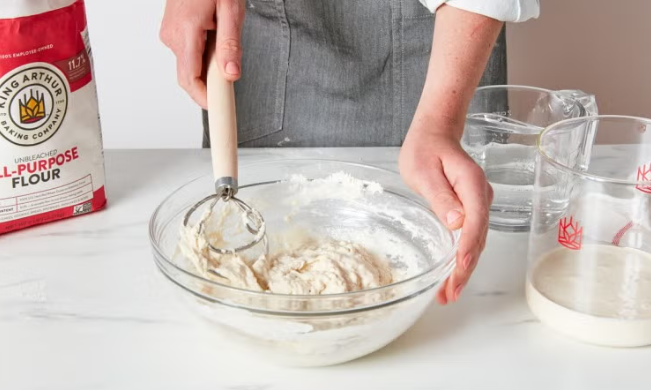
Mix thoroughly until no dry flour remains.
The texture should be similar to thick pancake batter.
Step 4: Let It Ferment
- Scrape down the sides of the jar.
- Cover loosely.
- Leave at room temperature.
A healthy starter will usually:
- Begin bubbling within a few hours
- Double in size
- Reach peak activity in about 4–8 hours (depending on temperature and strength)
Feeding Schedule
Room Temperature Starter
Feed:
- Every 12 hours for frequent baking
- Once daily for regular maintenance
Example:
- Morning: Feed starter
- Evening: Feed starter again
Refrigerator Starter
If you bake occasionally:
- Store starter in the refrigerator.
- Feed about once per week.
- Before baking, bring it to room temperature and feed it 1–2 times until bubbly and active.
How to Know Your Starter Is Ready to Bake
Your starter is ready when it:
✅ Doubles in size after feeding
✅ Has many bubbles
✅ Smells pleasantly sour and fresh
✅ Looks slightly rounded on top
✅ Passes the float test (a small spoonful may float in water)
Flour Options
You can feed your starter with:
- Bread flour — strong and reliable
- All-purpose flour — easy and accessible
- Whole wheat flour — boosts activity
- Rye flour — excellent for strengthening weak starters
Many bakers use a blend of bread flour and whole wheat or rye for a more active starter.
Troubleshooting
Starter Is Not Rising
Possible causes:
- Room is too cold
- Starter needs more frequent feeding
- Flour lacks nutrients
Try:
- Moving it to a warmer location
- Feeding with some whole wheat or rye flour
Starter Smells Like Acetone or Nail Polish Remover
This usually means it is hungry.
Solution:
- Feed it more frequently
- Increase the feeding ratio (for example, 1:3:3 starter:flour:water)
Starter Is Too Runny
Solution:
- Add slightly more flour
- Measure ingredients by weight for accuracy
Tips for a Strong Starter
- Use filtered or chlorine-free water when possible.
- Keep the jar clean but do not sterilize it constantly.
- Feed consistently.
- Use room-temperature ingredients.
- Mark the starter level after feeding to track growth.
- Avoid using a metal container for long-term storage.
Simple Feeding Formula
1 part starter + 1 part water + 1 part flour by weight
Example:
- 25 g starter
- 25 g water
- 25 g flour
= 75 g refreshed starter
