
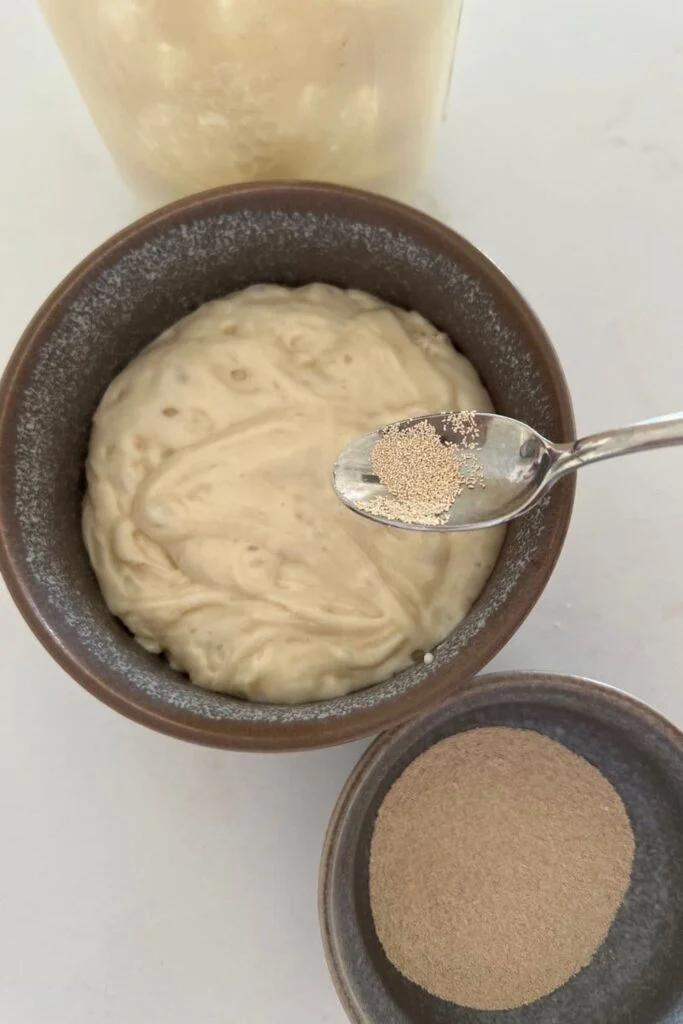
If you’re new to sourdough baking, you may wonder whether adding commercial yeast can make your starter stronger or help it rise faster. While it might seem like a good shortcut, the answer depends on what you’re trying to achieve.
A sourdough starter is a living culture made from flour and water. Over time, naturally occurring wild yeast and beneficial lactic acid bacteria colonize the mixture, creating a balanced ecosystem that gives sourdough bread its signature flavor, aroma, and texture.
Adding commercial yeast directly to the starter changes that balance and is generally unnecessary. Instead, if you need a faster rise, it’s better to add yeast to the bread dough—not the starter itself.
Why You Shouldn’t Add Yeast to Your Starter
Commercial yeast isn’t harmful, but it can interfere with the natural fermentation process.
Reasons to avoid adding yeast:
- Preserves the natural balance of wild yeast and bacteria.
- Maintains authentic sourdough flavor.
- Prevents changes in fermentation behavior.
- Encourages a healthier, naturally active starter.
- Helps develop better crust and crumb structure.
If your starter seems weak, regular feedings are usually all it needs.
When Is It Okay to Use Commercial Yeast?
There are times when adding yeast to the bread dough can be helpful.
Examples include:
- You’re short on time.
- Your kitchen is very cold.
- Your starter is active but not particularly strong.
- You’re making sandwich bread that benefits from a quicker rise.
- You’re learning sourdough and want more predictable results.
This method is often called hybrid sourdough, combining sourdough flavor with the reliability of commercial yeast.
Signs Your Starter Doesn’t Need Yeast
A healthy starter will:
- Double in size within 4–8 hours after feeding.
- Smell pleasantly tangy.
- Contain plenty of bubbles.
- Float in water (optional test).
- Rise bread successfully.
If your starter does these things, there’s no need to add commercial yeast.
How to Strengthen a Weak Sourdough Starter Naturally
Instead of adding yeast, try these methods:
- Feed every 12 hours for several days.
- Use bread flour or whole wheat flour.
- Keep the starter warm (75–80°F / 24–27°C).
- Use filtered or non-chlorinated water.
- Discard before each feeding.
- Keep consistent feeding ratios.
These habits help wild yeast multiply naturally.
Hybrid Sourdough Bread Recipe (Using Starter + Commercial Yeast)
If you want faster fermentation while keeping sourdough flavor, this recipe is a great option.
Ingredients
- 500g bread flour
- 350g warm water
- 100g active sourdough starter
- 7g instant yeast (1 packet)
- 10g salt
Equipment
- Large mixing bowl
- Kitchen scale
- Dough scraper
- Banneton or bowl lined with a towel
- Dutch oven or baking stone
- Sharp bread lame or knife
Instructions
Step 1: Mix the Dough
In a large bowl, combine the warm water, active sourdough starter, and instant yeast. Stir until dissolved.
Add the bread flour and mix until no dry flour remains.
Cover and let rest for 20 minutes.
Step 2: Add Salt
Sprinkle the salt over the dough.
Mix thoroughly until incorporated.
Step 3: Knead
Knead by hand for about 8–10 minutes or use a stand mixer for 5–6 minutes until smooth and elastic.
Step 4: First Rise
Place the dough in a lightly greased bowl.
Cover and allow it to rise for 1–2 hours until doubled.
Step 5: Shape
Turn the dough onto a lightly floured surface.
Shape into a tight round or oval loaf.
Place seam-side up in a floured proofing basket or bowl.
Step 6: Final Proof
Cover and proof for 45–60 minutes.
Meanwhile, preheat the oven to 450°F (230°C) with a Dutch oven inside.
Step 7: Score and Bake
Transfer the dough onto parchment paper.
Score the top with a sharp blade.
Bake covered for 20 minutes.
Remove the lid and bake another 20–25 minutes until deeply golden brown.
The loaf should sound hollow when tapped.
Step 8: Cool
Transfer to a cooling rack.
Allow the bread to cool for at least one hour before slicing.
Storage
- Store at room temperature for up to 3 days.
- Freeze sliced bread for up to 3 months.
- Refresh slices by warming in the oven or toaster.
Tips for Success
- Always use an active, bubbly starter.
- Measure ingredients with a kitchen scale for accuracy.
- Avoid adding yeast directly to your sourdough starter.
- Keep dough in a warm environment for consistent fermentation.
- Let the bread cool completely before cutting to preserve its crumb.
Frequently Asked Questions
Can I revive a weak starter with yeast?
No. Regular feedings and proper care are the best ways to revive a sluggish starter.
Will adding yeast change the flavor?
Yes. Bread made with commercial yeast usually has a milder sour flavor because fermentation happens more quickly.
Is hybrid sourdough real sourdough?
It still contains sourdough starter and develops some sourdough flavor, but it’s not a traditional naturally leavened loaf.
Can I make bread with only sourdough starter?
Absolutely. An active starter is all you need to naturally leaven sourdough bread without commercial yeast.
Conclusion
Adding commercial yeast directly to your sourdough starter is generally not recommended, as it can disrupt the natural balance of wild yeast and beneficial bacteria. Instead, focus on regular feedings, proper hydration, and a warm environment to build a strong, healthy starter. If you need a quicker rise, adding a small amount of yeast to the bread dough is a practical solution that still allows you to enjoy much of the flavor and character of sourdough.
