
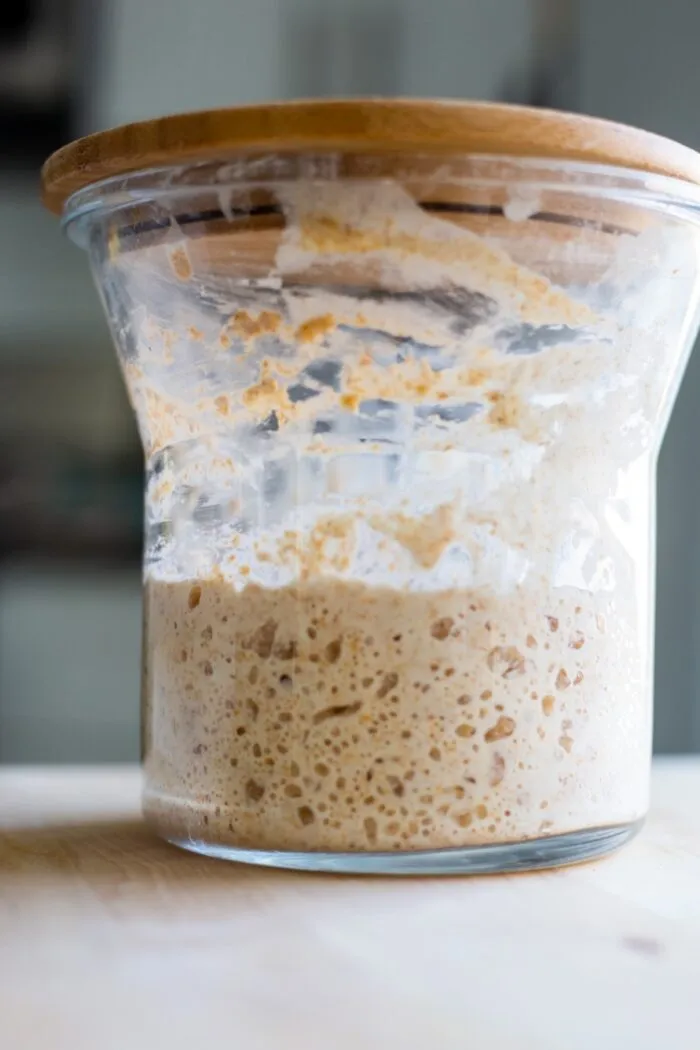
1. My Sourdough Starter Is Not Bubbling
Possible causes:
- The room temperature is too cold.
- The starter needs more time to develop.
- The flour does not contain enough nutrients.
- The feeding schedule is inconsistent.
Solutions:
- Move the starter to a warmer area (around 70–80°F / 21–27°C).
- Continue feeding it regularly; some starters take more than a week to become active.
- Try using whole wheat or rye flour to encourage growth.
- Keep a consistent feeding routine.
2. My Starter Smells Bad
A sourdough starter naturally develops a sour, tangy, or fermented smell. However, unusual odors can indicate an imbalance.
Normal smells:
- Sour
- Fruity
- Yeasty
- Slightly acidic
Possible problems:
- A strong unpleasant smell may mean the starter is hungry.
- Mold or unusual discoloration may mean the starter should be discarded.
Solutions:
- Feed the starter more frequently.
- Remove any dried or discolored areas.
- Always use a clean jar and utensils.
3. My Starter Has Liquid on Top
The dark or clear liquid that forms on top of a starter is called “hooch.” It usually means the starter has used up its food.
Solutions:
- Stir the hooch back in for a stronger sour flavor, or pour it off for a milder taste.
- Feed the starter with fresh flour and water.
- Increase feeding frequency if hooch appears often.
4. My Starter Is Not Rising After Feeding
A starter may fail to rise because the yeast and bacteria are not strong enough yet.
Solutions:
- Give it more time to mature.
- Feed it with fresh flour, especially whole grain flour.
- Keep it in a warmer location.
- Make sure the starter has the correct flour-to-water balance.
5. My Starter Rises and Then Falls Quickly
This usually means the starter is active but has used all available food.
Solutions:
- Feed it more often.
- Increase the amount of flour and water during feeding.
- Use the starter closer to its peak rise for baking.
6. My Starter Is Too Thick or Too Runny
The consistency of a sourdough starter should be similar to a thick pancake batter.
If it is too thick:
- Add a small amount of water and mix well.
If it is too thin:
- Add more flour until it reaches the correct consistency.
7. Mold Appears on My Starter
Mold can appear if the starter becomes contaminated or is left too long without feeding.
Signs of mold:
- Fuzzy growth
- Unusual colors such as green, black, or pink
Solution:
- Discard the starter and make a fresh one.
- Clean the jar thoroughly before starting again.
8. My Starter Was Left Unfed for a Long Time
A neglected starter may look inactive but can often recover.
Solutions:
- Remove any unwanted growth or contamination.
- Keep a small amount of healthy starter.
- Feed it with fresh flour and water.
- Repeat feedings until it becomes bubbly and active again.
9. How to Know Your Starter Is Healthy
A healthy sourdough starter should:
- Rise and expand after feeding.
- Have visible bubbles.
- Smell pleasantly sour and fermented.
- Become active within several hours after feeding.
- Have a creamy, thick texture.
Final Tips for Success
- Be patient—every starter develops at its own pace.
- Keep feeding times consistent.
- Use quality flour and clean equipment.
- Track changes in smell, bubbles, and growth to understand your starter’s needs.
With regular care and attention, your sourdough starter can become a reliable baking companion for years.
