
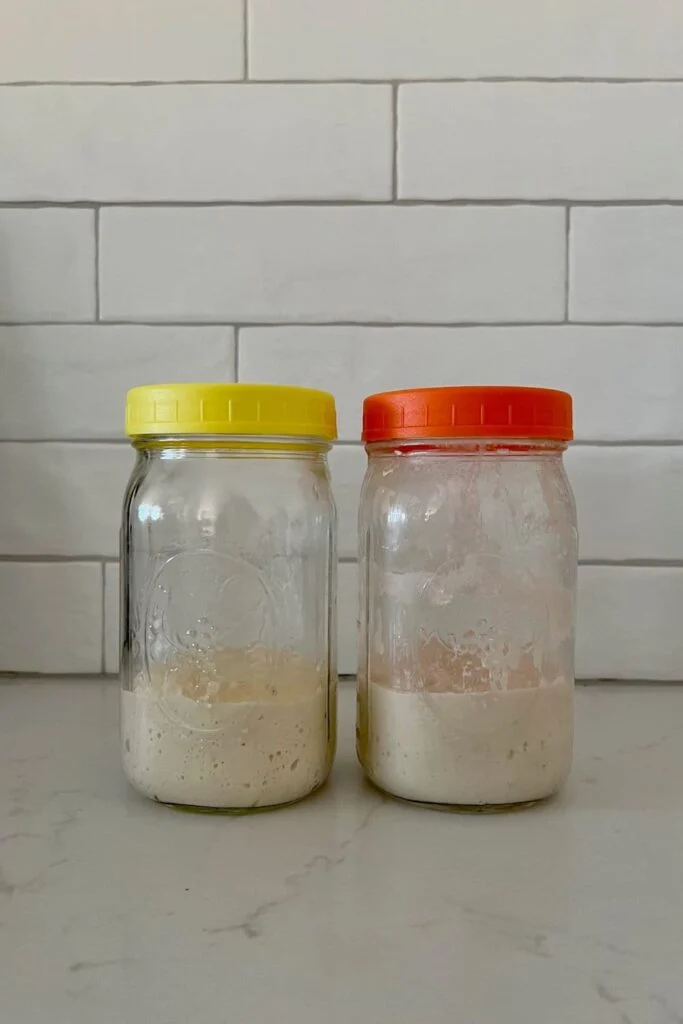
What Is a Sourdough Starter?
A sourdough starter is a living culture of flour and water filled with naturally occurring wild yeast and beneficial bacteria. These microorganisms ferment the flour, producing carbon dioxide that helps bread rise without the need for commercial yeast.
A healthy starter should be:
- Bubbly and active
- Double in size within 4–8 hours after feeding
- Have a pleasant tangy, fruity, or yeasty aroma
- Rise and fall predictably after each feeding
- Strong enough to naturally leaven bread
When a recipe calls for an active sourdough starter, it means the starter has been recently fed and is at or near its peak rise.
What Is Sourdough Discard?
Sourdough discard is the portion of starter that is removed before feeding the remaining culture with fresh flour and water.
Discard is still made of flour, water, wild yeast, and beneficial bacteria, but because it has already consumed much of its available food, it is generally less active and less capable of raising bread on its own.
Despite its name, sourdough discard does not have to be thrown away. It can be used in many recipes where chemical leaveners like baking powder or baking soda provide the lift.
Common uses include:
- Pancakes
- Waffles
- Crackers
- Muffins
- Banana bread
- Biscuits
- Cookies
- Brownies
- Pizza dough
- Cakes
Active Starter vs. Discard at a Glance
| Feature | Active Sourdough Starter | Sourdough Discard |
|---|---|---|
| Recently fed | Yes | No |
| Full of bubbles | Yes | Sometimes |
| Doubles after feeding | Yes | Usually not |
| Can raise bread by itself | Yes | Generally no |
| Best for artisan bread | Yes | No |
| Best for quick breads and baked treats | Sometimes | Yes |
| Needs regular feeding | Yes | No (until revived) |
When Should You Use Active Starter?
Use active starter anytime you need natural fermentation to provide lift.
Recipes include:
- Artisan sourdough bread
- Sandwich bread
- Sourdough bagels
- English muffins
- Pizza crust
- Focaccia
- Dinner rolls
- Pretzels
Because the starter is active, it supplies the gas needed to create an airy crumb and good oven spring.
When Should You Use Sourdough Discard?
Discard is perfect for recipes that rely on baking powder or baking soda instead of fermentation for rising.
Great recipes include:
- Pancakes
- Waffles
- Crackers
- Muffins
- Brownies
- Banana bread
- Cookies
- Biscuits
- Cakes
- Quick breads
In these recipes, discard adds moisture, tenderness, and a subtle tang without needing to be active.
Does Discard Still Contain Wild Yeast?
Yes.
Even though discard is no longer at peak activity, it still contains wild yeast and beneficial bacteria. The yeast simply isn’t active enough to consistently leaven bread without additional feedings.
If you continue feeding discard regularly, it becomes an active sourdough starter again.
Can You Bake Bread with Discard?
Sometimes, but not usually.
Fresh discard that still has plenty of activity may contribute some rise, but for reliable results, bread recipes should use an active starter that has recently been fed and has doubled in size.
Many “discard bread” recipes also include a small amount of commercial yeast to help ensure a good rise.
Why Do You Discard Starter?
Discarding part of your starter before feeding serves several important purposes:
- Keeps the starter at a manageable size
- Maintains the proper balance of flour, water, yeast, and bacteria
- Prevents the starter from becoming overly acidic
- Ensures fresh food is available for the microorganisms
- Helps maintain a healthy, active culture
Without removing some starter, you would need increasingly large amounts of flour and water at every feeding.
Can You Save Sourdough Discard?
Absolutely!
Many bakers keep a discard jar in the refrigerator.
Each time they feed their starter, they add the removed discard to the jar.
Once enough has accumulated, it’s used for baking recipes.
Discard stored in the refrigerator is typically best used within 1–2 weeks for the freshest flavor, although it may keep longer if properly refrigerated.
Can Discard Become Starter Again?
Yes!
Simply feed the discard just as you would any starter:
- Keep 50 grams discard.
- Add 50 grams water.
- Add 50 grams flour.
Repeat regular feedings until it becomes bubbly, doubles in size, and is strong enough for baking bread.
Expert Tips
- Label jars so you know which is your active starter and which is discard.
- Use active starter only when a recipe specifically calls for it.
- Refrigerate discard if you don’t plan to use it immediately.
- Feed your starter consistently to keep it healthy and active.
- Don’t throw away discard unless it’s moldy or contaminated—it has countless delicious uses.
Frequently Asked Questions
Is sourdough discard dead?
No. Discard still contains living wild yeast and beneficial bacteria. It simply isn’t as active because it has used much of its available food.
Can I substitute discard for active starter?
It depends on the recipe. For artisan bread, use an active starter. For pancakes, muffins, crackers, and quick breads, discard works perfectly.
Does discard make baked goods taste sour?
Usually only slightly. The longer discard has been stored, the more pronounced its tangy flavor may become. In most sweet recipes, the flavor is mild and pleasantly balanced.
How long can I keep discard?
Discard stored in the refrigerator is generally best used within 1–2 weeks. If it develops mold, unusual colors, or a foul odor, it should be discarded.
Can I freeze sourdough discard?
Yes. Freeze discard in airtight containers or freezer bags for up to 3 months. Thaw it in the refrigerator before using it in your favorite discard recipes.
Final Thoughts
Although they come from the same culture, active sourdough starter and sourdough discard have different roles in baking. Active starter is the powerhouse that naturally leavens bread, while discard is a versatile ingredient that adds flavor, moisture, and character to quick breads, pancakes, cookies, crackers, and many other baked goods. Understanding the difference helps you use every part of your sourdough starter wisely, reduce waste, and enjoy a wider variety of homemade recipes.
