
Ingredients
For the Sourdough Dough
- 100g active sourdough starter (about ½ cup)
- 350g warm water (about 1 ½ cups)
- 500g bread flour (about 4 cups)
- 10g sea salt (about 1 ½ teaspoons)
- 2 tablespoons fresh rosemary, finely chopped
- ¾ cup pitted olives, sliced or roughly chopped
Optional Toppings
- Extra rosemary leaves
- A drizzle of olive oil
- Sea salt flakes
- Additional olives for topping
Equipment Needed
- Large mixing bowl
- Dough scraper
- Dutch oven or heavy baking pot
- Parchment paper
- Kitchen towel
- Sharp knife or bread lame
How to Make Rosemary Olive Sourdough Bread
Step 1: Prepare the Sourdough Starter
Make sure your sourdough starter is active and ready before beginning.
A healthy starter should be bubbly, have a pleasant sour aroma, and double in size after feeding.
Using an active starter ensures the bread develops a good rise and flavorful crumb.
Step 2: Mix the Dough
In a large bowl, combine warm water and active sourdough starter.
Stir until the starter begins to dissolve into the water.
Add bread flour and mix until no dry flour remains. The dough will look rough and sticky at this stage.
Cover the bowl and let it rest for 30–60 minutes. This resting period allows the flour to absorb water and improves the dough texture.
Step 3: Add Salt and Flavor Ingredients
Add sea salt, chopped rosemary, and olives to the dough.
Use your hands to gently fold the ingredients into the dough until evenly distributed.
The olives add a salty, savory flavor, while rosemary provides a fresh herbal aroma.
Step 4: Stretch and Fold the Dough
Over the next 2 hours, perform stretch-and-folds every 30 minutes.
To do this:
- Wet your hands slightly.
- Pull one side of the dough upward.
- Fold it over the center.
- Rotate the bowl and repeat.
This process strengthens the dough structure without traditional kneading.
Step 5: First Rise (Bulk Fermentation)
Cover the dough and allow it to ferment at room temperature for 4–6 hours.
The dough should become:
- Slightly larger in size
- Smoother
- More elastic
- Filled with small air bubbles
The exact timing depends on room temperature and starter strength.
Step 6: Shape the Dough
Transfer the dough onto a lightly floured surface.
Gently shape it into a round loaf by folding the edges toward the center.
Create surface tension by gently pulling the dough toward you.
Place the shaped dough into a floured proofing basket or bowl lined with a towel.
Step 7: Final Proof
Cover the dough and allow it to rise for 1–2 hours at room temperature.
For deeper flavor, place the dough in the refrigerator overnight for a slow cold fermentation.
Cold proofing creates a more complex sourdough flavor and improves the crust.
Step 8: Bake the Bread
Preheat your oven to 450°F (230°C) with a Dutch oven inside.
Carefully transfer the dough onto parchment paper.
Score the top of the loaf with a sharp knife.
Place the dough into the hot Dutch oven and cover with the lid.
Bake:
- 20 minutes covered
- 20–25 minutes uncovered
Bake until the crust becomes deep golden brown.
Step 9: Cool Before Slicing
Remove the bread from the oven and place it on a cooling rack.
Allow it to cool completely for at least 1 hour before slicing.
Cooling helps the crumb finish developing and prevents the bread from becoming gummy.
Tips for Perfect Rosemary Olive Sourdough Bread
Use Good Quality Olives
Choose flavorful olives such as:
- Kalamata olives
- Green olives
- Black olives
- Mixed Mediterranean olives
Drain and dry olives before adding them to prevent excess moisture.
Use Fresh Rosemary
Fresh rosemary provides the strongest aroma and flavor. If using dried rosemary, reduce the amount because it is more concentrated.
Do Not Rush Fermentation
Sourdough depends on time. A slower fermentation creates better flavor and texture.
Handle the Dough Gently
Avoid pressing out all the air bubbles during shaping to maintain a light and airy crumb.
Serving Suggestions
Enjoy this rosemary olive sourdough bread with:
- Extra virgin olive oil for dipping
- Butter or herb butter
- Cheese boards
- Soups and stews
- Fresh salads
- Sandwich fillings
- Toasted bruschetta
Storage Instructions
Store cooled bread in a paper bag or bread box at room temperature for up to 3 days.
For longer storage:
- Freeze slices for up to 3 months.
- Reheat slices in a toaster or oven for a fresh texture.
Avoid storing sourdough in plastic for long periods because it can soften the crust.
Nutrition Information (Approximate Per Slice)
- Calories: 150–180
- Protein: 5–7g
- Carbohydrates: 28–32g
- Fat: 2–5g
- Fiber: 2g
Nutrition values may vary depending on ingredients and slice size.
Frequently Asked Questions
Can I make this bread without olives?
Yes. Simply leave out the olives or replace them with roasted garlic, sun-dried tomatoes, or seeds.
Can I use dried rosemary?
Yes. Use about 1 teaspoon of dried rosemary instead of fresh.
Why is my sourdough bread dense?
Dense bread can result from an inactive starter, under-fermentation, or insufficient dough development.
Can I make this without a Dutch oven?
Yes. Bake the bread on a baking sheet or baking stone and add steam to the oven for a crisp crust.
Final Thoughts
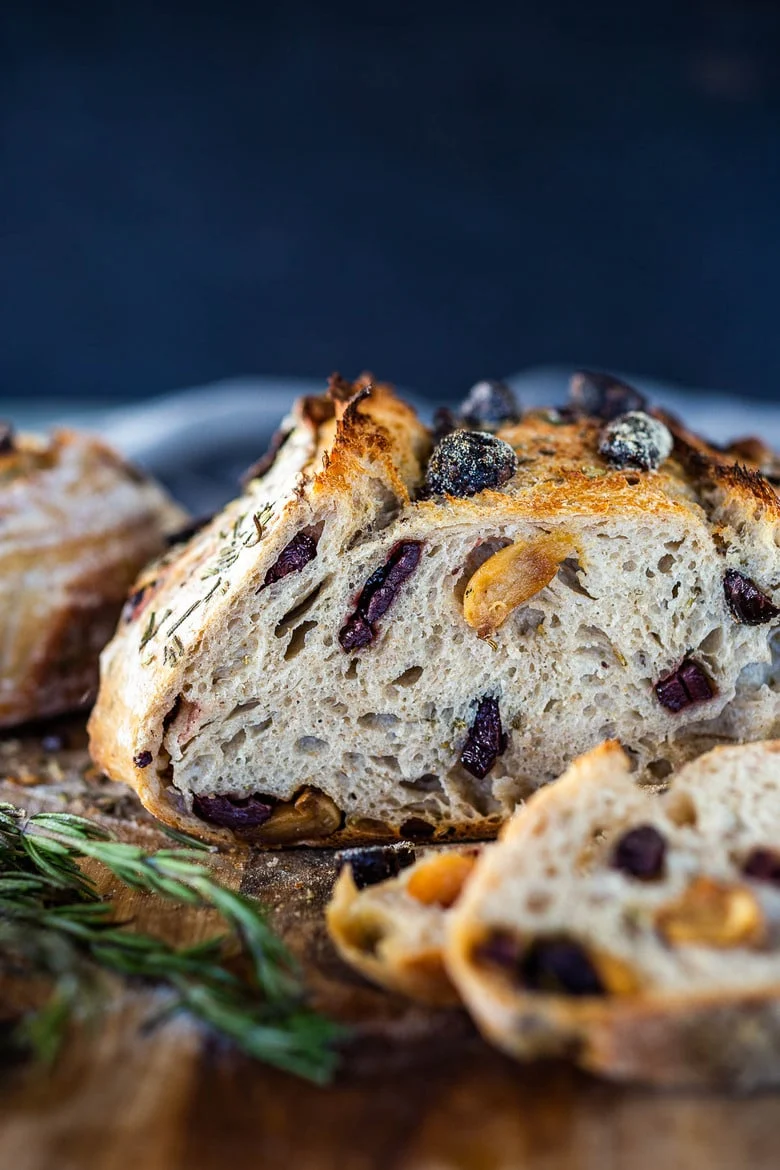
Rosemary Olive Sourdough Bread combines the beauty of traditional sourdough with Mediterranean-inspired flavors. The crispy crust, chewy texture, aromatic rosemary, and savory olives make this homemade loaf a bakery-quality recipe that is worth the time and effort.
