
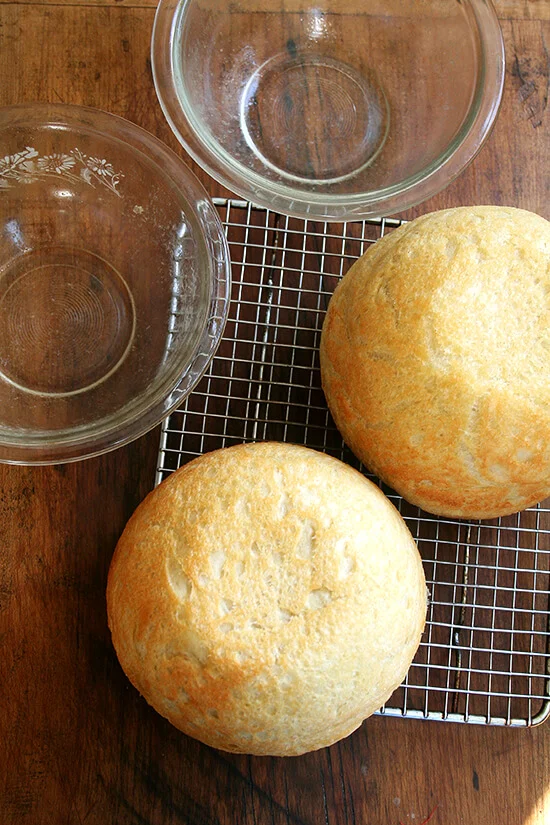
Why You’ll Love This Peasant Bread
- Super easy to make: No advanced baking skills required.
- Perfect for beginners: Simple mixing and shaping process.
- Soft and fluffy inside: Creates a tender crumb with a lightly crisp crust.
- Uses everyday ingredients: Made with flour, yeast, water, and a few simple staples.
- Perfect for any meal: Great with soups, sandwiches, butter, and spreads.
- Homemade taste: Freshly baked flavor that beats store-bought bread.
Ingredients
For the Bread Dough
- 4 cups all-purpose flour (about 500g)
- 2 teaspoons active dry yeast
- 2 teaspoons salt
- 2 cups warm water (about 105–110°F / 40–43°C)
- 2 tablespoons olive oil or melted butter
- 1 tablespoon honey or sugar
Optional Toppings
- Melted butter for brushing
- Sea salt flakes
- Sesame seeds
- Rosemary
- Garlic butter
Equipment Needed
- Large mixing bowl
- Wooden spoon or spatula
- Measuring cups
- Baking dish or loaf pan
- Kitchen towel
- Wire cooling rack
How to Make Peasant Bread
Step 1: Activate the Yeast
In a large bowl, combine warm water, honey, and yeast.
Let it sit for 5–10 minutes until the mixture becomes slightly foamy.
This step helps ensure the yeast is active and ready to create a light, airy bread.
Step 2: Mix the Dough
Add flour, salt, and olive oil to the yeast mixture.
Stir everything together with a wooden spoon until a sticky dough forms.
Unlike traditional bread dough, peasant bread does not require kneading. The dough should remain soft and slightly sticky.
Step 3: Let the Dough Rise
Cover the bowl with a clean kitchen towel.
Place it in a warm area and allow the dough to rise for 1–2 hours, or until it doubles in size.
The longer rise allows the bread to develop better flavor and a softer texture.
Step 4: Prepare the Baking Dish
Grease a baking dish or loaf pan with butter or oil.
Gently transfer the risen dough into the prepared pan.
Do not press the dough too much because you want to keep the air bubbles that create a fluffy texture.
Step 5: Second Rise
Cover the dough again and let it rest for 30–45 minutes.
The dough should become slightly puffy and expanded.
This second rise helps create a lighter loaf.
Step 6: Bake the Bread
Preheat your oven to 425°F (220°C).
Bake the bread for 35–45 minutes, or until the top is golden brown.
The bread should sound hollow when tapped.
For extra flavor, brush the warm loaf with melted butter immediately after baking.
Step 7: Cool Before Slicing
Remove the bread from the pan and place it on a cooling rack.
Allow it to cool for at least 30 minutes before slicing.
Cooling helps the crumb set and gives the bread a better texture.
Tips for the Best Peasant Bread
Use Fresh Yeast
Fresh yeast creates better rise and a lighter texture. Always check the expiration date before baking.
Do Not Add Too Much Flour
The dough should be soft and sticky. Adding too much flour can make the bread dense.
Let the Dough Rise Fully
Proper rising time is important for a fluffy loaf. Avoid rushing the fermentation process.
Add Extra Flavor
Customize your bread with:
- Garlic and herbs
- Parmesan cheese
- Rosemary
- Sunflower seeds
- Whole wheat flour
- Honey and cinnamon
Serving Suggestions
Enjoy fresh peasant bread with:
- Butter and jam
- Homemade soups
- Stews
- Pasta dishes
- Cheese spreads
- Sandwich fillings
- Olive oil dipping sauce
Fresh slices are especially delicious when slightly warm from the oven.
Storage Instructions
Store cooled bread in an airtight container or bread bag at room temperature for up to 3 days.
For longer storage:
- Freeze the loaf for up to 3 months.
- Slice before freezing for easy serving.
- Reheat slices in the toaster or oven.
Nutrition Information (Approximate Per Slice)
Serving size: 1 slice
- Calories: 140–170
- Protein: 4–5g
- Carbohydrates: 28–32g
- Fat: 2–4g
- Fiber: 1–2g
Nutrition values may vary depending on ingredients and slice size.
Frequently Asked Questions
What makes peasant bread different from regular bread?
Peasant bread is known for its simple ingredients, rustic texture, and easy preparation. It usually requires minimal shaping and no complicated techniques.
Do I need a stand mixer to make this bread?
No. This recipe can be mixed completely by hand with a spoon or spatula.
Can I make peasant bread with whole wheat flour?
Yes. Replace part of the all-purpose flour with whole wheat flour for a heartier flavor and texture.
Why is my bread dense?
Dense bread can happen if the dough did not rise enough, the yeast was inactive, or too much flour was added.
Can I make this bread ahead of time?
Yes. You can prepare the dough ahead and refrigerate it for a slower rise and deeper flavor.
Final Thoughts
Peasant Bread is one of the easiest homemade bread recipes you can make, yet it delivers incredible flavor and texture. With a soft interior, golden crust, and simple preparation, this rustic loaf is perfect for everyday meals, family dinners, and anyone learning how to bake bread at home.
