
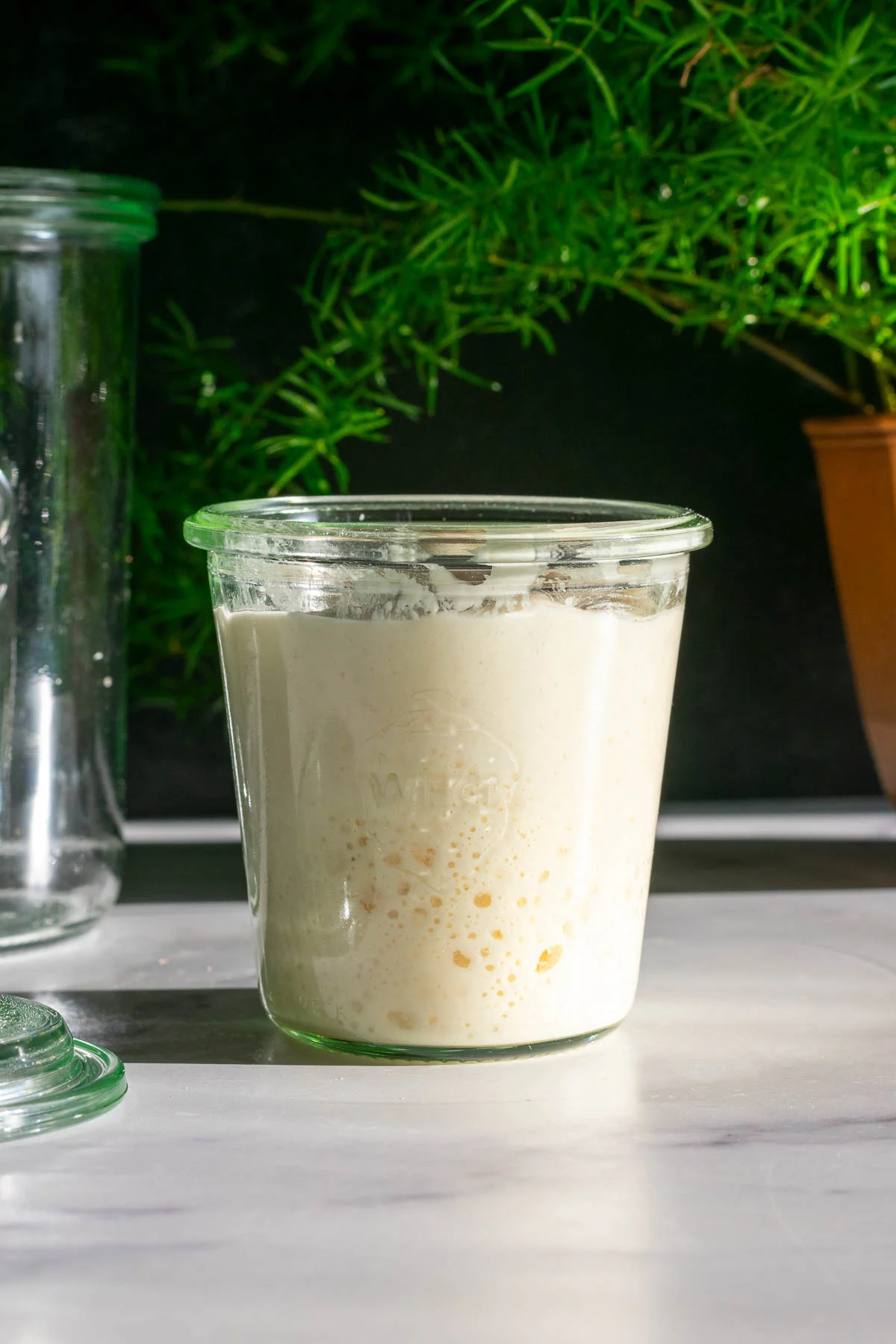
What Is a Small Sourdough Starter?
A small sourdough starter is simply a reduced amount of the traditional flour-and-water culture. Instead of keeping hundreds of grams of starter, many home bakers maintain only 20–50 grams.
A small starter offers several benefits:
- Less flour waste
- Easier storage
- Faster feeding routine
- Less frequent discard
- Simple maintenance for occasional baking
A small starter can still produce large sourdough loaves because you can build up the amount needed before baking.
What You Need
Basic Equipment
- Small glass jar (250–500 ml)
- Digital kitchen scale
- Spoon or small spatula
- Loose-fitting lid or jar cover
- Rubber band or marker to track growth
Ingredients
- Active sourdough starter
- Bread flour or all-purpose flour
- Whole wheat or rye flour (optional)
- Room-temperature water
Using some whole grain flour can help keep your starter healthy because it contains more nutrients that support fermentation.
The Small Starter Maintenance Ratio
A simple feeding ratio for a small starter is:
10 g starter + 20 g water + 20 g flour
This creates 50 g of starter.
The ratio is:
1:2:2
- 1 part starter
- 2 parts water
- 2 parts flour
This feeding method gives the starter enough fresh food while keeping the quantity small.
Daily Room Temperature Maintenance
If you bake frequently and keep your starter on the counter, feed it once every 24 hours.
Daily Feeding Schedule
- Keep 10 g of starter in a clean jar.
- Add 20 g water.
- Stir until the starter dissolves.
- Add 20 g flour.
- Mix until combined.
- Cover loosely.
- Leave at room temperature until bubbly and active.
A healthy starter should:
- Rise after feeding
- Have visible bubbles
- Smell pleasantly sour and slightly fruity
- Double in size within several hours
The exact timing depends on room temperature and flour type.
Refrigerator Maintenance Method
For most home bakers, storing a small starter in the refrigerator is the easiest method.
Weekly or Biweekly Feeding
Every 1–2 weeks:
- Remove the starter from the refrigerator.
- Allow it to come closer to room temperature.
- Keep 10 g starter and discard the rest.
- Add:
- 20 g water
- 20 g flour
- Mix well.
- Let it sit at room temperature until active.
- Return it to the refrigerator.
If you bake regularly, refresh your starter more often.
How to Prepare Your Starter for Baking
A refrigerated starter usually needs a few feedings before making bread.
Example Schedule
Day Before Baking
Morning:
- 10 g starter
- 30 g water
- 30 g flour
Wait until it becomes active.
Evening:
- Feed again if needed.
Baking Day
Use the starter when it is:
- Puffy
- Full of bubbles
- Near its highest rise
- Slightly domed on top
This is when the yeast activity is strongest.
How to Know Your Starter Is Healthy
A strong sourdough starter should have:
Appearance
- Bubbles throughout the jar
- A noticeable rise after feeding
- A smooth, airy texture
Aroma
Healthy smells include:
- Mild sourness
- Yogurt-like aroma
- Fruity notes
- Slight fermentation smell
Activity
A strong starter should rise predictably after feeding.
Many starters double in size within 4–8 hours, but timing depends on temperature, flour, and hydration.
Common Starter Problems and Solutions
My Starter Is Not Rising
Possible causes:
- Starter is too young
- Kitchen temperature is too cold
- Feeding schedule is inconsistent
- Flour lacks nutrients
Solutions:
- Feed more regularly
- Add some whole wheat or rye flour
- Keep it in a warmer area
- Give it more time
My Starter Smells Too Sour
A very sour smell usually means the starter is hungry.
Solution:
Increase feeding frequency or use a larger feeding ratio such as:
1:3:3
Example:
- 10 g starter
- 30 g water
- 30 g flour
There Is Liquid on Top
A dark liquid layer, sometimes called hooch, means the starter has used most of its food.
Solution:
- Pour off the liquid if the smell is unpleasant
- Feed the starter normally
- Give it a few refreshes before baking
Can I Save a Neglected Starter?
Yes. Many starters can recover after being neglected.
To revive:
- Remove any dried or discolored surface layer.
- Keep a small amount of starter.
- Feed with fresh flour and water.
- Repeat feeding every 12–24 hours until active.
How Much Starter Should You Keep?
For occasional baking:
20–30 g starter is usually enough.
For frequent baking:
50–100 g starter may be more convenient.
Remember, you can always build more starter before baking by feeding it larger amounts.
Tips for Maintaining a Strong Small Starter
Use a Clean Jar
A clean jar prevents unwanted mold and makes it easier to observe activity.
Mark the Starting Level
Use a rubber band or marker to track how much the starter rises.
Keep Consistent Hydration
A 100% hydration starter (equal weights flour and water) is easy to maintain and works well for most recipes.
Do Not Feed Large Amounts Unnecessarily
A small starter is healthier when regularly refreshed with appropriate amounts rather than constantly keeping a large quantity.
Use Quality Flour
Fresh flour provides better nutrients for fermentation. Whole wheat and rye flour can help strengthen a weak starter.
Frequently Asked Questions
How often should I feed a small sourdough starter?
A counter starter usually needs daily feeding. A refrigerated starter can often be fed every 1–2 weeks.
Can I keep only 10 grams of starter?
Yes. A very small starter can be maintained and expanded before baking.
Do I have to discard starter?
Discarding helps maintain balance by preventing the jar from becoming too large. The discard can also be used in pancakes, crackers, muffins, and other recipes.
Can I use my starter straight from the refrigerator?
For best bread results, refresh it first and use it when it becomes active.
Final Thoughts
A small sourdough starter is a simple, sustainable way to enjoy naturally fermented baking at home. With just a little flour, water, and regular care, you can maintain a powerful starter that is always ready to create delicious homemade bread.
The secret is not keeping a large amount of starter—it is keeping a healthy, active culture. A small starter requires less maintenance, produces less waste, and gives you the freedom to bake whenever inspiration strikes.
