
Why Wild Yeast Matters
Wild yeast is responsible for:
- Leavening your bread naturally
- Producing carbon dioxide for a good rise
- Creating an open, airy crumb
- Developing complex sourdough flavor
- Building a strong and reliable starter
A starter with plenty of wild yeast will typically double in size within 4–8 hours after feeding, depending on room temperature.
Ingredients
- 50 grams mature sourdough starter
- 50 grams bread flour
- 50 grams whole wheat flour or rye flour
- 100 grams filtered, chlorine-free water (75–80°F / 24–27°C)
Equipment
- Clean glass jar
- Digital kitchen scale
- Silicone spatula or wooden spoon
- Loose-fitting lid or cloth cover
- Rubber band or marker
Instructions
Step 1: Start with a Small Amount of Starter
Discard all but 50 grams of your existing sourdough starter.
Using a smaller amount of starter with fresh flour gives the wild yeast plenty of new food to multiply.
Step 2: Feed with Nutrient-Rich Flour
Mix together:
- 50 grams bread flour
- 50 grams whole wheat flour or rye flour
Whole wheat and rye flours contain more minerals and nutrients than white flour, helping wild yeast reproduce more quickly.
Step 3: Add Fresh Water
Pour in 100 grams of filtered water at 75–80°F (24–27°C).
Avoid chlorinated tap water, as chlorine can inhibit yeast activity.
Mix until no dry flour remains. The starter should have the consistency of thick pancake batter.
Step 4: Keep It Warm
Cover the jar loosely and place it in a warm location between 75–80°F (24–27°C).
This temperature range is ideal for encouraging rapid yeast growth.
Avoid placing the starter in direct sunlight or near heat sources that could overheat it.
Step 5: Feed Regularly
If your starter is weak, feed it every 12 hours for 2–3 days.
A consistent feeding schedule helps strengthen the yeast population and improve fermentation.
Once your starter becomes active and doubles reliably, you can return to your normal feeding routine.
Step 6: Watch for Peak Activity
Your starter is becoming healthier when it:
- Doubles or triples in size
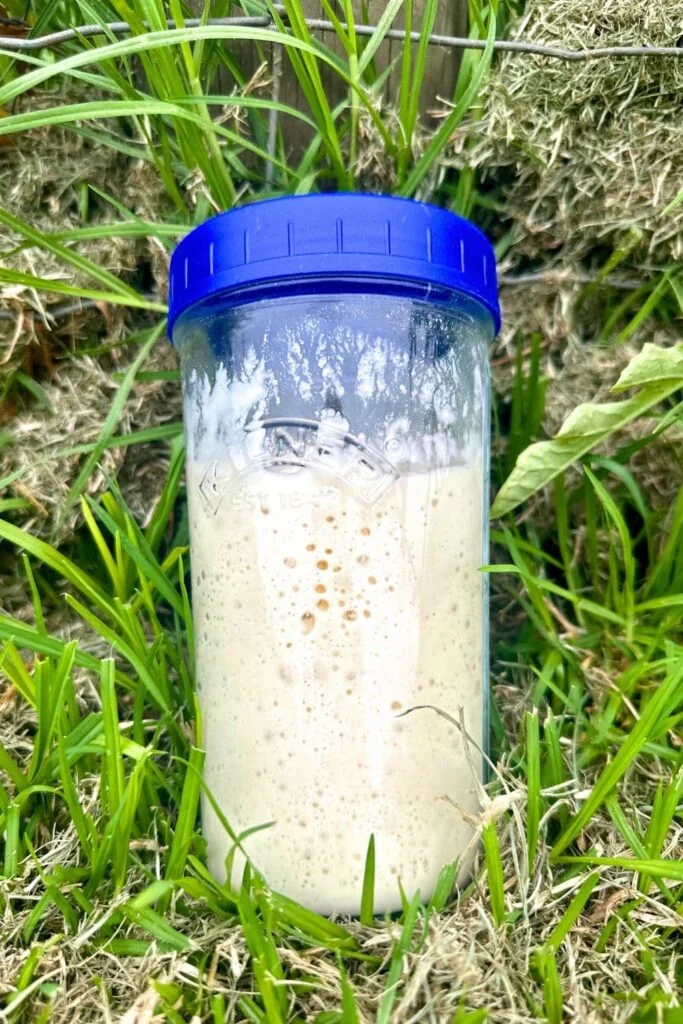
- Develops large and small bubbles throughout
- Has a domed surface before it begins to fall
- Smells pleasantly tangy with mild fruity notes
- Rises predictably after each feeding
Use your starter at its peak for the best baking results.
Tips to Encourage More Wild Yeast
- Feed your starter on a regular schedule.
- Use unbleached flour whenever possible.
- Add a small percentage of whole wheat or rye flour to each feeding.
- Maintain a warm fermentation temperature.
- Keep your jar clean to prevent contamination.
- Weigh ingredients with a digital scale for consistent hydration.
- Avoid overfeeding a weak starter before it has time to ferment.
Signs of a Healthy Starter
A healthy starter should:
- Double in volume within 4–8 hours
- Be full of bubbles on the sides and surface
- Have a light, airy texture
- Smell pleasantly sour without harsh or unpleasant odors
- Stretch slightly when stirred
Common Mistakes
Using Chlorinated Water
Chlorine may slow fermentation. Filtered or dechlorinated water is the best choice.
Feeding Inconsistently
Skipping feedings weakens the yeast population and slows fermentation.
Keeping the Starter Too Cold
Temperatures below 70°F (21°C) can significantly reduce yeast activity.
Using Old Flour
Fresh, high-quality flour contains more nutrients that support healthy fermentation.
Expecting Instant Results
Building a strong yeast population takes time. Regular care over several days is often needed to revive a sluggish starter.
Storage
If You Bake Frequently
Keep your starter at room temperature and feed it every 24 hours.
If You Bake Occasionally
Store it in the refrigerator and feed it once each week.
Before baking, remove it from the refrigerator and feed it 1–2 times until it becomes active and bubbly.
Frequently Asked Questions
Which flour grows the most wild yeast?
Rye flour is often the most effective because it contains abundant nutrients that support rapid yeast growth. Whole wheat flour is another excellent option.
How long does it take to strengthen a weak starter?
With consistent feedings and warm temperatures, most starters show noticeable improvement within 2–5 days.
Can I switch from all-purpose flour to bread flour?
Yes. Bread flour provides more protein, which supports stronger gluten development and often leads to a more vigorous starter.
Should I stir my starter between feedings?
It’s not necessary, but stirring can help redistribute the yeast and bacteria while releasing trapped carbon dioxide.
Final Thoughts
Increasing the wild yeast in your sourdough starter is all about providing the right environment and consistent care. By feeding your starter regularly with fresh flour, incorporating nutrient-rich whole wheat or rye flour, using filtered water, and maintaining a warm fermentation temperature, you’ll encourage a thriving colony of wild yeast. The result is a bubbly, reliable starter that produces beautifully risen loaves with exceptional flavor, texture, and oven spring every time you bake.
