
Why Share Your Sourdough Starter?
Sharing sourdough starter is a long-standing baking tradition that helps preserve wild yeast cultures while introducing others to the joy of homemade bread.
Benefits include:
- Encouraging new bakers to start baking
- Reducing unnecessary sourdough discard
- Keeping your starter active and refreshed
- Creating thoughtful homemade gifts
- Passing along a baking tradition
- Building a community of sourdough enthusiasts
When Is a Starter Ready to Share?
Only share a starter that is healthy and well-established.
A mature starter should:
- Be at least 10–14 days old
- Double in size within 4–8 hours after feeding
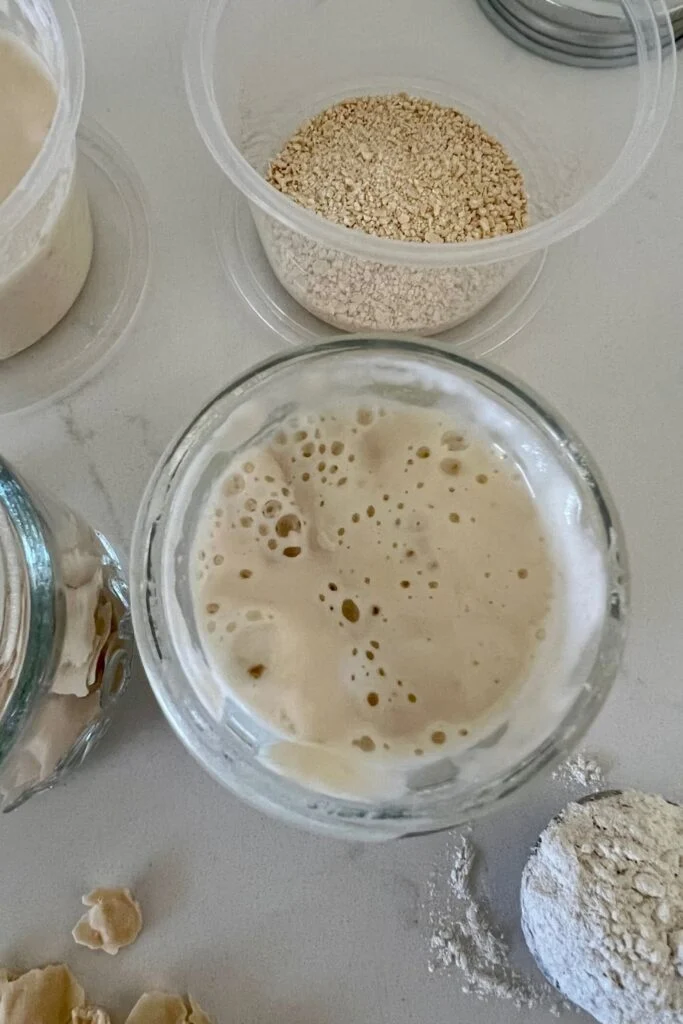
- Have plenty of bubbles throughout
- Smell pleasantly tangy, slightly fruity, or yeasty
- Rise and fall consistently after each feeding
- Successfully bake a loaf of bread
Avoid sharing a sluggish or newly created starter that hasn’t become stable yet.
Step 1: Feed the Starter
Feed your starter as you normally would using your preferred feeding ratio.
For many bakers, a simple maintenance feeding works well:
- 50 grams starter
- 50 grams water
- 50 grams flour
Allow the starter to become fully active and reach its peak rise before dividing it.
Sharing an active starter gives the recipient the strongest possible culture.
Step 2: Divide the Starter
Using a clean spoon or silicone spatula, transfer approximately:
- 50–100 grams for beginners
- 100–150 grams for gift jars
- 25–50 grams if mailing a dehydrated starter
This amount is more than enough for someone to begin feeding and baking.
Your original starter remains healthy and continues growing after feeding.
Step 3: Choose a Container
Package the starter in a clean container with room for expansion.
Good options include:
- Small glass jars
- Wide-mouth mason jars
- Food-safe plastic containers
- Deli containers with lids
Do not completely fill the container.
Leave at least one-third of the container empty because an active starter expands significantly after feeding.
Avoid tightening the lid excessively if the starter is still very active, as pressure can build inside the container.
Step 4: Label the Starter
Include a label with:
- Date it was fed
- Type of flour used
- Feeding ratio
- Your starter’s name (optional and fun!)
- Simple feeding instructions
A handwritten note makes the gift even more personal.
Step 5: Include Care Instructions
Provide easy instructions so the recipient knows what to do next.
A simple guide might include:
After receiving:
- Feed immediately if the starter has fallen.
- Mix equal parts starter, flour, and water by weight.
- Keep at room temperature until bubbly.
- Feed every 24 hours if stored on the counter.
- Refrigerate after becoming active if baking only occasionally.
How to Share a Refrigerated Starter
If your starter lives in the refrigerator:
- Remove it 1–2 days before sharing.
- Feed it once or twice until it becomes active again.
- Share after it reaches its peak rise.
- Feed your remaining starter before returning it to the refrigerator.
How to Mail a Sourdough Starter
For longer trips, a dehydrated starter is the safest option.
To Dehydrate
- Feed the starter.
- Allow it to become fully active.
- Spread a very thin layer on parchment paper.
- Let it air-dry completely for 24–48 hours.
- Break it into flakes.
- Store the flakes in an airtight bag or jar.
Include simple instructions for rehydrating the starter with water and flour over several days.
If mailing a fresh starter, package it securely in a leak-proof container, seal it inside a zip-top bag, and cushion it well to prevent spills during shipping.
How to Reactivate a Shared Starter
Once the recipient receives the starter:
- Stir the starter well.
- Discard all but about 50 grams.
- Feed with 50 grams water and 50 grams flour.
- Let it rest at room temperature.
- Repeat feedings every 12–24 hours until it reliably doubles in size.
Within a few feedings, the starter should be strong enough for baking.
Troubleshooting
My starter looks flat.
This is normal if it was shared after peaking. Feed it and allow time for it to become active again.
There’s liquid on top.
A layer of liquid, often called hooch, means the starter is hungry. Stir it in or pour it off, then feed the starter.
It doesn’t bubble after shipping.
Shipping can temporarily slow fermentation. Feed the starter consistently for several days before assuming it’s inactive.
It smells very sour.
A tangy, acidic aroma is normal. Persistent foul or moldy odors indicate contamination, and the starter should be discarded.
Expert Tips
- Always share a healthy, mature starter.
- Feed it before giving it away for the strongest activity.
- Use clean containers and utensils to avoid contamination.
- Include clear feeding instructions for beginners.
- For long-distance sharing, dehydrated starter travels better than fresh starter.
- Encourage recipients to name and care for their starter to make the experience more enjoyable.
Frequently Asked Questions
How much starter should I give someone?
About 50–100 grams is plenty. A small amount can quickly grow into a full baking starter with regular feedings.
Can I share sourdough discard?
No. Discard is not intended to be used as a starter unless it is still active and regularly fed. For the best results, always share an active, healthy starter.
Does sharing weaken my own starter?
Not at all. A sourdough starter is designed to be divided. Simply feed the remaining starter, and it will continue growing as usual.
How long can shared starter sit before feeding?
An active starter can usually sit at room temperature for about a day. If refrigerated, it can often go a week or longer before needing another feeding, depending on its condition.
Can I freeze sourdough starter?
Yes. While dehydration is generally preferred for long-term storage and sharing, a healthy starter can also be frozen in a freezer-safe container. Thaw it in the refrigerator, then revive it with several regular feedings until it becomes active again.
Final Thoughts
Sharing a sourdough starter is a rewarding way to introduce others to the art of naturally leavened bread. With a healthy starter, proper packaging, and clear care instructions, you can confidently pass along a thriving culture that may be used for years to come. Whether you’re gifting it to a friend, mailing it across the country, or helping a beginner start their first loaf, sharing sourdough starter continues a timeless baking tradition built on generosity, patience, and the joy of homemade bread.
