
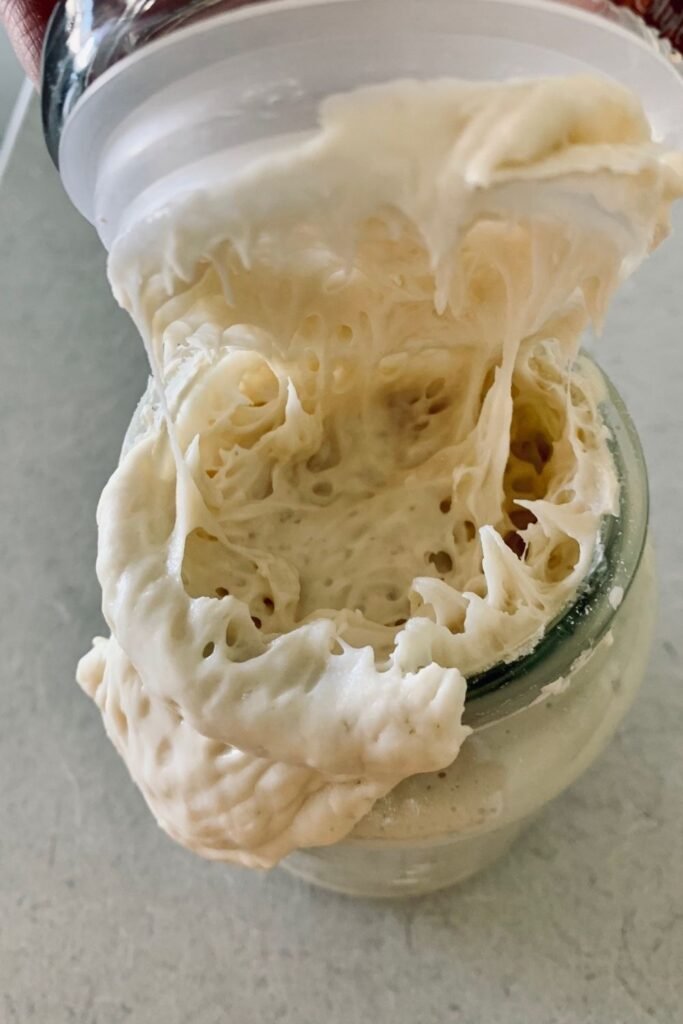
What Is a Sourdough Starter?
A sourdough starter is a fermented mixture of flour and water that naturally captures wild yeast and lactic acid bacteria from the environment. With regular feeding, the starter becomes active enough to leaven bread without commercial yeast.
The type of flour you use and how you maintain your starter influence its flavor, strength, and fermentation speed.
1. White Flour Sourdough Starter
A white flour starter is one of the most common and beginner-friendly options. It’s typically made with unbleached bread flour or all-purpose flour.
Characteristics
- Mild, balanced flavor
- Consistent fermentation
- Easy to maintain
- Excellent rise
Best Uses
- Classic artisan sourdough
- Sandwich bread
- Dinner rolls
- Pizza dough
- Cinnamon rolls
2. Whole Wheat Sourdough Starter
Whole wheat flour contains more nutrients and natural microorganisms, making this starter ferment more quickly than white flour starters.
Characteristics
- Strong fermentation
- Earthy flavor
- More active bubbling
- Faster growth
Best Uses
- Rustic whole wheat bread
- Multigrain loaves
- Hearth bread
- Rustic rolls
3. Rye Sourdough Starter
Rye flour is famous for producing vigorous, highly active starters because it’s rich in nutrients that wild yeast loves.
Characteristics
- Extremely active
- Tangy flavor
- Fast fermentation
- Excellent for beginners
Best Uses
- Rye bread
- Dark artisan loaves
- European-style breads
- Seeded breads
4. Einkorn Sourdough Starter
Einkorn is one of the oldest cultivated grains. It produces a soft, delicate starter with a unique nutty flavor.
Characteristics
- Mild fermentation
- Buttery taste
- Softer gluten structure
- Slightly slower rise
Best Uses
- Ancient grain bread
- Rustic loaves
- Flatbreads
- Crackers
5. Spelt Sourdough Starter
Spelt flour creates a lively starter with a pleasant nutty sweetness.
Characteristics
- Active fermentation
- Soft dough
- Mild nutty flavor
- Light texture
Best Uses
- Sandwich bread
- Dinner rolls
- Rustic artisan bread
- Pizza crust
6. Gluten-Free Sourdough Starter
A gluten-free starter is made using flours such as brown rice, sorghum, buckwheat, millet, or oat flour instead of wheat.
Characteristics
- Mild tang
- Different fermentation behavior
- Requires careful feeding
- Suitable for gluten-free baking
Best Uses
- Gluten-free sandwich bread
- Muffins
- Pancakes
- Pizza crust
- Flatbreads
7. Liquid Sourdough Starter (100% Hydration)
A liquid starter contains equal weights of flour and water, creating a thick batter-like consistency.
Characteristics
- Easy to mix
- Fast fermentation
- Most common hydration
- Versatile
Best Uses
- Most sourdough bread recipes
- Focaccia
- Pizza dough
- Bagels
- English muffins
8. Stiff Sourdough Starter (50–60% Hydration)
A stiff starter contains less water, resulting in a dough-like consistency.
Characteristics
- Slower fermentation
- Milder acidity
- Excellent dough strength
- Longer storage between feedings
Best Uses
- Panettone
- Brioche
- Sweet breads
- Bagels
- Croissants
9. Levain (Freshly Built Starter)
A levain is not a separate starter but a freshly fed portion of your mature starter that is built specifically for a recipe.
Characteristics
- Highly active
- Predictable fermentation
- Strong leavening power
- Used at peak activity
Best Uses
- Artisan sourdough bread
- Country loaves
- Boules
- Batards
- Specialty breads
10. Mature Aged Sourdough Starter
A mature starter that has been maintained consistently for months or years develops greater stability and deeper flavor.
Characteristics
- Reliable performance
- Complex flavor
- Excellent fermentation strength
- Highly resilient
Best Uses
- Artisan breads
- Long-fermented doughs
- Specialty sourdough recipes
- Everyday baking
Which Starter Is Best for Beginners?
If you’re just starting your sourdough journey, these are the easiest options:
- White flour starter
- Whole wheat starter
- Rye starter
These ferment reliably, are forgiving, and are simple to maintain with regular feedings.
Choosing the Right Starter for Your Baking
| Baking Goal | Recommended Starter |
|---|---|
| Everyday artisan bread | White flour starter |
| Rustic whole grain loaves | Whole wheat starter |
| European rye bread | Rye starter |
| Ancient grain baking | Einkorn starter |
| Soft sandwich bread | White or spelt starter |
| Sweet enriched doughs | Stiff starter |
| Gluten-free baking | Gluten-free starter |
| Pizza and focaccia | Liquid starter |
| Panettone and brioche | Stiff starter |
| Professional artisan baking | Mature starter or levain |
Tips for Maintaining Any Sourdough Starter
- Feed your starter regularly using fresh flour and clean water.
- Use a clean jar to reduce contamination.
- Keep it at room temperature if baking frequently, or refrigerate it if baking occasionally.
- Feed refrigerated starters before baking to restore activity.
- Watch for signs of peak activity, such as doubling in size, a domed surface, and plenty of bubbles.
Frequently Asked Questions
Which flour makes the strongest sourdough starter?
Rye flour and whole wheat flour are generally the most vigorous because they contain more nutrients that encourage wild yeast growth.
Can I switch flours after my starter is established?
Yes. Mature starters adapt well to gradual flour changes over a few feedings.
Do I need different starters for different recipes?
Not necessarily. A healthy white flour starter can be used in most recipes. However, specialty starters such as rye, stiff, or gluten-free starters can improve results in certain types of baking.
How long does a sourdough starter last?
With proper care and regular feedings, a sourdough starter can last indefinitely. Many bakers maintain the same starter for years or even decades.
Final Thoughts
Sourdough starters come in many forms, and each offers unique benefits depending on the type of bread you want to bake. From classic white flour starters and nutrient-rich rye starters to stiff starters for enriched doughs and gluten-free options for specialty baking, there’s a starter to suit every baker’s needs. By understanding how each type behaves and where it shines, you’ll be better equipped to create flavorful, beautifully textured breads and baked goods with confidence.
