
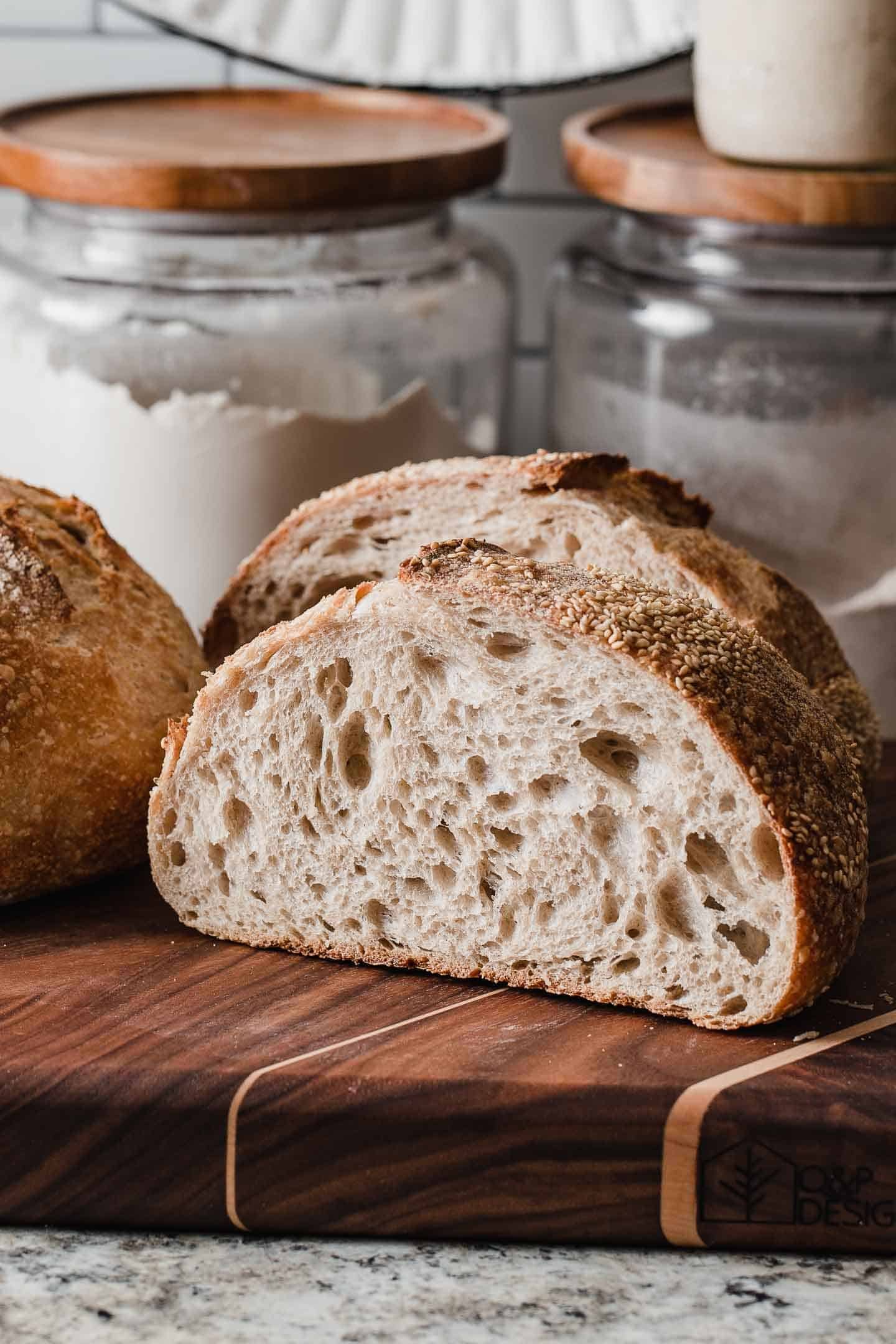
Ingredients
For the Dough
- 100 grams active sourdough starter (fed and bubbly)
- 350 grams bread flour
- 100 grams whole wheat flour
- 350 grams water (room temperature)
- 10 grams sea salt
Equipment
- Large mixing bowl
- Kitchen scale
- Dough scraper
- Dutch oven or heavy baking pot
- Banneton basket or bowl lined with a towel
- Parchment paper
- Sharp knife or bread lame
Instructions
Step 1: Prepare Your Sourdough Starter
Make sure your sourdough starter is active before beginning.
A ready-to-use starter should:
- Double in size after feeding
- Have visible bubbles
- Smell pleasantly tangy and slightly sweet
- Float in water when tested (optional)
For best results, use the starter near its peak activity.
Step 2: Mix the Dough
In a large bowl, combine:
- Bread flour
- Whole wheat flour
- Water
Mix until all flour is hydrated and no dry spots remain.
Cover and let the dough rest for:
30–60 minutes
This process is called autolyse and helps develop gluten naturally.
Step 3: Add Starter and Salt
Add the active sourdough starter and salt to the dough.
Using wet hands, squeeze and fold the dough until everything is evenly incorporated.
The dough may feel sticky at first, but it will become smoother as it develops.
Cover and rest for 30 minutes.
Step 4: Bulk Fermentation
Allow the dough to ferment at room temperature for approximately:
4–6 hours
The exact time depends on your kitchen temperature and starter strength.
During the first 2 hours, perform stretch-and-folds every 30 minutes.
Stretch and Fold Method:
- Wet your hands.
- Grab one side of the dough.
- Stretch it upward gently.
- Fold it over the center.
- Rotate the bowl and repeat.
Complete 3–4 sets of folds.
The dough is ready when:
- It has increased in volume by about 50%
- It looks smoother
- It holds its shape better
- Small bubbles appear around the edges
Step 5: Shape the Loaf
Lightly flour your work surface.
Turn the dough out gently.
Shape it into a round by folding the edges toward the center.
Flip it over and use your hands to create surface tension by pulling the dough toward you.
Place the shaped dough seam-side up into a floured banneton basket.
Step 6: Cold Proof
Cover the dough and place it in the refrigerator.
Cold ferment for:
8–12 hours
This slow fermentation develops deeper sourdough flavor and improves the crust.
Step 7: Preheat the Oven
Place a Dutch oven inside your oven.
Preheat to:
500°F (260°C)
Allow the Dutch oven to heat for at least:
30–45 minutes
A hot baking vessel helps create steam and gives the loaf its signature crust.
Step 8: Score the Dough
Remove the dough from the refrigerator.
Place it on parchment paper.
Using a sharp blade, score the top with one deep slash.
This allows the bread to expand properly during baking.
Step 9: Bake the Sourdough Country Loaf
Carefully transfer the dough into the hot Dutch oven.
Bake:
Covered:
20 minutes at 500°F (260°C)
Uncovered:
20–25 minutes at 450°F (230°C)
Bake until the crust is deep golden brown and crisp.
Step 10: Cool Completely
Remove the loaf from the Dutch oven.
Place it on a wire rack.
Allow it to cool for at least:
1–2 hours
before slicing.
Cutting too early can make the crumb gummy because the interior is still setting.
Serving Suggestions
Enjoy your Sourdough Country Loaf with:
- Salted butter
- Homemade jam
- Avocado toast
- Cheese and charcuterie boards
- Soups and stews
- Grilled cheese sandwiches
- Bruschetta
- Eggs and breakfast spreads
- Olive oil and herbs
Storage
Room Temperature: Store wrapped in a clean kitchen towel or bread bag for up to 4 days.
Freezer: Slice and freeze for up to 3 months.
Reheating: Toast slices directly from frozen or warm the whole loaf in a 350°F (175°C) oven for 10 minutes.
Tips for the Best Sourdough Country Loaf
- Use an active starter for the best rise and flavor.
- Weigh ingredients for the most consistent results.
- Avoid adding too much flour while shaping—the dough should remain slightly sticky.
- Give the dough enough fermentation time; under-proofed dough can result in a dense loaf.
- Cold fermentation creates deeper flavor and a better crust.
- Bake in a preheated Dutch oven to trap steam and develop a crisp crust.
- Let the bread cool fully before slicing for the best texture.
Recipe Notes
- You can replace some whole wheat flour with rye flour for a deeper, earthier flavor.
- For a softer crust, brush the warm loaf with butter after baking.
- Add roasted garlic, herbs, seeds, or cheese for a flavored country loaf variation.
- If your kitchen is warm, reduce fermentation time to prevent over-proofing.
- If your dough spreads instead of holding shape, it may need more gluten development or a shorter fermentation period.
- A well-maintained sourdough starter is the key to achieving a light, airy crumb and beautiful oven spring.
