
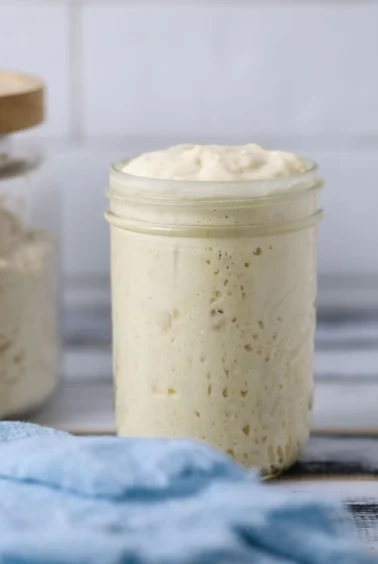
Ingredients
- 1 cup (120g) whole wheat flour (for starting)
- 3–4 cups (360–480g) unbleached all-purpose bread flour (for feeding over several days)
- ½ cup (120g) filtered or non-chlorinated water, room temperature (plus more for daily feedings)
Equipment
- 1 large glass jar (1-quart or larger)
- Kitchen scale (recommended)
- Wooden spoon or silicone spatula
- Loose-fitting lid or clean cloth
- Rubber band or marker (to track growth)
Instructions
Day 1: Create the Starter
In a clean glass jar, combine:
- ½ cup (60g) whole wheat flour
- ¼ cup (60g) filtered water
Mix until no dry flour remains. The mixture should resemble a thick pancake batter.
Scrape down the sides of the jar.
Cover loosely with a lid or clean cloth.
Leave at room temperature (70–75°F / 21–24°C) for 24 hours.
Day 2: Check for Activity
You may notice a few bubbles or a slightly sour smell. This is normal.
Discard about half of the starter.
Feed it with:
- ½ cup (60g) unbleached all-purpose flour
- ¼ cup (60g) filtered water
Mix thoroughly, cover loosely, and let it rest for another 24 hours.
Days 3–5: Continue Feeding
Each day:
- Discard about half of the starter.
- Feed with:
- ½ cup (60g) flour
- ¼ cup (60g) filtered water
You should begin seeing:
- More bubbles throughout the mixture
- A pleasant tangy aroma
- Noticeable rise after feeding
- Starter doubling in size within several hours
If your kitchen is cool, fermentation may take a little longer.
Days 6–7: Build Strength
Continue the daily discard and feeding routine.
By now, your starter should become consistently active.
A healthy starter should:
- Double in size within 4–8 hours after feeding
- Have plenty of bubbles on the surface and sides
- Smell pleasantly tangy, slightly fruity, or yeasty
- Have a light and airy texture
Step 7: Test for Readiness
To check if your starter is ready for baking, perform the float test.
Drop a small spoonful of starter into a glass of room-temperature water.
If it floats, it’s ready to use for baking.
If it sinks, continue feeding for another day or two and test again.
Feeding an Established Starter
If stored at room temperature:
- Feed every 24 hours.
If stored in the refrigerator:
- Feed once every 7 days.
Before baking, remove the starter from the refrigerator and feed it once or twice until it becomes active and bubbly.
Tips for the Best Sourdough Starter
- Use filtered or dechlorinated water whenever possible.
- Whole wheat or rye flour often helps the starter become active more quickly.
- Keep the starter in a warm area between 70–75°F (21–24°C).
- Weigh ingredients with a kitchen scale for the most consistent results.
- Always use a clean jar and utensils.
- Don’t panic if activity slows around Days 3–4—this is a normal part of the fermentation process.
- Patience is key; some starters take up to 10 days to become fully active.
Common Problems and Solutions
Starter Isn’t Bubbling
- Move it to a slightly warmer location.
- Make sure you’re using unbleached flour.
- Continue feeding consistently for a few more days.
Pink or Orange Color
Discard the starter immediately. This indicates contamination, and it is not safe to use.
Liquid on Top (Hooch)
A gray or brown liquid means the starter is hungry.
Simply pour off the liquid (or stir it back in if preferred) and feed the starter.
Bad Odor
Strong sour or tangy smells are normal.
However, if the starter smells rotten, moldy, or develops visible mold, discard it and start over.
Ways to Use Your Sourdough Starter
Once your starter is active, use it to make:
- Artisan sourdough bread
- Sandwich bread
- Sourdough pizza crust
- Bagels
- English muffins
- Pancakes
- Waffles
- Cinnamon rolls
- Dinner rolls
- Crackers
- Biscuits
- Pretzels
Storage
Room Temperature
Keep loosely covered and feed every 24 hours if you bake frequently.
Refrigerator
Store covered in the refrigerator and feed once a week if you bake occasionally.
Long-Term Storage
For extended storage, spread a thin layer of active starter on parchment paper and allow it to dry completely. Break it into flakes and store in an airtight container in a cool, dry place for several months. Rehydrate with water and flour when you’re ready to bake again.
