
How Do You Know When Your Sourdough Starter Is Ready to Bake With?
One of the most common questions beginner sourdough bakers ask is, “How do I know when my sourdough starter is ready to bake with?” Using your starter at the right time is one of the biggest factors in baking a loaf with excellent rise, an open crumb, and rich flavor.
A healthy sourdough starter is a living culture of wild yeast and beneficial bacteria. When properly fed and cared for, these microorganisms ferment the flour and water, producing gases that naturally leaven your bread. But a starter isn’t always at its strongest. It goes through a cycle of rising, peaking, and falling after every feeding, and understanding this cycle is the key to successful baking.
This guide explains the signs of a mature, active starter, how to recognize when it has reached its peak, and simple tests you can use to decide if it’s ready to bake with.
What Makes a Sourdough Starter “Ready”?
A sourdough starter is considered ready when it contains enough active wild yeast to reliably raise bread dough. It should be healthy, vigorous, and at or near its peak rise after feeding.
Using a starter too early or too late can result in:
- Dense bread
- Poor oven spring
- Slow fermentation
- Tight crumb
- Less flavorful loaves
Timing matters just as much as maintaining a healthy starter.
Sign 1: It Doubles (or More) in Size
The easiest way to tell if your starter is ready is by watching how much it rises after feeding.
A mature starter should:
- Double in size within 4–8 hours (depending on temperature and feeding ratio)
- Sometimes triple in volume
- Rise consistently after each feeding
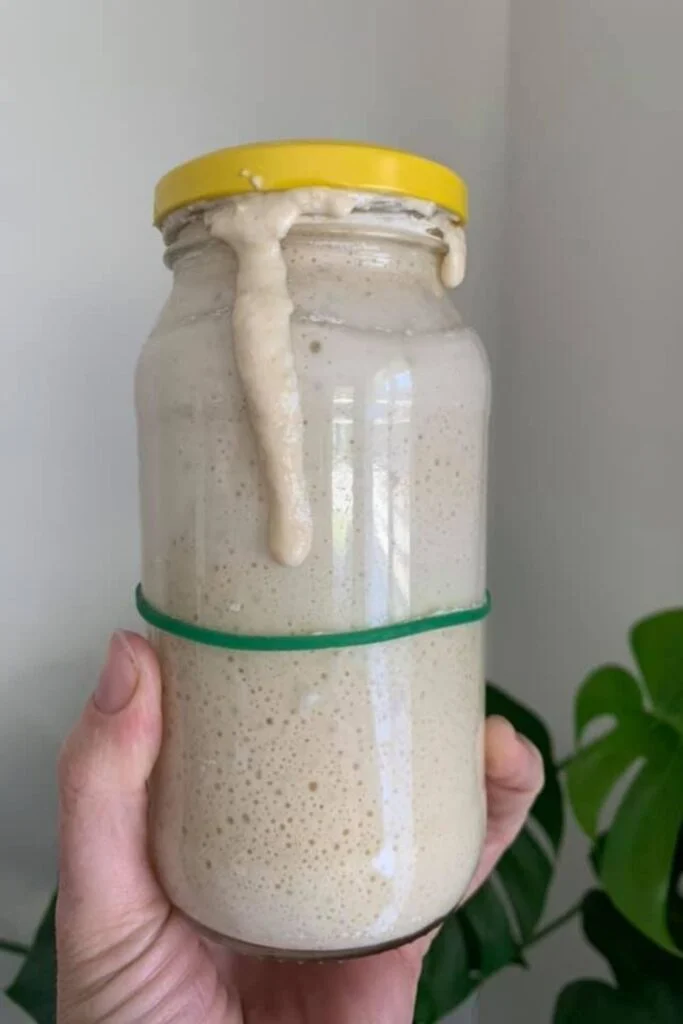
Mark the starting level with a rubber band or marker on the jar. This makes it easy to see how much your starter has grown.
If your starter struggles to rise, it may need a few more feedings before it’s strong enough for baking.
Sign 2: It’s Full of Bubbles
An active starter should be filled with bubbles throughout the jar.
Look for:
- Small bubbles along the sides
- Large bubbles on the surface
- An airy, sponge-like interior
- A light, fluffy texture
These bubbles are carbon dioxide produced by the wild yeast during fermentation—a good indication that your starter is actively working.
Sign 3: It Has Reached Its Peak
The best time to bake with your starter is when it has reached its highest point or is just beginning to flatten on top.
At its peak, the starter will usually have:
- A domed or slightly rounded top
- Maximum height
- Plenty of bubbles
- A light, airy consistency
- A pleasant aroma
Once the top begins to sink noticeably, the starter has started consuming all of its available food and is becoming less active.
You can still use it after it begins to fall, but it may not provide the same leavening power as a starter at its peak.
Sign 4: It Smells Pleasant
A healthy starter should have a fresh, mildly tangy aroma.
Common descriptions include:
- Yogurt-like
- Fruity
- Slightly sweet
- Mildly sour
- Fresh bread dough
Depending on the flour you use, you may also notice subtle nutty or earthy notes.
Avoid using a starter that smells:
- Rotten
- Putrid
- Like mold
- Strongly unpleasant
These odors may indicate contamination or neglect.
A sharp, vinegary smell usually means the starter is simply hungry and needs feeding.
Sign 5: It Has a Light, Airy Texture
When you stir a mature starter, it should feel:
- Soft
- Elastic
- Light
- Puffy
- Full of trapped gas
It should not feel heavy, dense, or paste-like immediately after reaching its peak.
Sign 6: It Passes the Float Test (Optional)
The float test is a popular method for checking starter readiness, although it isn’t always reliable.
To perform the test:
- Fill a glass with cool water.
- Gently scoop a small spoonful of starter.
- Drop it into the water.
If it floats, the starter contains plenty of trapped gas and is often ready to use.
If it sinks, it may still be perfectly usable—especially if it has recently been stirred or if it naturally has a wetter consistency. For this reason, many experienced bakers rely more on the starter’s rise and appearance than the float test alone.
How Long Does It Take After Feeding?
The time depends on several factors, including room temperature, feeding ratio, and the strength of your starter.
Typical guidelines:
- Warm kitchen (75–80°F / 24–27°C): 4–6 hours
- Average room temperature (70–74°F / 21–23°C): 6–8 hours
- Cool room (65–69°F / 18–20°C): 8–12 hours
Larger feedings (such as 1:5:5) generally take longer to reach their peak than smaller feedings (such as 1:1:1).
How Old Should a New Starter Be?
A brand-new starter usually isn’t ready for bread after only a few days.
Most starters become reliable after:
- 7–14 days of consistent feeding
- Doubling in size after each feeding
- Producing a pleasant aroma
- Reaching peak activity consistently
Some starters may take a little longer, especially in cooler environments.
What If My Starter Isn’t Ready?
If your starter isn’t rising well:
- Feed it regularly at consistent intervals.
- Keep it in a warm location.
- Use filtered or dechlorinated water if possible.
- Try incorporating a small amount of whole wheat or rye flour to encourage activity.
- Wait until it consistently doubles before baking bread.
Patience is one of the most important ingredients in sourdough baking.
Common Mistakes
Baking Too Soon
Using a starter before it has fully matured often leads to dense, under-risen bread.
Waiting Too Long
A starter that has collapsed significantly after peaking has already used much of its available food and may not provide the strongest rise.
Ignoring Temperature
Cooler kitchens slow fermentation, while warmer temperatures speed it up. Learn how your environment affects your starter’s schedule.
Relying Only on the Float Test
The float test can be helpful, but it shouldn’t be your only indicator. A starter’s rise, bubbles, aroma, and texture provide a more complete picture of its readiness.
Frequently Asked Questions
Can I bake with a starter that hasn’t doubled?
It’s possible, but the dough will likely rise more slowly and may produce a denser loaf. For the best results, wait until your starter consistently doubles or more after feeding.
Can I use a starter after it starts falling?
Yes. It will still ferment dough, but the strongest leavening power is usually at or just before its peak rise.
Does the float test always work?
No. A healthy starter may sink if it has been stirred, is very wet, or has just begun to collapse. Use the float test as an optional guide rather than a definitive measure.
Why does my starter smell like vinegar?
A vinegary aroma usually means your starter has exhausted its food supply and is ready for another feeding. Feed it fresh flour and water, and the smell should become milder.
How often should I feed my starter before baking?
Many bakers feed their starter once or twice before baking to ensure it is strong, active, and at peak performance.
Final Thoughts
Knowing when your sourdough starter is ready to bake with comes down to observing its behavior rather than watching the clock. A mature starter should consistently double in size, be filled with bubbles, have a light and airy texture, smell pleasantly tangy, and reach its peak before being mixed into your dough. While the float test can be a useful extra check, the most reliable signs are a vigorous rise and a healthy appearance.
With a little practice, you’ll become familiar with your starter’s unique rhythm and learn to recognize the perfect moment to bake. Once you can confidently identify a fully active starter, you’ll enjoy more consistent fermentation, better oven spring, and delicious homemade sourdough bread every time.
