
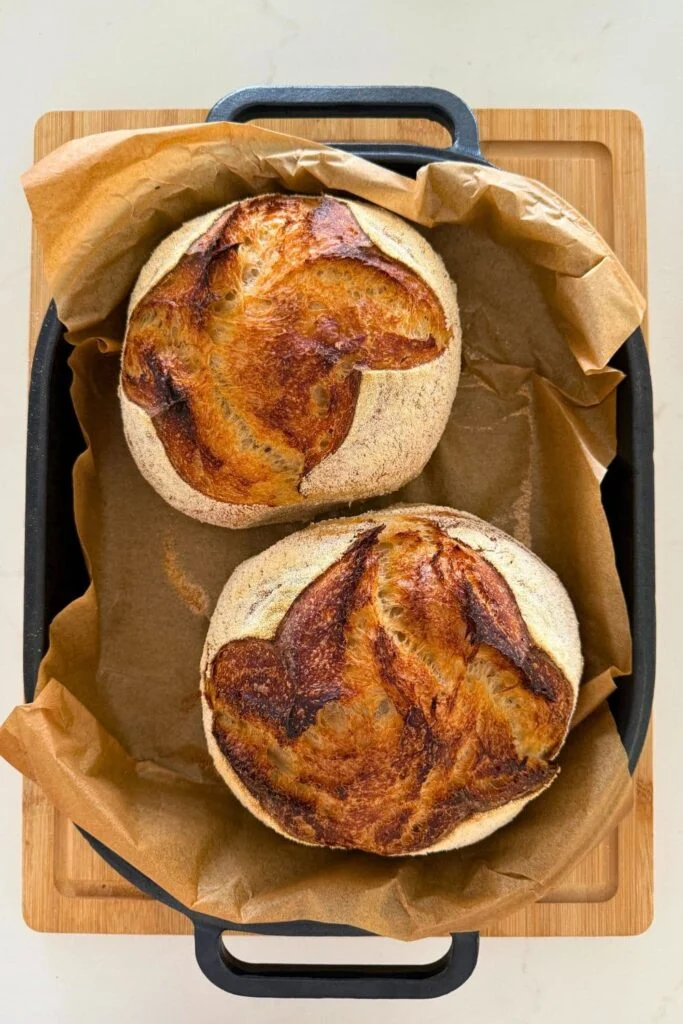
Ingredients
For the Sourdough Dough
- 500g bread flour
- 350g water
- 100g active sourdough starter
- 10g salt
Equipment
- Large mixing bowl
- Banneton basket or proofing bowl
- Plastic wrap or reusable food wrap
- Freezer-safe bags
- Dutch oven or baking stone
- Bread lame or sharp knife
Instructions
Step 1: Prepare the Dough
Mix the active sourdough starter and water in a large bowl until combined.
Add the bread flour and mix until no dry flour remains.
Let the dough rest for 30 minutes.
Add the salt and knead or perform stretch-and-folds until incorporated.
Continue bulk fermentation for 4–6 hours, performing stretch-and-folds every 30 minutes during the first 2 hours.
Step 2: Shape the Dough
Once the dough has risen and become airy, gently turn it onto a lightly floured surface.
Shape into a round or oval loaf.
Place the shaped dough into a floured proofing basket.
Step 3: Freeze the Dough
Cover the basket tightly with plastic wrap.
Place the dough in the freezer until completely frozen, about 3–4 hours.
Once frozen solid, transfer the dough to a freezer-safe bag or airtight container.
Label with the date.
Freeze for up to 3 months.
Step 4: Thaw the Dough
When ready to bake, remove the dough from the freezer.
Place it back into a proofing basket or bowl.
Cover loosely and thaw overnight in the refrigerator for 8–12 hours.
Step 5: Final Proof
After thawing, allow the dough to sit at room temperature for 2–4 hours.
The dough should become puffy and slightly expanded.
The exact proofing time will depend on room temperature and dough strength.
Step 6: Preheat the Oven
Place a Dutch oven in the oven.
Preheat to 475°F (245°C) for at least 45 minutes.
A thoroughly heated Dutch oven helps create excellent oven spring.
Step 7: Score and Bake
Turn the dough onto parchment paper.
Score the top with a bread lame or sharp knife.
Carefully transfer into the hot Dutch oven.
Cover with the lid.
Bake for 20 minutes.
Remove the lid and continue baking for 20–25 minutes until deep golden brown.
The loaf should reach an internal temperature of approximately 205–210°F (96–99°C).
Step 8: Cool
Transfer the bread to a wire rack.
Allow it to cool completely for at least 1 hour before slicing.
This helps the crumb finish setting and prevents a gummy texture.
Tips for Success
Freeze After Shaping
Freezing shaped dough is the easiest and most reliable method for future baking.
Use Strong Bread Flour
Higher-protein flour helps the dough maintain structure after thawing.
Avoid Overproofing
Freeze the dough before the final proof to preserve yeast activity.
Seal Well
Protect the dough from freezer burn by using airtight packaging.
Be Patient While Thawing
Slow overnight thawing in the refrigerator provides the best results.
Check Readiness
Use the finger-poke test before baking. The dough should slowly spring back when gently pressed.
Storage
Frozen Dough
- Store in the freezer for up to 3 months.
Baked Bread
- Store at room temperature for up to 3 days.
- Freeze sliced bread for up to 3 months.
Frequently Asked Questions
Can I Freeze Sourdough Dough Before Bulk Fermentation?
It is possible, but freezing after shaping generally produces better results and a stronger rise.
Will the Starter Survive Freezing?
Yes. The wild yeast and beneficial bacteria remain active after thawing, although fermentation may be slightly slower.
Can I Bake Directly From Frozen?
For best results, thaw and proof first. Baking directly from frozen may result in a dense loaf.
How Long Does Frozen Sourdough Dough Last?
For optimal quality, use within 2–3 months.
Serving Suggestions
Enjoy freshly baked sourdough with butter, homemade jam, soups, sandwiches, avocado toast, or your favorite breakfast spreads. Freezing dough ahead of time makes it easy to enjoy artisan sourdough bread whenever the craving strikes.
