
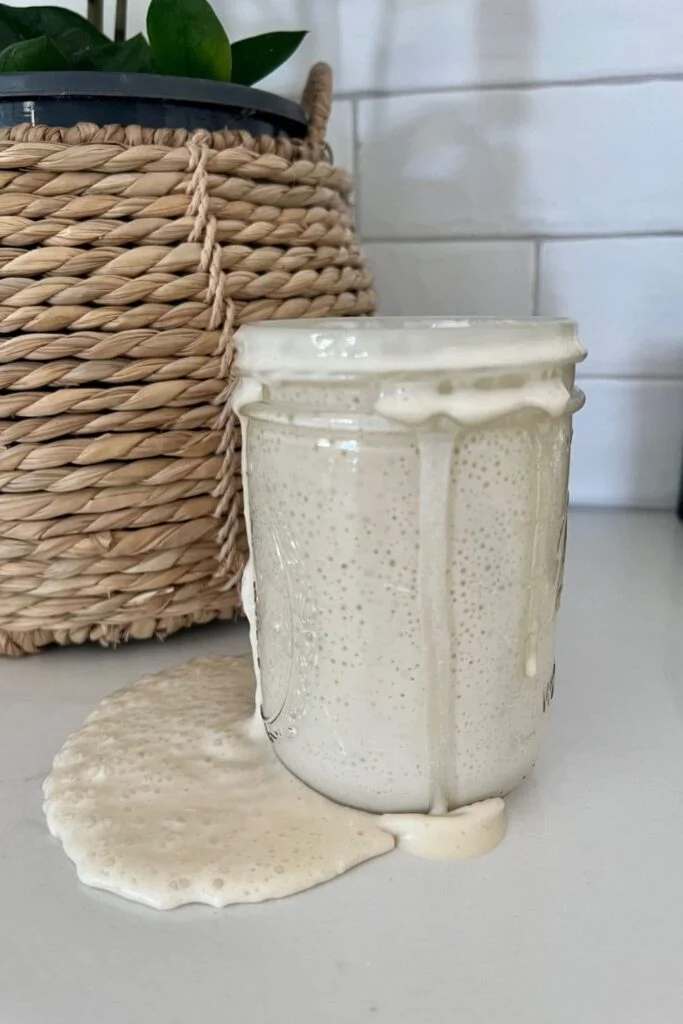
Yes, a sourdough starter can be overfed. Unlike a plant that can be damaged by too much water or fertilizer, an overfed starter is usually not permanently harmed. However, feeding it with too much fresh flour and water compared to the amount of existing starter can temporarily reduce its strength.
A sourdough starter works because wild yeast and beneficial bacteria consume the flour’s sugars and produce carbon dioxide, which creates bubbles and helps bread rise. When you add a large amount of flour and water but only a small amount of mature starter, the existing microorganisms need more time to multiply and ferment the new food.
The result may be a starter that appears inactive because the yeast population is not large enough yet to quickly ferment the fresh mixture.
What Does Overfeeding A Starter Mean?
Overfeeding usually happens when the feeding ratio is too large.
For example:
Balanced Feeding:
- 50 grams active starter
- 50 grams flour
- 50 grams water
This creates a 1:1:1 ratio and gives the starter enough food while maintaining a strong yeast population.
Heavy Feeding:
- 10 grams starter
- 200 grams flour
- 200 grams water
This creates a very diluted starter. The microorganisms have a large amount of fresh food but need more time to reproduce and become active.
Signs Your Sourdough Starter May Be Overfed
1. Slow Rising
A healthy starter usually rises noticeably after feeding, often doubling in size within a predictable timeframe.
An overfed starter may:
- Take much longer to rise
- Show only a few bubbles
- Look inactive for several hours
2. Mild or Weak Aroma
A mature starter typically smells pleasantly tangy, fruity, yeasty, or slightly sour.
An overfed starter may smell:
- Mostly like flour
- Very mild
- Less fermented than usual
This happens because the acids and fermentation byproducts have been diluted.
3. Thin Texture
A healthy starter usually has a thick, creamy consistency.
An overfed starter may become:
- Thin
- Runny
- Less elastic
The extra flour and water can temporarily change the balance of fermentation.
4. Longer Time Between Activity Peaks
If your starter previously peaked after 4–6 hours but now takes much longer, it may need a few regular feedings to rebuild strength.
How To Fix An Overfed Sourdough Starter
Step 1: Reduce the Starter Amount
Instead of continuing to add more flour and water, keep a smaller amount of starter.
Discard most of the starter, leaving:
- 25 grams starter
This gives the existing yeast and bacteria a stronger concentration.
Step 2: Feed With A Balanced Ratio
Add:
- 25 grams flour
- 25 grams water
Mix well.
This creates a simple:
1:1:1 feeding ratio
The starter now has enough food without being overly diluted.
Step 3: Keep It In A Warm Location
Place the starter somewhere warm, ideally around:
75–80°F (24–27°C)
Good locations include:
- Kitchen counter
- Inside the oven with the light on (oven turned off)
- Near a warm appliance
Avoid excessive heat, which can damage the natural microorganisms.
Step 4: Wait For Activity
Give the starter time.
Look for:
- Small bubbles throughout
- A pleasant sour smell
- Rising and falling patterns
- Increased volume after feeding
Depending on how weak the starter became, it may take 1–3 feedings to return to normal.
Sourdough Starter Feeding Recipe
Ingredients
- 25 grams mature sourdough starter
- 25 grams all-purpose flour
- 25 grams bread flour
- 50 grams water (room temperature)
Instructions
Step 1: Mix The Starter
Add the mature starter to a clean jar.
Pour in the water and stir until the starter loosens.
Step 2: Add Flour
Add:
- All-purpose flour
- Bread flour
Mix until fully combined.
The starter should have a thick, smooth texture similar to pancake batter or thick yogurt.
Step 3: Mark The Starting Level
Use a rubber band or marker to mark where the starter begins.
This makes it easy to see how much it rises.
Step 4: Let It Ferment
Cover loosely with a lid.
Allow the starter to sit at room temperature.
Depending on temperature and starter strength, it may peak within:
- 4–8 hours for an active starter
- 8–24 hours for a weak starter
How To Maintain A Healthy Sourdough Starter
For Daily Bakers
Feed your starter once every 24 hours.
A good routine:
- 50g starter
- 50g flour
- 50g water
Keep it at room temperature.
For Occasional Bakers
Store your starter in the refrigerator.
Feed it:
- Once every 1–2 weeks
Before baking:
- Remove starter from the refrigerator.
- Let it come to room temperature.
- Feed it 1–2 times.
- Wait until it becomes bubbly and active.
Best Feeding Ratios For Different Needs
1:1:1 Ratio
Best for:
- Daily maintenance
- Quick activity
- Regular baking
Example:
- 50g starter
- 50g flour
- 50g water
1:2:2 Ratio
Best for:
- A starter that needs more food
- Longer fermentation times
Example:
- 25g starter
- 50g flour
- 50g water
1:5:5 Ratio
Best for:
- Feeding before a long day away
- Slower fermentation
Example:
- 20g starter
- 100g flour
- 100g water
Common Sourdough Starter Mistakes
Feeding Too Frequently
Feeding before the starter has used its previous meal can weaken fermentation.
Wait until your starter:
- Rises
- Peaks
- Begins falling slightly
before feeding again.
Keeping Too Much Starter
Maintaining a large amount of starter requires more flour and can make it harder to manage.
Keeping a smaller starter is easier and less wasteful.
Using Only One Type Of Flour
While all-purpose flour works, many bakers find that adding:
- Bread flour
- Whole wheat flour
- Rye flour
can increase starter activity.
Using Cold Water
Very cold water slows fermentation.
Room-temperature water works best for regular feedings.
How To Know Your Starter Is Ready For Baking
Your sourdough starter is ready when it:
✓ Doubles in size after feeding
✓ Has lots of bubbles
✓ Smells pleasantly sour and yeasty
✓ Has a slightly domed surface at peak activity
✓ Passes the float test (optional)
Frequently Asked Questions
Can overfeeding kill a sourdough starter?
No, overfeeding usually does not kill a starter. It mainly weakens the concentration of yeast and bacteria, making it slower to become active.
How long does it take to recover an overfed starter?
Most starters recover within a few regular feedings. A very diluted starter may need several days of consistent care.
Should I throw away an overfed starter?
Usually no. If it smells normal and shows some activity, it can be restored with proper feeding.
Can I bake with an overfed starter?
You can, but if it is weak and not rising well, your bread may have less volume and flavor. It is better to strengthen it first.
Final Tips
A strong sourdough starter is built through consistency, not excessive feeding. Keep a manageable amount, feed it with balanced ratios, and watch its fermentation patterns rather than following a strict schedule alone. With proper care, your starter can stay active for years and produce beautiful homemade sourdough bread.
