
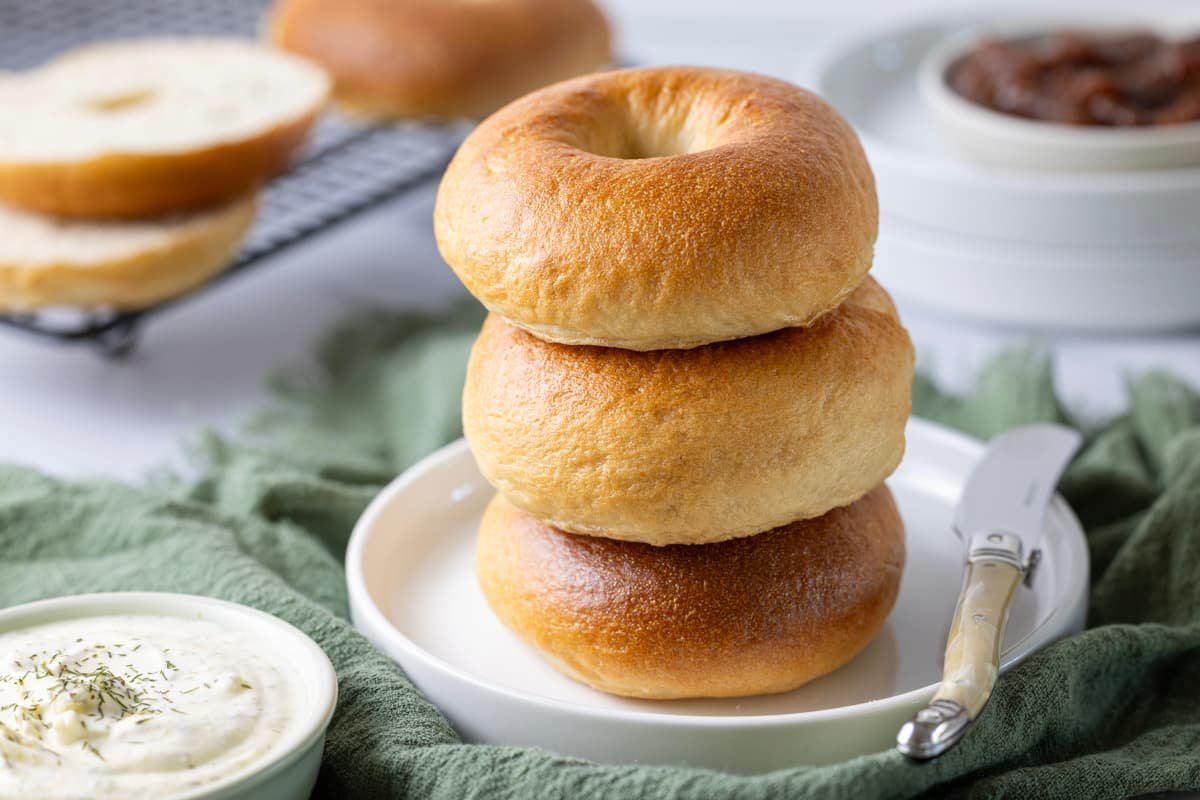
Homemade Chewy Sourdough Bagels
If you’ve always wanted to make bakery-style bagels at home, this Easy Sourdough Bagels recipe is the perfect place to start. Using an active sourdough starter instead of commercial yeast gives these bagels a deep, complex flavor while creating the signature chewy texture that makes homemade bagels so irresistible.
Unlike traditional bread, bagels are briefly boiled before baking. This important step gelatinizes the surface starches, producing their classic shiny crust and dense, chewy crumb. Whether you enjoy them toasted with cream cheese, layered into breakfast sandwiches, or simply spread with butter, these sourdough bagels are a delicious addition to your baking routine.
This recipe is beginner-friendly and includes options for overnight fermentation, making it easy to fit into your schedule. The dough can also be customized with whole wheat flour, herbs, cheese, cinnamon raisins, or your favorite seasoning blends.
Recipe Information
- Prep Time: 30 minutes
- First Rise: 8–12 hours (or overnight)
- Second Rise: 45–60 minutes
- Cook Time: 30 minutes
- Total Time: About 10–13 hours
- Yield: 8 large bagels
- Cuisine: American
- Course: Breakfast, Brunch, Bread
Ingredients
For the Dough
- 500g (4 cups) bread flour
- 150g (⅔ cup) active sourdough starter
- 250ml (1 cup + 1 tablespoon) warm water
- 25g (2 tablespoons) honey or maple syrup
- 10g (2 teaspoons) fine sea salt
For Boiling
- 2 quarts (2 liters) water
- 1 tablespoon honey or brown sugar
- 1 teaspoon baking soda (optional, for extra browning)
Optional Toppings
- Everything bagel seasoning
- Sesame seeds
- Poppy seeds
- Flaky sea salt
- Dried minced garlic
- Dried minced onion
- Shredded cheddar cheese
- Asiago cheese
- Cinnamon sugar
Equipment
- Large mixing bowl
- Kitchen scale (recommended)
- Dough scraper
- Baking sheet
- Parchment paper
- Large pot
- Slotted spoon
- Cooling rack
Instructions
Step 1: Mix the Dough
In a large mixing bowl, combine the active sourdough starter, warm water, and honey. Stir until the starter dissolves.
Add the bread flour and salt. Mix until a shaggy dough forms.
Transfer the dough to a lightly floured surface and knead for 10–12 minutes until smooth, firm, and elastic. The dough should feel slightly stiff but not dry.
If using a stand mixer, knead with the dough hook on medium speed for about 8 minutes.
Step 2: Bulk Fermentation
Place the dough in a lightly greased bowl and cover with plastic wrap or a damp towel.
Allow it to ferment at room temperature for 8–12 hours, or overnight, until it has increased noticeably in size and feels airy.
The exact fermentation time depends on the strength of your sourdough starter and the temperature of your kitchen.
Step 3: Divide the Dough
Turn the dough onto a clean work surface.
Divide it into 8 equal portions using a bench scraper or sharp knife.
Roll each piece into a smooth ball.
Cover with a towel and let the dough rest for 15 minutes.
Step 4: Shape the Bagels
There are two common methods:
Hole Method
Press your thumb through the center of each dough ball to create a hole. Gently stretch and rotate until the hole is about 2 inches wide.
Rope Method
Roll each dough ball into a rope about 9 inches long. Wrap the rope into a circle, overlapping the ends by about an inch. Pinch the seam firmly to seal.
Place the shaped bagels on a parchment-lined baking sheet.
Step 5: Second Rise
Cover the bagels loosely.
Allow them to proof for 45–60 minutes until they become slightly puffy.
Meanwhile, preheat the oven to 425°F (220°C).
Step 6: Prepare the Boiling Water
Bring a large pot of water to a gentle boil.
Add the honey and baking soda if using.
Reduce the heat slightly so the water remains at a steady simmer.
Step 7: Boil the Bagels
Boil 2–3 bagels at a time.
Cook for:
- 30 seconds on the first side
- Flip carefully
- 30–45 seconds on the second side
For an extra chewy crust, boil each side for 60 seconds.
Remove using a slotted spoon and return to the prepared baking sheet.
Step 8: Add Toppings
While the bagels are still damp from boiling, sprinkle generously with your desired toppings.
The moisture helps the toppings adhere during baking.
Step 9: Bake
Bake for 22–28 minutes, rotating the baking sheet halfway through baking.
The bagels should become deep golden brown with a glossy crust.
The internal temperature should reach approximately 200°F (93°C).
Step 10: Cool
Transfer the bagels to a wire rack.
Allow them to cool for at least 20 minutes before slicing.
Although tempting, cutting them too early can make the interior gummy.
Baker’s Tips
- Feed your sourdough starter 4–8 hours before mixing the dough for the best rise.
- Bread flour produces the chewiest texture due to its higher protein content.
- Avoid adding too much extra flour while kneading.
- Longer fermentation creates a more pronounced sourdough flavor.
- Boiling is essential—never skip this step if you want authentic bagels.
- Rotate the baking tray halfway through baking for even browning.
Flavor Variations
Everything Bagel
Top with everything bagel seasoning before baking.
Cinnamon Raisin
Mix 1 cup raisins and 2 teaspoons cinnamon into the dough during kneading.
Jalapeño Cheddar
Fold diced jalapeños and shredded cheddar cheese into the dough before fermentation.
Asiago Cheese
Sprinkle grated Asiago cheese over the bagels immediately after boiling.
Whole Wheat
Replace up to half of the bread flour with whole wheat flour for a heartier flavor.
Garlic Herb
Mix dried herbs and roasted garlic into the dough for a savory twist.
Storage
Store cooled bagels in an airtight container at room temperature for up to 3 days.
For longer storage, freeze individually wrapped bagels for up to 3 months.
Reheating
- Toast directly from room temperature or frozen.
- Warm in a 350°F (175°C) oven for 8–10 minutes.
- Slice before freezing for easy toasting.
Serving Suggestions
These sourdough bagels pair perfectly with:
- Cream cheese
- Smoked salmon
- Avocado
- Fried or scrambled eggs
- Bacon and cheddar
- Peanut butter
- Strawberry jam
- Honey butter
- Turkey and Swiss cheese
- Fresh tomato and cucumber
Nutrition Information (Approximate Per Bagel)
- Calories: 280
- Protein: 10g
- Carbohydrates: 55g
- Fat: 2g
- Saturated Fat: 0g
- Fiber: 2g
- Sugar: 3g
- Sodium: 390mg
Frequently Asked Questions
Can I refrigerate the dough overnight?
Yes. After shaping the bagels, refrigerate them overnight for a slower fermentation and enhanced flavor. Boil and bake them directly from the refrigerator the next morning.
Why do bagels need to be boiled?
Boiling creates the signature chewy crust by gelatinizing the starches on the surface before baking.
Can I use all-purpose flour?
Yes, but bread flour is recommended because its higher protein content produces a chewier texture.
How do I know my sourdough starter is ready?
A mature starter should double in size within 4–8 hours after feeding and pass the float test, indicating it’s active enough for baking.
Can I freeze baked bagels?
Absolutely. Cool completely, wrap each bagel tightly, and freeze for up to three months. Toast or warm directly from frozen for the best texture.
Final Thoughts
Easy Sourdough Bagels are a rewarding homemade bread with a crisp, golden crust, chewy interior, and rich sourdough flavor. Whether topped with classic everything seasoning, sweet cinnamon sugar, or savory cheese, these bagels are versatile, freezer-friendly, and perfect for breakfast, brunch, or sandwiches. With a little patience and an active sourdough starter, you’ll enjoy bakery-quality bagels fresh from your own oven.
