
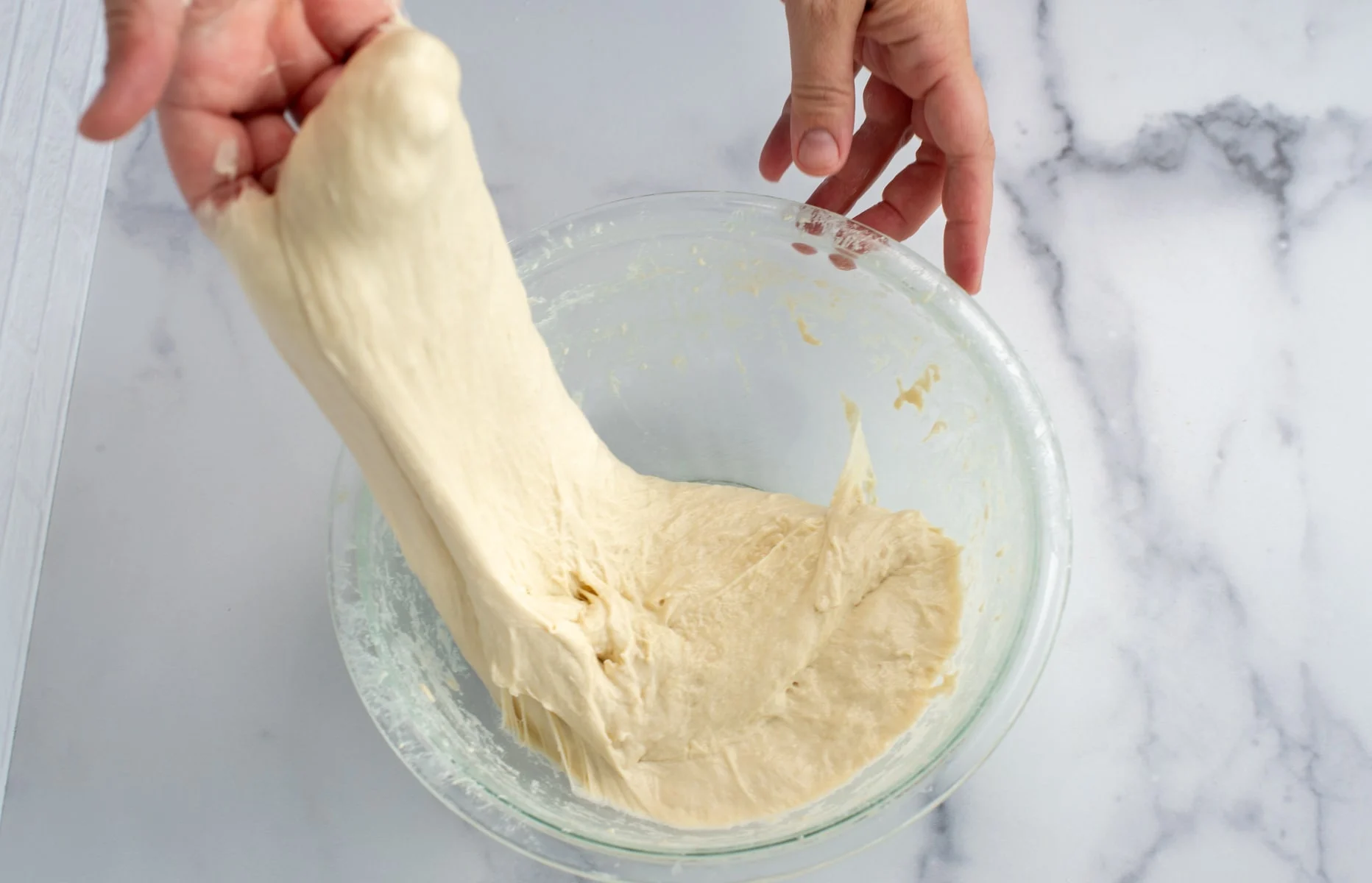
What Is Sourdough Hydration?
Hydration refers to the percentage of water compared to the amount of flour in a sourdough recipe. It tells you how wet or dry the dough is and plays a major role in shaping, fermentation, and the final texture of the bread.
Hydration is calculated using the baker’s percentage:
Hydration % = (Weight of Water ÷ Weight of Flour) × 100
Example:
- 500g flour
- 350g water
350 ÷ 500 × 100 = 70% hydration
This means the dough contains water equal to 70% of the flour weight.
Why Hydration Matters in Sourdough
Hydration affects almost every part of the bread-making process:
Dough Texture
- Lower hydration creates a firmer, easier-to-handle dough.
- Higher hydration creates a softer, stickier dough.
Bread Crumb
- Lower hydration → tighter, more even crumb
- Higher hydration → larger holes and a more open crumb
Crust
Higher hydration often produces a thinner, crispier crust with a lighter interior.
Fermentation
Wetter doughs usually ferment faster because yeast and bacteria move more easily through the dough.
Common Sourdough Hydration Levels
Low Hydration (50–65%)
Texture: Firm and easy to shape
Best for:
- Bagels
- Sandwich bread
- Dense rustic loaves
Characteristics:
- Tight crumb
- Strong dough structure
- Easier handling
Medium Hydration (65–75%)
Texture: Soft but manageable
Best for:
- Classic sourdough boules
- Everyday artisan bread
Characteristics:
- Balanced flavor
- Good oven spring
- Moderate open crumb
A typical beginner sourdough recipe is around 70% hydration.
High Hydration (75–90%+)
Texture: Very soft and sticky
Best for:
- Ciabatta-style bread
- Open-crumb artisan loaves
Characteristics:
- Large air pockets
- Light, airy texture
- Requires stronger shaping skills
How to Calculate Sourdough Hydration
Basic Formula
Water weight ÷ Flour weight × 100 = Hydration percentage
Example:
Recipe:
- 500g flour
- 375g water
375 ÷ 500 × 100 = 75% hydration
Does Starter Count Toward Hydration?
Yes. When calculating sourdough hydration, the water and flour inside your starter must be included.
Example:
Recipe:
- 450g bread flour
- 100g flour from starter
- 350g water
- 100g water from starter
Total flour:
450 + 100 = 550g
Total water:
350 + 100 = 450g
Hydration:
450 ÷ 550 × 100 = 82% hydration
How Hydration Changes Your Dough
60% Hydration
Feel:
- Firm
- Easy to knead
- Less sticky
Result:
- Dense but strong crumb
- Easy shaping
70% Hydration
Feel:
- Slightly sticky
- Flexible
- Beginner-friendly
Result:
- Good balance of chewiness and openness
- Classic sourdough texture
80% Hydration
Feel:
- Very soft
- Sticky
- Requires gentle handling
Result:
- Airy crumb
- Larger holes
- Lighter loaf
How to Adjust Hydration
To Increase Hydration
Add more water gradually.
Example:
70% hydration recipe:
- 500g flour
- 350g water
For 75% hydration:
- 500g flour
- 375g water
Increase by small amounts to avoid overly sticky dough.
To Decrease Hydration
Reduce water while keeping flour the same.
Example:
75% hydration:
- 500g flour
- 375g water
Lower to 65%:
- 500g flour
- 325g water
Factors That Affect Hydration
Flour Type
Different flours absorb different amounts of water.
- Bread flour → absorbs moderate amounts
- Whole wheat → absorbs more water
- Rye flour → absorbs a lot but creates stickier dough
Gluten Strength
Higher hydration requires stronger gluten development.
Strong bread flour handles wetter dough better than weak flour.
Temperature
Warm temperatures make dough feel softer and ferment faster.
Cool temperatures slow fermentation and make dough easier to handle.
Tips for Working With High Hydration Dough
- Use wet hands instead of adding extra flour.
- Allow proper resting time before shaping.
- Use stretch-and-fold techniques.
- Build gluten gradually.
- Avoid rushing fermentation.
- Practice with medium hydration before attempting very wet doughs.
Beginner-Friendly Sourdough Hydration Recipe
70% Hydration Sourdough Loaf
Ingredients
- 500g bread flour
- 350g water
- 100g active sourdough starter
- 10g salt
Result:
- Soft but manageable dough
- Crisp crust
- Chewy crumb
- Good oven spring
This hydration level is ideal for learning sourdough techniques.
Frequently Asked Questions
What is the best hydration for beginner sourdough?
Around 65–70% hydration is usually easiest to handle while still producing a beautiful artisan loaf.
Does higher hydration always mean better bread?
No. Higher hydration can create a lighter crumb, but it also requires stronger technique. The best hydration depends on the style of bread you want.
Why is my sourdough dough too sticky?
Sticky dough can come from high hydration, weak gluten development, warm temperatures, or flour with low absorption.
Can I change hydration in any recipe?
Yes, but adjust gradually. Small changes can significantly affect dough handling and fermentation.
Final Thoughts
Understanding sourdough hydration gives you control over your bread instead of simply following a recipe. Once you understand how water changes dough behavior, you can adjust recipes confidently, experiment with different flours, and create sourdough loaves with the exact texture and flavor you love.
