
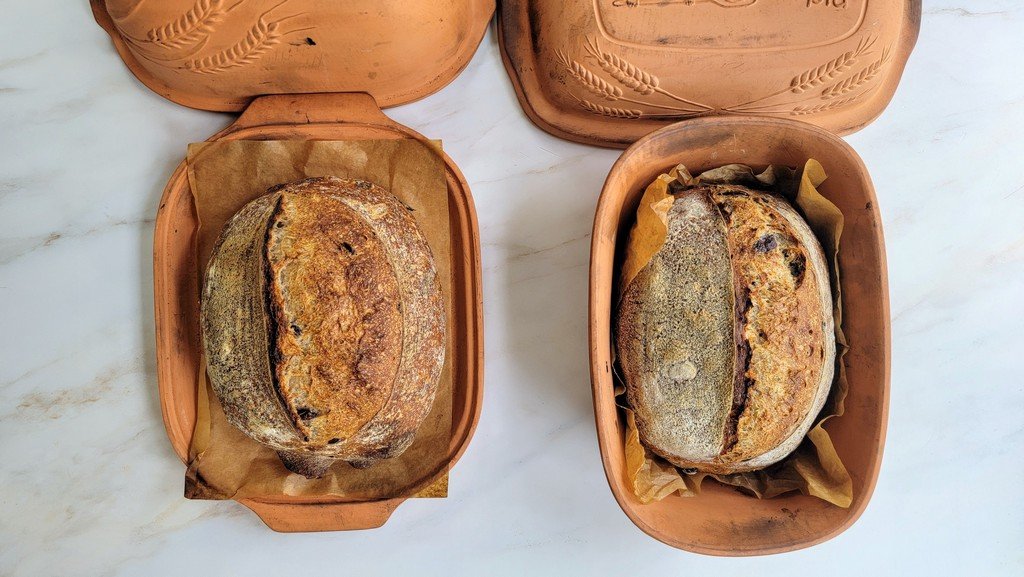
Ingredients
For the Dough
- 100g active sourdough starter (100% hydration)
- 350g bread flour
- 150g sprouted rye flour
- 375g water, room temperature
- 10g sea salt
Mix-Ins
- 120g pitted green or Kalamata olives, roughly chopped
- 2 tablespoons fresh tarragon, finely chopped
- 1 tablespoon extra virgin olive oil
For Dusting
- Rice flour or rye flour
Equipment
- Large mixing bowl
- Banneton basket or bowl lined with a towel
- Dutch oven
- Bench scraper
- Sharp bread lame or knife
Instructions
Step 1: Feed Your Starter
Feed your sourdough starter 4–6 hours before mixing.
Your starter is ready when:
- It has doubled in size.
- It is bubbly and active.
- It passes the float test.
Step 2: Mix the Dough
In a large bowl combine:
- 100g active starter
- 375g water
Stir until mostly dissolved.
Add:
- 350g bread flour
- 150g sprouted rye flour
Mix until no dry flour remains.
Cover and let rest for 45 minutes.
This autolyse helps improve gluten development and dough strength.
Step 3: Add Salt
Sprinkle the salt over the dough.
Add 1 tablespoon water if needed and work the salt into the dough by squeezing and folding.
Cover and rest for 30 minutes.
Step 4: Incorporate the Olives and Tarragon
Combine:
- Chopped olives
- Fresh tarragon
- Olive oil
Gently stretch the dough and fold in the olive mixture until evenly distributed.
The dough may feel slightly wetter because of the olives.
Step 5: Bulk Fermentation
Ferment at room temperature for 4–6 hours.
Perform 4 sets of stretch-and-folds during the first 2 hours:
- First fold: after 30 minutes
- Second fold: after 60 minutes
- Third fold: after 90 minutes
- Fourth fold: after 120 minutes
After the final fold, allow the dough to rest undisturbed until it becomes airy and increases in volume by about 50%.
Step 6: Pre-Shape
Turn the dough onto a lightly floured surface.
Shape into a loose round.
Let rest uncovered for 20–30 minutes.
Step 7: Final Shape
Shape into a tight boule or batard.
Place seam-side up into a floured banneton basket.
Cover well.
Step 8: Cold Proof
Refrigerate for 12–18 hours.
The long cold fermentation enhances flavor and makes scoring easier.
Step 9: Preheat Oven
Place a Dutch oven inside your oven.
Preheat to:
475°F (245°C)
for at least 45 minutes.
Step 10: Score and Bake
Transfer the dough onto parchment paper.
Score the top with a sharp blade.
Carefully place into the hot Dutch oven.
Bake covered for:
- 25 minutes at 475°F (245°C)
Remove the lid.
Reduce temperature to:
450°F (230°C)
Bake an additional 20–25 minutes until deeply golden brown.
The internal temperature should reach approximately:
208–210°F (98–99°C)
Step 11: Cool Completely
Transfer to a cooling rack.
Allow the loaf to cool for at least 2 hours before slicing.
This helps the crumb finish setting and prevents gumminess.
Storage
Room Temperature
Store in a bread bag or airtight container for up to 4 days.
Freezer
Slice and freeze for up to 3 months.
Toast directly from frozen when ready to serve.
Serving Ideas
- Pair with goat cheese and roasted vegetables.
- Serve alongside tomato soup or creamy mushroom soup.
- Use for gourmet sandwiches.
- Toast and drizzle with olive oil.
- Enjoy with charcuterie and artisan cheeses.
Baker’s Tips
- Pat olives dry before mixing them into the dough to avoid excess moisture.
- Fresh tarragon provides the best flavor, but 2 teaspoons dried tarragon can be substituted.
- Sprouted rye flour ferments faster than regular rye, so watch the dough carefully during bulk fermentation.
- For extra flavor, add a tablespoon of chopped fresh rosemary along with the tarragon.
- Allow the loaf to cool completely before slicing to achieve the best texture.
