
Ingredients
For the Dough
- ½ cup (120g) active sourdough starter
- ¾ cup (180ml) warm whole milk
- 1 large egg
- 3 tablespoons (40g) unsalted butter, softened
- 2 tablespoons (25g) granulated sugar
- 1 teaspoon salt
- 3 cups (360g) bread flour
For the Egg Wash
- 1 egg
- 1 tablespoon milk
Optional Toppings
- Sesame seeds
- Poppy seeds
- Everything bagel seasoning
- Oats
Equipment Needed
- Large mixing bowl
- Stand mixer (optional)
- Baking sheet
- Parchment paper
- Kitchen scale
- Pastry brush
- Plastic wrap or reusable cover
Why You’ll Love These Sourdough Hamburger Buns
- Soft and fluffy interior
- Rich buttery flavor
- Naturally fermented with sourdough starter
- Strong enough for juicy burgers
- Freezer-friendly
- Better taste than store-bought buns
- No commercial yeast required
- Perfect for burgers, sandwiches, and sliders
Step-by-Step Instructions
Step 1: Feed Your Starter
About 4–6 hours before mixing the dough, feed your sourdough starter.
The starter should be active, bubbly, and doubled in size before use.
To test readiness, drop a spoonful into water. If it floats, it’s ready.
Step 2: Mix the Dough
In a large bowl combine:
- Active sourdough starter
- Warm milk
- Egg
- Sugar
Whisk until smooth.
Add:
- Bread flour
- Salt
Mix until a shaggy dough forms.
Add softened butter and continue mixing until incorporated.
The dough may seem sticky at first but will become smoother as kneaded.
Step 3: Knead the Dough
By Hand
Transfer the dough to a lightly floured surface.
Knead for 10–12 minutes until smooth and elastic.
Using a Stand Mixer
Knead with a dough hook on medium speed for 6–8 minutes.
The finished dough should be soft and slightly tacky but not overly sticky.
Step 4: First Fermentation (Bulk Rise)
Place the dough in a lightly greased bowl.
Cover with plastic wrap or a damp towel.
Allow the dough to rise at room temperature for:
8–12 hours
The dough should nearly double in size.
The exact time will depend on room temperature and starter strength.
Step 5: Divide and Shape
Turn the dough onto a lightly floured surface.
Gently deflate the dough.
Divide into 8 equal portions.
Each piece should weigh approximately 95–100 grams.
Shape each piece into a smooth ball by pulling the dough edges underneath and rotating.
Place on a parchment-lined baking sheet.
Leave 2–3 inches of space between each bun.
Step 6: Flatten Slightly
Using the palm of your hand, gently flatten each dough ball.
This helps create the classic hamburger bun shape.
The buns will puff up considerably during the final rise and baking.
Step 7: Second Rise
Cover loosely with lightly oiled plastic wrap.
Allow the buns to rise for:
2–3 hours
They should become noticeably puffy and almost doubled in size.
Step 8: Prepare for Baking
Preheat the oven to:
375°F (190°C)
In a small bowl whisk together:
- 1 egg
- 1 tablespoon milk
Brush each bun gently with egg wash.
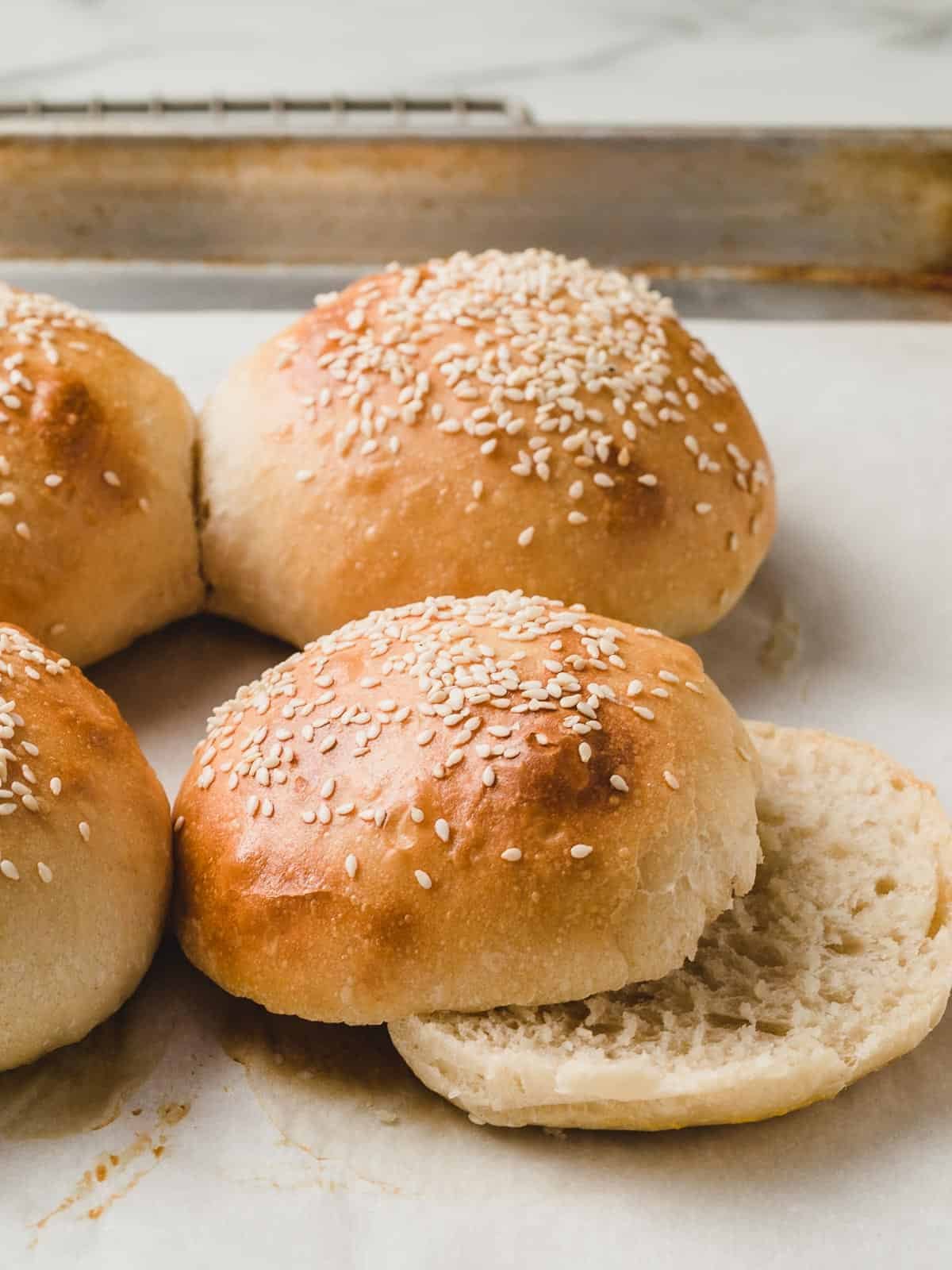
Sprinkle with sesame seeds or your preferred topping.
Step 9: Bake
Bake for:
18–22 minutes
The buns should be deeply golden brown and reach an internal temperature of approximately:
190–195°F (88–90°C)
The tops should be shiny and beautifully browned.
Step 10: Cool Completely
Transfer the buns to a wire rack.
Allow them to cool for at least:
30 minutes
before slicing.
This prevents the crumb from becoming gummy.
Baker’s Tips for Perfect Buns
Use Bread Flour
Bread flour provides better structure and chew than all-purpose flour.
Don’t Over-Flour
The dough should remain soft and slightly tacky.
Adding too much flour can make the buns dense.
Shape Tightly
A tight surface tension creates taller, more uniform buns.
Allow Full Fermentation
Proper fermentation develops flavor and improves texture.
Overnight Refrigerator Method
After bulk fermentation:
- Cover the dough tightly.
- Refrigerate overnight.
- Shape buns the next day.
- Allow 3–4 hours for the final rise.
- Bake as directed.
This method creates even deeper sourdough flavor.
Flavor Variations
Sesame Seed Burger Buns
Top with sesame seeds before baking.
Brioche-Style Sourdough Buns
Add an extra egg yolk and 2 tablespoons more butter.
Whole Wheat Sourdough Buns
Replace 25% of the bread flour with whole wheat flour.
Everything Burger Buns
Top with everything bagel seasoning.
Cheese-Topped Buns
Sprinkle shredded cheddar or Parmesan before baking.
Storage Instructions
Room Temperature
Store in an airtight container for up to 3 days.
Refrigerator
Store for up to 1 week.
Freezer
Freeze for up to 3 months.
Thaw at room temperature before serving.
Serving Ideas
These buns are perfect for:
- Classic beef hamburgers
- Cheeseburgers
- Chicken sandwiches
- BBQ pulled pork
- Veggie burgers
- Sloppy joes
- Breakfast sandwiches
- Deli sandwiches
Nutrition Information (Approximate Per Bun)
- Calories: 245
- Carbohydrates: 37g
- Protein: 7g
- Fat: 7g
- Saturated Fat: 3g
- Fiber: 1g
- Sugar: 3g
- Sodium: 280mg
Final Thoughts
These Sourdough Hamburger Buns combine the rich flavor of natural fermentation with the soft texture of a classic burger bun. They’re sturdy enough to hold the juiciest burgers yet light and fluffy enough to make every bite enjoyable. Once you experience the flavor and texture of homemade sourdough buns fresh from the oven, you’ll never want to go back to store-bought hamburger buns again. Perfect for cookouts, family dinners, and meal prep, this recipe is a delicious way to elevate any burger night.
