
Ingredients
- 2 cups fresh basil leaves, tightly packed
- ½ cup extra virgin olive oil
- ½ cup freshly grated Parmesan cheese
- ⅓ cup pine nuts
- 3 cloves garlic
- 1 tablespoon fresh lemon juice
- 1 teaspoon lemon zest (optional)
- ½ teaspoon kosher salt
- ¼ teaspoon freshly ground black pepper
Optional Add-Ins
- 2 tablespoons Pecorino Romano cheese
- ¼ teaspoon crushed red pepper flakes
- 2 tablespoons toasted walnuts or almonds
- 1 teaspoon fresh parsley
- Extra Parmesan for serving
Equipment
- Food processor or high-speed blender
- Small skillet
- Measuring cups and spoons
- Rubber spatula
- Airtight glass jar or container
Step 1: Toast the Pine Nuts
Heat a small dry skillet over medium heat.
Add the pine nuts and toast for 3–5 minutes, stirring frequently until lightly golden and fragrant.
Remove them from the pan immediately to prevent burning.
Allow them to cool completely.
Step 2: Prepare the Basil
Wash the basil leaves thoroughly under cold water.
Dry them completely using a salad spinner or clean kitchen towels.
Removing excess moisture helps create a thicker pesto and prevents it from becoming watery.
Discard any damaged or wilted leaves.
Step 3: Blend the Base
In a food processor combine:
- Toasted pine nuts
- Garlic cloves
- Salt
- Black pepper
Pulse several times until finely chopped.
Step 4: Add the Basil
Add the fresh basil leaves to the food processor.
Pulse several times until the basil is finely chopped and evenly combined with the garlic and nuts.
Scrape down the sides of the bowl as needed.
Step 5: Add the Cheese
Add:
- Parmesan cheese
- Lemon juice
- Lemon zest (if using)
Pulse a few more times until combined.
Step 6: Slowly Add the Olive Oil
With the food processor running, slowly drizzle in the olive oil through the feed tube.
Continue blending until the pesto becomes smooth, creamy, and well emulsified.
For a chunkier pesto, pulse only until the desired consistency is reached.
Step 7: Taste and Adjust
Taste the pesto and adjust as needed.
You may add:
- More Parmesan for a richer flavor.
- More lemon juice for brightness.
- Additional olive oil for a thinner consistency.
- A pinch of salt or black pepper if desired.
Step 8: Serve
Use the pesto immediately or transfer it to an airtight container.
To keep the vibrant green color, pour a thin layer of olive oil over the surface before sealing.
Refrigerate until ready to use.
Tips for the Best Basil Pesto
- Use fresh, bright green basil leaves for the best flavor.
- Toasting the pine nuts enhances their rich, nutty taste.
- Freshly grated Parmesan melts smoothly into the sauce.
- Add the olive oil slowly to create a silky, emulsified texture.
- Avoid over-processing to preserve the fresh basil flavor.
- Store with a layer of olive oil on top to reduce oxidation and browning.
Flavor Variations
Spinach Basil Pesto
Replace half of the basil with fresh baby spinach for a milder flavor.
Arugula Pesto
Substitute half of the basil with peppery arugula for a bold twist.
Sun-Dried Tomato Pesto
Blend in ½ cup oil-packed sun-dried tomatoes for a rich, tangy variation.
Walnut Pesto
Replace the pine nuts with toasted walnuts for a more affordable alternative.
Vegan Basil Pesto
Replace the Parmesan cheese with nutritional yeast or your favorite dairy-free Parmesan substitute.
Creamy Pesto
Blend in 2 tablespoons of cream cheese or Greek yogurt for a richer, creamier sauce.
Storage
Store the pesto in an airtight container in the refrigerator for up to 5 days.
Cover the surface with a thin layer of olive oil before sealing to help preserve its vibrant color.
Freezing Instructions
Freeze pesto in ice cube trays until solid.
Transfer the frozen cubes to a freezer-safe bag or container.
Freeze for up to 3 months.
Thaw overnight in the refrigerator or add frozen cubes directly to hot pasta, soups, or sauces.
Ways to Use Basil Pesto
This homemade basil pesto is delicious with:
- Pasta
- Pizza
- Grilled chicken
- Salmon
- Shrimp
- Roasted vegetables
- Sandwiches and wraps
- Caprese salad
- Bruschetta
- Garlic bread
- Eggs and omelets
- Grain bowls
- Pasta salad
- Potato salad
- Soup garnish
Nutrition (Approximate Per 2 Tablespoons)
- Calories: 160
- Protein: 3g
- Carbohydrates: 2g
- Fat: 17g
- Saturated Fat: 3g
- Fiber: 1g
- Sugar: 0g
- Sodium: 180mg
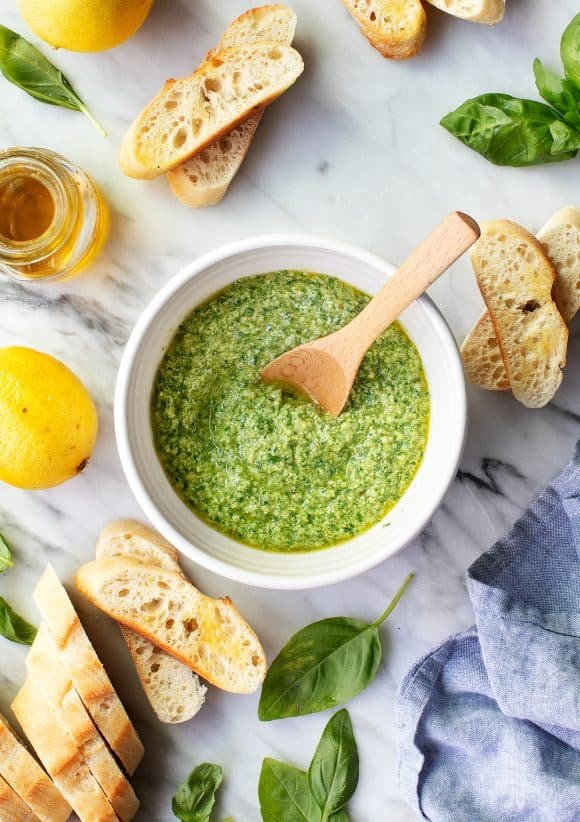
This Homemade Basil Pesto is fresh, flavorful, and incredibly versatile. With its vibrant basil, nutty pine nuts, rich Parmesan cheese, and silky olive oil, it’s the perfect sauce to keep on hand for adding authentic Italian flavor to countless dishes, from pasta and pizza to grilled meats and fresh vegetables.
