
Ingredients
- 100g active sourdough starter (fed and bubbly)
- 350g warm filtered water (75–80°F / 24–27°C)
- 500g bread flour
- 10g fine sea salt
For Dusting
- Rice flour or bread flour
Equipment
- Large mixing bowl
- Digital kitchen scale
- Dough scraper
- Banneton basket or medium bowl lined with a floured kitchen towel
- Dutch oven with lid
- Parchment paper
- Bread lame or sharp knife
- Cooling rack
Instructions
Step 1 – Feed the Starter
Feed your sourdough starter 4–8 hours before baking. It should be bubbly, active, and have doubled in size before you begin mixing the dough.
Step 2 – Mix the Dough
- In a large bowl, combine the warm filtered water and active sourdough starter. Stir until the starter is mostly dissolved.
- Add the bread flour and mix until no dry flour remains.
- Cover the bowl and let the dough rest for 30 minutes. This rest, known as the autolyse, allows the flour to fully absorb the water and begins gluten development.
Step 3 – Add the Salt
Sprinkle the sea salt over the dough.
Using damp hands, gently squeeze and fold the dough until the salt is evenly incorporated.
Cover and let rest for another 30 minutes.
Step 4 – Stretch and Fold
Over the next 2 hours, perform 4 sets of stretch-and-folds, spacing them 30 minutes apart.
For each set:
- Lift one edge of the dough.
- Stretch it upward without tearing.
- Fold it over the center.
- Rotate the bowl and repeat on all four sides.
The dough will gradually become smoother, stronger, and more elastic.
Step 5 – Bulk Fermentation
Cover the bowl and let the dough rise until it has increased by about 50–75% in volume.
Approximate fermentation times:
- Warm kitchen (75–78°F / 24–26°C): 4–5 hours
- Cooler kitchen (68–72°F / 20–22°C): 5–6 hours
The dough should appear puffy with bubbles visible along the sides.
Step 6 – Shape the Dough
Lightly flour your work surface.
Turn the dough out gently, preserving as much air as possible.
Shape it into a loose round and let it rest for 20 minutes.
Perform a final shaping by creating surface tension, then place the dough seam-side up into a floured banneton or towel-lined bowl.
Step 7 – Final Proof
Choose one of the following options:
Room Temperature Proof
Allow the dough to proof for 1–2 hours until slightly puffy.
Cold Proof (Recommended)
Cover and refrigerate for 8–12 hours to develop deeper flavor and make scoring easier.
Step 8 – Preheat the Oven
Place a Dutch oven with its lid inside the oven.
Preheat to 475°F (245°C) for 45 minutes.
A hot Dutch oven traps steam, helping the loaf achieve a crisp crust and excellent oven spring.
Step 9 – Score the Dough
Turn the dough onto parchment paper.
Dust away any excess flour.
Using a bread lame or sharp knife, make one deep slash about ½ inch (1 cm) deep across the top. Add decorative scoring if desired.
Step 10 – Bake
Carefully transfer the dough into the hot Dutch oven using the parchment paper.
Bake:
- 30 minutes covered
- Remove the lid and bake for another 15–20 minutes
The bread is done when it is deep golden brown and reaches an internal temperature of 205–210°F (96–99°C).
Step 11 – Cool
Transfer the loaf to a cooling rack.
Allow it to cool for at least 1 hour before slicing to ensure the crumb finishes setting.
Tips for Success
- Use a mature starter that doubles consistently after feeding.
- Measure ingredients by weight for the best results.
- Avoid adding extra flour unless absolutely necessary.
- Wet your hands before handling sticky dough.
- Cold-proofing overnight improves flavor, texture, and crust color.
- Always allow the loaf to cool completely before cutting.
Flavor Variations
Whole Wheat Sourdough
Replace 100g of the bread flour with whole wheat flour for a richer, nuttier flavor.
Herb Sourdough
Add 1 tablespoon chopped fresh rosemary or thyme during mixing.
Garlic Parmesan
Mix in 2 minced garlic cloves and 75g grated Parmesan cheese during the final stretch-and-fold.
Olive Bread
Fold in 100g chopped Kalamata olives and 1 teaspoon dried oregano.
Seeded Loaf
Add 75g mixed seeds such as sunflower, sesame, flaxseed, or pumpkin seeds.
Storage
- Store in a bread bag or wrapped in a clean kitchen towel at room temperature for up to 3 days.
- Freeze sliced bread in a freezer-safe bag for up to 3 months.
- Toast or warm slices before serving for the best texture.
Serving Suggestions
This basic sourdough bread pairs perfectly with:
- Butter and flaky sea salt
- Homemade jams and preserves
- Olive oil and balsamic vinegar
- Soup and stew
- Avocado toast
- Grilled cheese sandwiches
- Bruschetta
- Cheese boards
- French toast
- Garlic bread
Nutrition (Approximate per slice, based on 12 slices)
- Calories: 170
- Carbohydrates: 34g
- Protein: 6g
- Fat: 1g
- Saturated Fat: 0.2g
- Fiber: 2g
- Sugar: 0g
- Sodium: 200mg
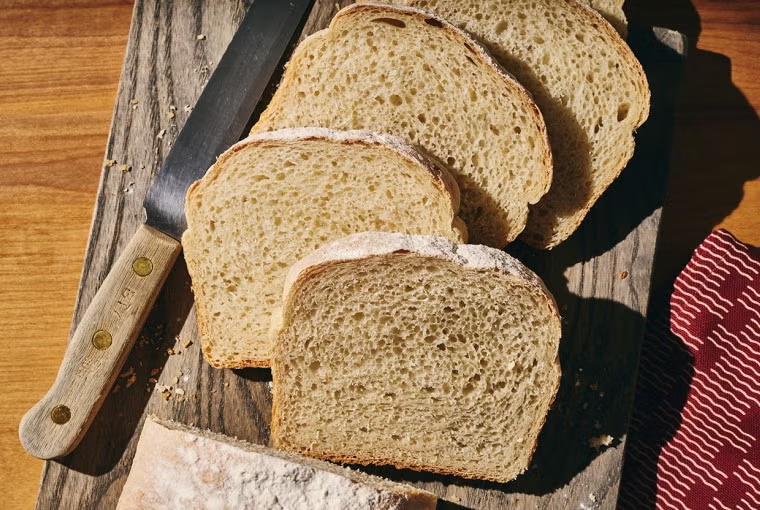
Basic Sourdough Bread is a timeless recipe that showcases the beauty of natural fermentation with minimal ingredients and simple techniques. Its crisp crust, tender crumb, and balanced tangy flavor make it an ideal everyday loaf for breakfast, sandwiches, soups, or enjoying fresh with butter. Once you’ve mastered this recipe, you’ll have a solid foundation for creating countless sourdough variations at home.
