
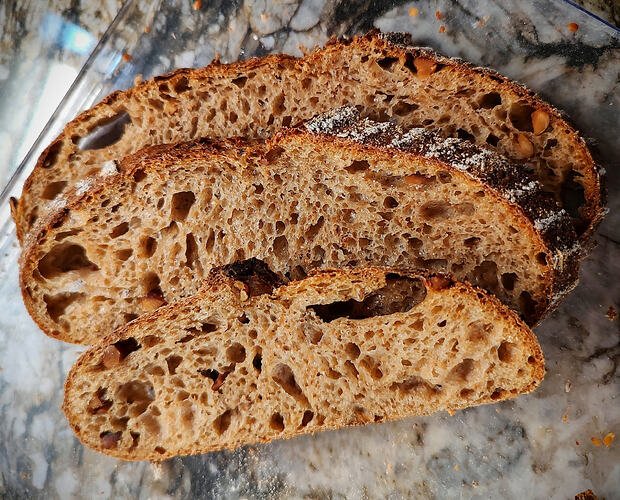
Ingredients
For the Dough
- 4 cups (500g) bread flour
- 1½ cups (360ml) warm water (105–110°F / 40–43°C)
- 2¼ teaspoons (7g) active dry yeast
- 1 tablespoon honey or sugar
- 2 teaspoons fine sea salt
- 2 tablespoons olive oil or melted butter
Optional for a Better Crust
- 1 tablespoon milk for brushing
- Water for creating steam in the oven
Equipment
- Large mixing bowl
- Measuring cups and spoons
- Dough scraper (optional)
- Loaf pan or baking sheet
- Kitchen towel or plastic wrap
- Wire cooling rack
Instructions
Step 1: Activate the Yeast
Pour the warm water into a large mixing bowl. Add the honey and stir until dissolved. Sprinkle the yeast over the water and allow it to sit for 5–10 minutes.
The mixture should become foamy and bubbly. This indicates the yeast is active and ready to use. If no foam appears, discard and start with fresh yeast.
Step 2: Mix the Dough
Add the olive oil and salt to the yeast mixture. Gradually add the flour, one cup at a time, stirring with a wooden spoon or dough whisk.
Continue mixing until a shaggy dough forms and most of the flour is incorporated.
The dough should be slightly sticky but manageable. Avoid adding too much extra flour, as this can make the bread dense.
Step 3: Knead the Dough
Transfer the dough to a lightly floured surface.
Knead for 10–12 minutes by hand:
- Push the dough away with the heel of your hand.
- Fold it back over itself.
- Rotate a quarter turn.
- Repeat.
The dough is ready when it becomes smooth, elastic, and springs back when gently pressed.
If using a stand mixer, knead with the dough hook attachment on medium speed for 6–8 minutes.
Step 4: First Rise
Lightly grease a large bowl with oil.
Place the dough inside and turn it once so all sides are lightly coated. Cover with a clean kitchen towel or plastic wrap.
Allow the dough to rise in a warm place for 1½–2 hours, or until doubled in size.
A properly risen dough will look puffy and airy.
Step 5: Shape the Loaf
Gently punch down the dough to release excess gas.
Turn it onto a lightly floured surface and shape it into a rectangle.
For a loaf pan:
- Roll the dough tightly into a log.
- Pinch the seam closed.
- Place seam-side down into a greased 9×5-inch loaf pan.
For a rustic artisan loaf:
- Shape into a round boule.
- Place on a parchment-lined baking sheet.
Step 6: Second Rise
Cover the shaped dough loosely with a towel.
Let it rise again for 45–60 minutes until noticeably puffy and nearly doubled.
During the final 20 minutes of rising, preheat the oven to 425°F (220°C).
Step 7: Score the Bread
Using a sharp knife or bread lame, make 2–3 shallow slashes across the top of the loaf.
Scoring allows the bread to expand properly during baking and creates an attractive artisan appearance.
Brush the top lightly with milk if desired for a richer golden color.
Step 8: Create Steam
For a crisp bakery-style crust, place a metal baking pan on the bottom oven rack while preheating.
Just before baking, carefully pour 1 cup of hot water into the pan to create steam.
This helps produce a beautiful crust and better oven spring.
Step 9: Bake
Place the loaf in the center of the oven.
Bake for 35–40 minutes, or until:
- The crust is deep golden brown.
- The loaf sounds hollow when tapped on the bottom.
- The internal temperature reaches 190–200°F (88–93°C).
If the top browns too quickly, loosely tent with aluminum foil during the last 10 minutes.
Step 10: Cool Completely
Remove the bread from the pan and transfer it to a wire rack.
Allow it to cool for at least 1 hour before slicing.
Cutting too soon can make the interior gummy because the crumb is still setting.
Baker’s Tips
- Use bread flour for the chewiest texture and best rise.
- Measure flour accurately using a kitchen scale for consistent results.
- Warm, not hot, water is essential to avoid killing the yeast.
- For extra flavor, let the dough rise slowly overnight in the refrigerator.
- Add herbs, seeds, cheese, or dried fruit for delicious variations.
Storage
Room Temperature
Store in an airtight container or bread bag for up to 4 days.
Freezer
Slice the loaf and freeze for up to 3 months. Thaw slices as needed.
Nutrition Information (Per Slice)
- Calories: 180
- Carbohydrates: 33g
- Protein: 6g
- Fat: 3g
- Saturated Fat: 0.5g
- Fiber: 1.5g
- Sodium: 290mg
Serving Suggestions
Serve warm with butter, jam, honey, soups, stews, sandwiches, or toasted for breakfast. This classic homemade real bread recipe is a timeless staple that every baker should have in their collection. The simple ingredients and traditional techniques create a loaf that’s flavorful, comforting, and perfect for everyday enjoyment.
