
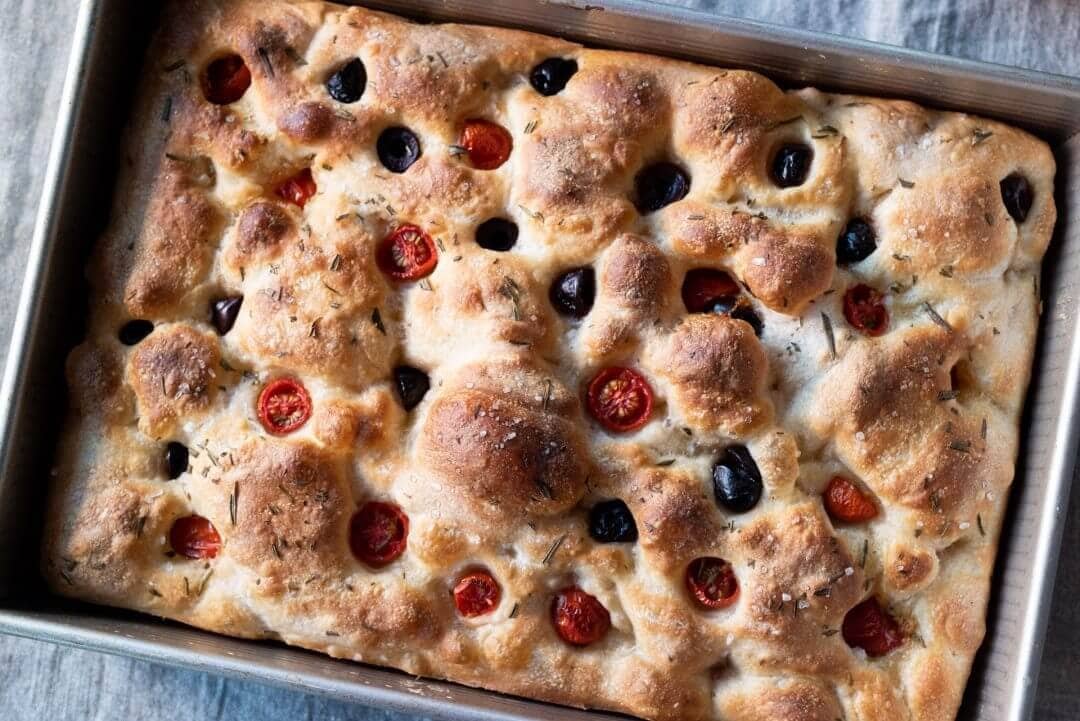
Simple Sourdough Focaccia Recipe
Yield
1 Large Focaccia (9×13-inch pan)
Skill Level
Beginner to Intermediate
Prep Time
30 minutes active work
Fermentation Time
12–18 hours
Bake Time
25–30 minutes
Total Time
13–19 hours
Ingredients
For the Dough
- 100g active sourdough starter
- 400g warm water
- 500g bread flour
- 10g fine sea salt
- 30g extra virgin olive oil
For the Pan
- 3 tablespoons extra virgin olive oil
For the Topping
- 2 tablespoons extra virgin olive oil
- 1 tablespoon fresh rosemary, chopped
- Flaky sea salt
- Freshly cracked black pepper
Optional Toppings
- Cherry tomatoes
- Caramelized onions
- Garlic slices
- Parmesan cheese
- Olives
- Fresh basil
Why You’ll Love This Recipe
- No kneading required
- Perfect for beginners
- Crispy golden edges
- Soft, airy interior
- Incredible sourdough flavor
- Easy to customize
- Great for sandwiches and dipping
Equipment Needed
- Large mixing bowl
- 9×13-inch baking pan
- Kitchen scale
- Dough scraper
- Plastic wrap or towel
Step 1: Prepare Your Starter
Feed your sourdough starter 4–6 hours before mixing.
Your starter should:
- Double in size
- Be bubbly and active
- Smell pleasantly tangy
A strong starter ensures a beautifully risen focaccia.
Step 2: Mix the Dough
In a large mixing bowl combine:
- 100g active starter
- 400g warm water
Whisk until the starter dissolves.
Add:
- 500g bread flour
Mix until no dry flour remains.
The dough will look shaggy and sticky.
Cover the bowl and let rest for 30 minutes.
This resting period allows the flour to fully hydrate.
Step 3: Add Salt and Olive Oil
Add:
- 10g sea salt
- 30g olive oil
Mix thoroughly using your hands.
Pinch and fold the dough until everything is incorporated.
The dough will become smoother and more elastic.
Step 4: Stretch and Fold
Over the next 2 hours perform four sets of stretch-and-folds every 30 minutes.
How to Stretch and Fold
- Wet your hands.
- Grab one edge of the dough.
- Stretch upward.
- Fold over the center.
- Rotate the bowl.
- Repeat on all four sides.
After each fold, cover the bowl and let it rest.
Each round strengthens the gluten structure and traps air inside the dough.
Step 5: Bulk Fermentation
Cover the bowl.
Allow the dough to ferment at room temperature for 4–6 hours.
The dough should:
- Increase significantly in volume
- Develop visible air bubbles
- Feel soft and airy
The exact timing depends on your room temperature.
Step 6: Prepare the Pan
Generously coat a 9×13-inch baking pan with:
- 3 tablespoons olive oil
Don’t be shy with the oil.
The olive oil is what creates the signature crispy bottom crust.
Step 7: Transfer the Dough
Gently transfer the dough into the prepared pan.
Turn it once so both sides are lightly coated with oil.
Cover and let rest for 30 minutes.
After resting, gently stretch the dough toward the corners of the pan.
If it resists, let it rest another 15 minutes and try again.
Step 8: Overnight Cold Fermentation (Optional but Recommended)
For the best flavor:
Cover the pan tightly and refrigerate for 8–12 hours.
This slow fermentation develops:
- Better flavor
- Improved texture
- More air bubbles
- Enhanced crust
If you’re short on time, you can skip this step and continue with the final rise.
Step 9: Final Rise
Remove the dough from the refrigerator.
Allow it to sit at room temperature for 2–3 hours.
The dough should become:
- Puffy
- Jiggly
- Full of visible bubbles
This is the sign of well-fermented focaccia.
Step 10: Create the Signature Dimples
Drizzle:
- 2 tablespoons olive oil
over the surface.
Coat your fingertips with oil.
Press your fingers deeply into the dough.
Create dimples across the entire surface.
Don’t worry about deflating the dough.
The dimples help hold olive oil and toppings.
Step 11: Add Toppings
Sprinkle with:
- Fresh rosemary
- Flaky sea salt
- Black pepper
If desired, add:
- Cherry tomatoes
- Garlic slices
- Parmesan cheese
- Olives
Press toppings gently into the dough.
Step 12: Bake
Preheat your oven to:
425°F (220°C)
Bake for:
25–30 minutes
The focaccia is done when:
- The top is golden brown
- The edges are crisp
- The bottom is deeply golden
The internal temperature should reach approximately 205°F (96°C).
Step 13: Cool and Serve
Allow the focaccia to cool in the pan for 10 minutes.
Transfer to a wire rack.
Serve warm or at room temperature.
Expert Tips for Perfect Focaccia
Use Plenty of Olive Oil
Olive oil is essential for flavor and texture.
It creates:
- Crispy edges
- Golden crust
- Soft crumb
Don’t Skip the Dimples
Dimpling gives focaccia its signature appearance and texture.
Be Patient with Fermentation
Long fermentation equals better flavor.
Handle the Dough Gently
Preserve as many air bubbles as possible.
Serving Ideas
Simple Sourdough Focaccia is delicious with:
- Olive oil and balsamic vinegar
- Soups and stews
- Pasta dishes
- Cheese boards
- Grilled meats
- Fresh salads
It also makes excellent:
- Sandwich bread
- Panini bread
- Garlic bread
- Pizza-style flatbread
Storage
Room Temperature
Store in an airtight container for up to 3 days.
Freezer
Freeze slices for up to 3 months.
Reheating
Warm in a 350°F (175°C) oven for 5–10 minutes to restore crispness.
Final Thoughts
Simple Sourdough Focaccia is one of the easiest and most rewarding sourdough recipes you can make. Its airy crumb, crispy olive-oil crust, and rich fermented flavor make it a crowd-pleasing bread suitable for any occasion. Whether enjoyed plain, topped with herbs, or loaded with vegetables and cheese, this rustic Italian classic is a guaranteed favorite that looks beautiful and tastes even better.
