
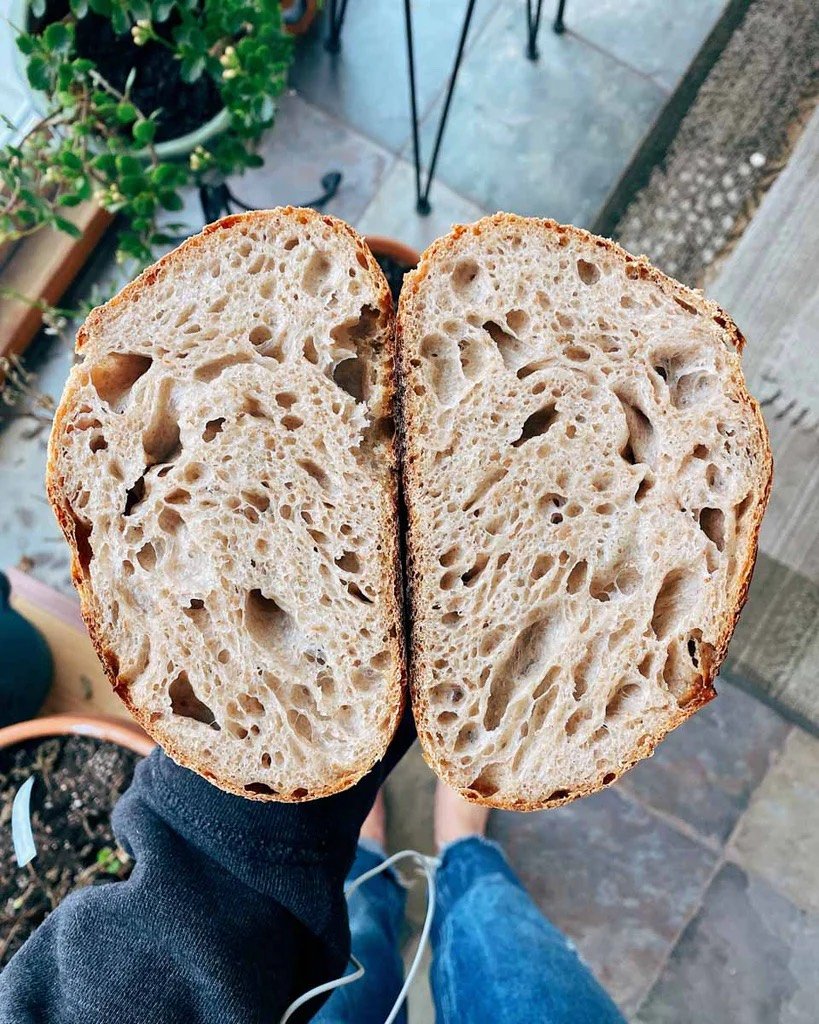
Ingredients
For the Dough
- 100g active sourdough starter (fed and bubbly)
- 500g bread flour
- 350g lukewarm water
- 10g fine sea salt
Optional
- Rice flour for dusting the proofing basket
Equipment
- Large mixing bowl
- Kitchen scale
- Dough scraper
- Banneton basket or medium bowl lined with a clean towel
- Dutch oven with lid
- Bread lame or sharp knife
- Cooling rack
Instructions
Step 1: Feed Your Starter
Feed your sourdough starter 4–6 hours before mixing the dough. It should be bubbly, active, and have doubled in size for the best rise.
Step 2: Mix the Dough
In a large mixing bowl, combine the lukewarm water and active sourdough starter. Stir until mostly dissolved.
Add the bread flour and mix until no dry flour remains. Cover the bowl and let the dough rest for 30 minutes. This resting period, called autolyse, helps strengthen the gluten and improves dough texture.
Step 3: Add the Salt
Sprinkle the salt evenly over the dough.
Wet your hands and gently squeeze and fold the dough until the salt is fully incorporated.
Cover and let the dough rest for another 30 minutes.
Step 4: Stretch and Fold
Perform 4 sets of stretch-and-folds, spaced 30 minutes apart.
To do this:
- Gently lift one side of the dough.
- Stretch it upward.
- Fold it over the center.
- Rotate the bowl and repeat on all four sides.
The dough will become smoother and stronger after each round.
Step 5: Bulk Fermentation
Cover the bowl and allow the dough to ferment at room temperature for 4–6 hours, depending on the temperature of your kitchen.
The dough is ready when it has increased in size by about 50–75%, feels airy, and shows bubbles around the edges.
Step 6: Pre-Shape
Transfer the dough onto a lightly floured work surface.
Shape it into a loose round using a bench scraper or your hands.
Let it rest uncovered for 20 minutes.
Step 7: Final Shape
Shape the dough into a tight round by gently pulling it toward yourself to create surface tension.
Place it seam-side up into a floured banneton basket or towel-lined bowl.
Step 8: Cold Proof (Optional but Recommended)
Cover the basket and refrigerate for 8–12 hours.
This overnight proof improves flavor, makes scoring easier, and creates a better crust.
If you’re short on time, you can proof at room temperature for 1–2 hours instead.
Step 9: Preheat the Oven
Place a Dutch oven with its lid inside the oven.
Preheat to 475°F (245°C) for at least 45 minutes.
A fully heated Dutch oven creates steam, which helps the bread rise beautifully.
Step 10: Score the Dough
Turn the dough onto a piece of parchment paper.
Lightly dust with flour if desired.
Using a bread lame or sharp knife, make one long slash about ½ inch deep across the top of the loaf.
Step 11: Bake
Carefully lower the dough into the hot Dutch oven.
Cover with the lid and bake for 20 minutes.
Remove the lid and continue baking for 25–30 minutes, until the crust is deep golden brown and crisp.
The bread is fully baked when the internal temperature reaches 205–210°F (96–99°C).
Step 12: Cool Before Slicing
Transfer the loaf to a wire cooling rack.
Allow it to cool for at least 1 hour before slicing to prevent a gummy texture.
Pro Tips
- Use an active, bubbly starter for the best oven spring.
- Weigh your ingredients using a kitchen scale for consistent results.
- Avoid adding extra flour unless the dough is extremely sticky.
- Fermentation times vary depending on room temperature—watch the dough rather than the clock.
- Let the bread cool completely before cutting to preserve its texture.
Storage
- Store at room temperature in a bread bag or bread box for up to 3 days.
- Refrigerate for up to 1 week.
- Freeze sliced bread for up to 3 months and toast directly from frozen.
Variations
- Whole Wheat Beginner Sourdough – Replace 20–30% of the bread flour with whole wheat flour.
- Seeded Sourdough – Add sunflower, sesame, flax, or pumpkin seeds during the stretch-and-fold stage.
- Rosemary Garlic Sourdough – Fold in fresh rosemary and roasted garlic for extra flavor.
- Cheddar Jalapeño Sourdough – Add shredded cheddar cheese and diced jalapeños before shaping.
- Cinnamon Raisin Sourdough – Mix in raisins, cinnamon, and a touch of brown sugar for a sweet variation.
Nutrition (Per Slice, Approximate)
- Calories: 170
- Carbohydrates: 34g
- Protein: 6g
- Fat: 1g
- Fiber: 2g
- Sugar: 1g
- Sodium: 230mg
This Beginner Sourdough Bread is the perfect introduction to artisan bread baking. With its crisp crust, tender crumb, and mild sourdough flavor, it’s an easy, reliable recipe that helps new bakers build confidence while creating delicious homemade bread every time.
