
Ingredients
Day 1
- 100g bread flour
- 60g filtered water, room temperature
- 20g active sourdough starter (or create one from scratch using flour and water)
Daily Feedings (Days 2–7)
- 50g mature stiff starter
- 100g bread flour
- 60g filtered water
Hydration: 60%
Equipment
- Glass jar or food-safe container
- Digital kitchen scale
- Dough scraper
- Silicone spatula or wooden spoon
- Loose-fitting lid
- Rubber band or marker to track growth
Instructions
Day 1 – Mix the Starter
- In a clean bowl, combine:
- 20g active sourdough starter
- 60g filtered water
- Stir until the starter is mostly dissolved.
- Add 100g bread flour.
- Mix until a firm dough forms.
- Knead for 1–2 minutes until smooth.
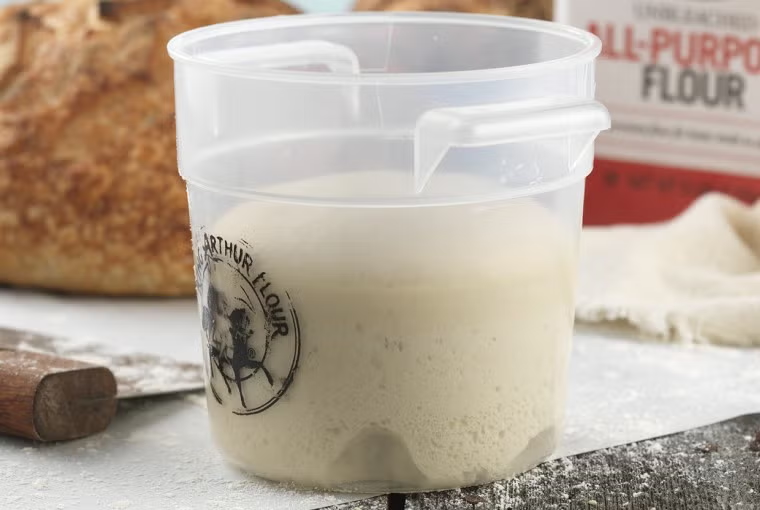
- Shape into a ball and place it in a clean glass jar.
- Mark the starting level with a rubber band.
- Cover loosely and leave at room temperature (72–78°F / 22–26°C) for 24 hours.
The dough should feel soft but firm, similar to bread dough.
Day 2 – First Feeding
- Remove and discard all but 50g of the starter.
- Add:
- 100g bread flour
- 60g filtered water
- Mix into a firm dough.
- Knead briefly until smooth.
- Return to the jar.
- Cover loosely and ferment for another 24 hours.
You may notice a few bubbles and a mild yeasty aroma.
Day 3 – Build Strength
Repeat the feeding:
- Keep 50g starter.
- Add 100g bread flour.
- Add 60g water.
- Knead until smooth.
Allow to ferment for another 24 hours.
The starter should begin showing small air pockets inside when cut open.
Day 4 – Increased Activity
Feed again using the same ratio:
- 50g starter
- 100g bread flour
- 60g water
Shape into a smooth ball and place back into the container.
The starter may begin rising noticeably between feedings.
Days 5–7 – Mature Starter
Continue feeding every 24 hours until the starter:
- Doubles in size within 4–8 hours
- Feels light and airy inside
- Has a pleasant, mildly tangy aroma
- Holds its shape while still expanding well
Once these signs appear consistently, your stiff starter is ready to use in recipes.
Daily Maintenance
If kept at room temperature:
Feed every 24 hours using:
- 50g starter
- 100g bread flour
- 60g filtered water
Knead into a smooth dough each time.
Refrigerator Storage
For occasional baking:
- Feed the starter.
- Let it sit at room temperature for 1–2 hours.
- Refrigerate in a loosely covered container.
Feed once every 5–7 days.
Before baking:
- Remove from the refrigerator.
- Feed once or twice at room temperature.
- Wait until the starter doubles before using.
Signs of a Healthy Stiff Starter
Your starter is ready when it:
- Doubles in volume after feeding
- Has small, evenly distributed air pockets
- Smells mildly sweet, yeasty, and slightly tangy
- Feels elastic when stretched
- Maintains a rounded shape while expanding
Troubleshooting
Starter Isn’t Rising
- Move it to a warmer location (75–78°F / 24–26°C).
- Use filtered water if your tap water contains chlorine.
- Feed consistently every 24 hours.
- Mix in a small amount of whole wheat or rye flour for a few feedings to encourage activity.
Dry Surface
If the surface becomes dry, cover the container more securely while still allowing a small amount of airflow.
Sour Smell
A mild tangy aroma is normal. If the starter develops pink, orange, green, black, or fuzzy mold, discard it immediately and start with a clean container.
Pro Tips
- Bread flour provides the strongest gluten structure.
- Always weigh your ingredients for consistent hydration.
- Kneading the starter briefly helps strengthen the gluten network.
- Mark the container after every feeding to monitor growth.
- Keep the starter in a warm, draft-free environment for the best fermentation.
Best Uses for a Stiff Sourdough Starter
A stiff starter is especially well suited for:
- Artisan sourdough bread
- Panettone
- Brioche
- Croissants
- Cinnamon rolls
- Bagels
- Pizza dough
- Focaccia
- Dinner rolls
- Soft pretzels
- Sandwich bread
- Sweet doughs
- Danish pastries
- Babka
Nutrition (Approximate per 50g active stiff starter)
- Calories: 75
- Carbohydrates: 15g
- Protein: 3g
- Fat: 0.3g
- Fiber: 0.8g
- Sugar: 0g
- Sodium: 1mg
A Stiff Sourdough Starter is an excellent choice for bakers who want a strong, reliable culture with slower fermentation and a milder flavor profile. Its firm consistency promotes excellent dough strength and is ideal for both artisan breads and enriched pastries, making it a versatile addition to any home bakery.
