
Ingredients
For the Batter
- 1 cup (125g) all-purpose flour
- 1 teaspoon baking powder
- ¼ teaspoon salt
- 2 large eggs, room temperature
- ½ cup (100g) granulated sugar
- 2 teaspoons pure vanilla extract
- 1 tablespoon lemon zest
- ½ cup (113g) unsalted butter, melted and cooled
For the Pan
- 1 tablespoon melted butter
- 1 tablespoon flour
Optional Finishing Touches
- Powdered sugar for dusting
- Melted chocolate for dipping
- Lemon glaze
- Chocolate drizzle
What Makes Madeleines Special?
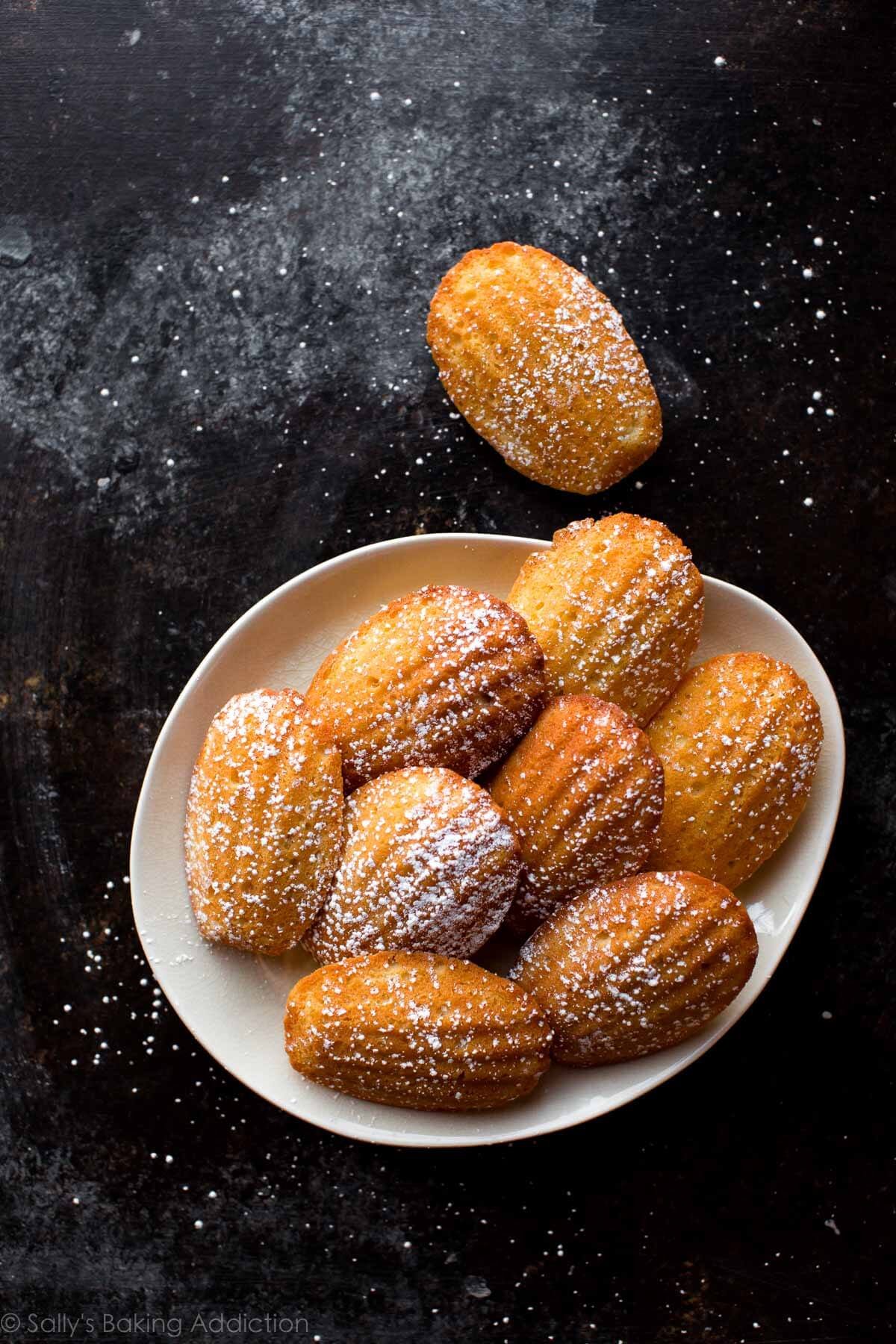
Madeleines are often described as a cross between a sponge cake and a butter cake. Their iconic shell shape and characteristic hump come from:
- Well-aerated eggs
- Chilled batter
- A hot oven
The sudden temperature change creates steam, helping the cakes rise into their famous domed shape.
Instructions
Step 1: Prepare the Dry Ingredients
In a medium bowl, whisk together:
- Flour
- Baking powder
- Salt
Set aside.
Step 2: Beat Eggs and Sugar
In a large mixing bowl, beat:
- Eggs
- Sugar
for 4–5 minutes until pale, thick, and fluffy.
The mixture should leave ribbons on the surface when lifted.
This step creates the light texture of the cakes.
Step 3: Add Flavorings
Mix in:
- Vanilla extract
- Lemon zest
until combined.
Step 4: Fold in Dry Ingredients
Gently fold the flour mixture into the egg mixture.
Use a spatula and avoid overmixing.
Mix only until no dry flour remains.
Step 5: Add the Butter
Slowly drizzle in the cooled melted butter.
Fold gently until fully incorporated.
The batter should remain light and airy.
Step 6: Chill the Batter
Cover the bowl and refrigerate for at least 1 hour.
For even better results, chill for up to 12 hours.
This resting period helps develop flavor and encourages the signature hump.
Step 7: Prepare the Madeleine Pan
Brush a madeleine pan generously with melted butter.
Lightly dust with flour and tap out any excess.
Place the pan in the refrigerator while the batter chills.
A cold pan also helps create the traditional shape.
Step 8: Fill the Pan
Preheat oven to 375°F (190°C).
Spoon or pipe batter into each madeleine cavity.
Fill each cavity about ¾ full.
Do not spread the batter.
It will naturally fill the molds during baking.
Step 9: Bake
Bake for 10–12 minutes.
The madeleines are done when:
- The edges are golden brown
- The centers spring back when touched
- The classic hump has formed
Avoid overbaking.
Step 10: Cool
Let the madeleines cool in the pan for 2 minutes.
Transfer to a wire rack to cool completely.
Dust lightly with powdered sugar before serving.
Optional Variations
Chocolate-Dipped Madeleines
Dip cooled madeleines halfway into melted chocolate.
Allow to set before serving.
Lemon Madeleines
Increase lemon zest to:
- 2 tablespoons
Add:
- 1 tablespoon fresh lemon juice
Orange Madeleines
Replace lemon zest with orange zest.
Honey Madeleines
Replace:
- 2 tablespoons sugar
with:
- 2 tablespoons honey
Almond Madeleines
Add:
- ½ teaspoon almond extract
Espresso Madeleines
Add:
- 1 teaspoon instant espresso powder
to the batter.
Tips for Perfect Madeleines
Chill the Batter
This is the secret to achieving the signature hump.
Don’t Overmix
Gentle folding keeps the cakes light and tender.
Use a Madeleine Pan
The traditional shell shape comes from the special mold.
Bake Immediately After Filling
The temperature contrast helps the cakes rise beautifully.
Storage
Room Temperature
Store in an airtight container for up to 3 days.
Freezer
Freeze for up to 2 months.
Thaw at room temperature before serving.
Serving Suggestions
Serve madeleines with:
- Coffee
- Tea
- Hot chocolate
- Fresh berries
- Lemon curd
- Whipped cream
They are especially delicious served slightly warm.
Nutrition (Per Madeleine)
- Calories: 95
- Protein: 2g
- Carbohydrates: 10g
- Fat: 5g
- Sugar: 5g
(Values are approximate.)
With their delicate crumb, buttery flavor, and elegant shell shape, Classic French Madeleines are a timeless treat that feels both sophisticated and comforting. Perfect for afternoon tea, dessert platters, or a simple indulgence, these little cakes capture the magic of a French bakery in every bite.
