
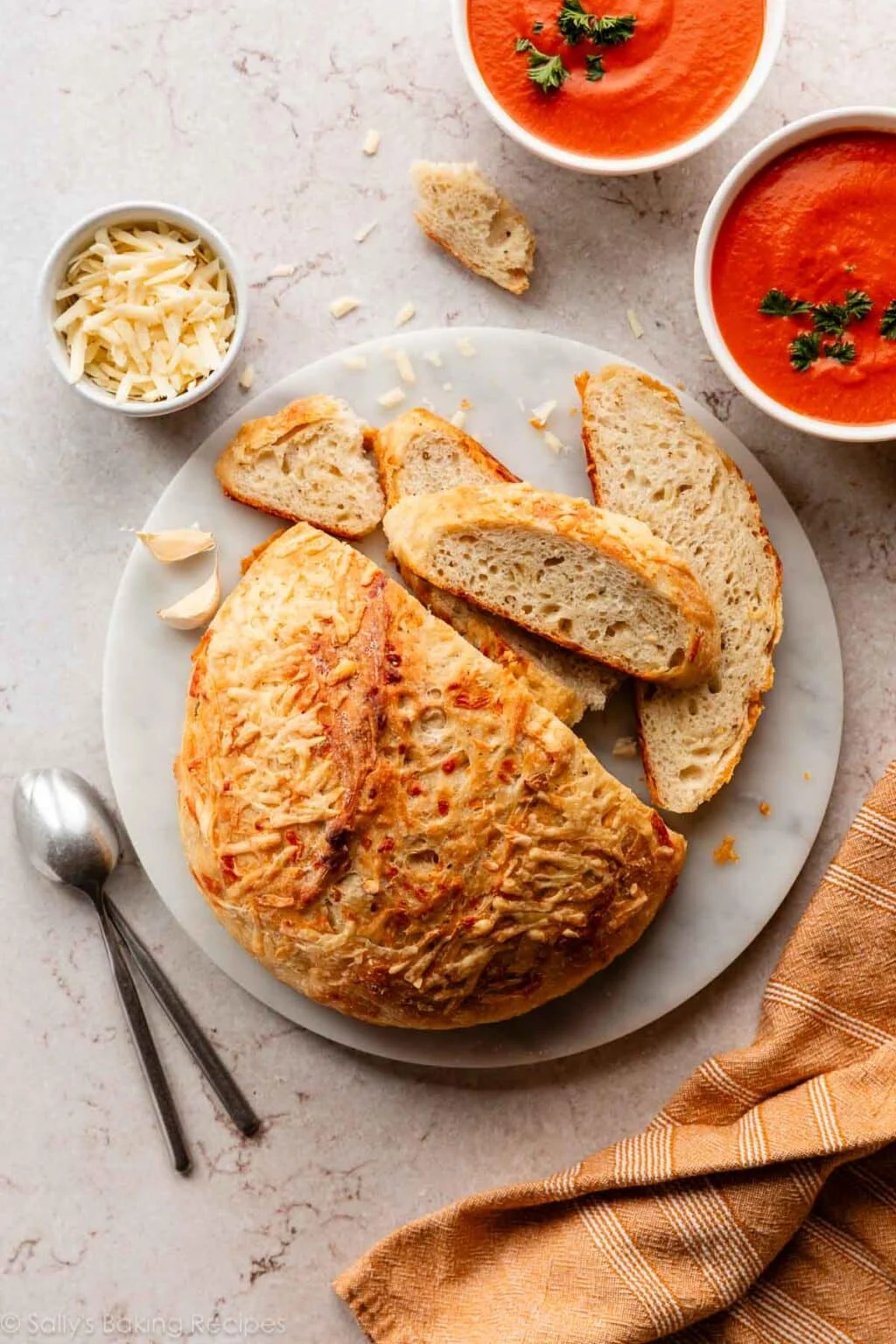
Ingredients
For the Dough
- 3½ cups (440g) bread flour
- 2¼ teaspoons (1 packet) active dry yeast
- 1¼ cups (300ml) warm water (105–110°F / 40–43°C)
- 2 tablespoons olive oil
- 1 tablespoon honey or granulated sugar
- 1½ teaspoons fine sea salt
- 1 teaspoon garlic powder
- 1 teaspoon dried Italian seasoning
- 1 tablespoon chopped fresh rosemary (optional)
For the Asiago Crust
- 1½ cups (150g) freshly grated Asiago cheese
- 2 tablespoons grated Parmesan cheese
- 1 tablespoon olive oil
- 1 teaspoon cracked black pepper
- 1 teaspoon chopped fresh parsley
Optional Toppings
- Flaky sea salt
- Sesame seeds
- Fresh thyme
- Minced garlic
- Red pepper flakes
Instructions
Step 1: Activate the Yeast
In a large mixing bowl, combine the warm water, honey, and yeast.
Stir gently and let the mixture sit for 5–10 minutes, until it becomes foamy.
Step 2: Make the Dough
Add the olive oil, salt, garlic powder, Italian seasoning, and rosemary to the yeast mixture.
Gradually stir in the bread flour until a shaggy dough forms.
Transfer the dough to a lightly floured surface and knead for 8–10 minutes, or until smooth, elastic, and slightly tacky.
Alternatively, knead with a stand mixer fitted with a dough hook for about 6–7 minutes.
Step 3: First Rise
Place the dough in a lightly oiled bowl and turn it once to coat.
Cover with plastic wrap or a clean kitchen towel.
Let the dough rise in a warm place for 1½–2 hours, or until doubled in size.
Step 4: Prepare the Skillet
Lightly grease a 10-inch cast-iron skillet with olive oil.
Mix together the grated Asiago cheese, Parmesan cheese, black pepper, and parsley.
Sprinkle about half of the cheese mixture evenly across the bottom of the skillet.
Step 5: Shape the Dough
Punch down the risen dough and shape it into a smooth round loaf.
Place it gently into the prepared skillet.
Brush the top with olive oil and sprinkle the remaining Asiago cheese mixture evenly over the loaf.
Cover loosely and let the dough rise for another 30–40 minutes.
Step 6: Bake
Preheat the oven to 375°F (190°C).
Bake the bread for 30–35 minutes, or until the top is deeply golden and the cheese is crisp.
The bread is done when the internal temperature reaches 190–200°F (88–93°C) and the loaf sounds hollow when tapped on the bottom.
If the cheese begins browning too quickly, loosely cover the bread with aluminum foil during the last 10 minutes of baking.
Step 7: Cool
Allow the bread to cool in the skillet for 10 minutes.
Carefully remove it from the skillet and transfer it to a wire rack.
Let it cool for at least 20–30 minutes before slicing.
Optional Variations
Garlic Asiago Bread
Add 2 teaspoons of minced fresh garlic to the dough and brush the baked loaf with garlic butter.
Rosemary Asiago Bread
Increase the fresh rosemary to 2 tablespoons for an aromatic herb loaf.
Cheesy Herb Bread
Mix shredded mozzarella and Parmesan with the Asiago for an extra cheesy crust.
Jalapeño Asiago Bread
Fold ½ cup finely diced jalapeños into the dough for a spicy variation.
Sun-Dried Tomato Asiago Bread
Add ½ cup chopped oil-packed sun-dried tomatoes and a teaspoon of dried basil to the dough.
Serving Suggestions
This Asiago-Crusted Skillet Bread pairs perfectly with:
- Tomato soup
- Creamy broccoli soup
- Pasta with marinara sauce
- Chicken Alfredo
- Caesar salad
- Olive oil and balsamic vinegar
- Garlic butter
- Herb butter
- Charcuterie boards
- Roasted vegetables
- Grilled chicken
- Italian beef stew
Storage
Store the bread in an airtight container or bread bag at room temperature for up to 3 days.
Refrigerate for up to 1 week.
Freeze the whole loaf or sliced portions for up to 3 months. Thaw at room temperature and warm before serving.
Reheating
Warm the loaf in a 350°F (175°C) oven for 8–10 minutes to refresh the crust.
Toast individual slices for a crispy exterior and soft center.
Tips for the Best Asiago-Crusted Skillet Bread
- Use freshly grated Asiago cheese for the best flavor and melting quality.
- Bread flour produces a chewier texture and better rise than all-purpose flour.
- Allow the dough to rise fully for a light, airy crumb.
- Preheating the cast-iron skillet for a few minutes can create an even crispier bottom crust.
- Avoid adding too much flour during kneading to keep the bread soft.
- Let the loaf cool before slicing so the crumb sets properly.
- Enjoy leftovers toasted with butter or use them for gourmet grilled cheese sandwiches.
Nutrition (Per Slice – Approximate)
- Calories: 245
- Protein: 9g
- Carbohydrates: 31g
- Fat: 9g
- Saturated Fat: 4g
- Cholesterol: 15mg
- Sodium: 410mg
- Fiber: 1g
- Sugar: 2g
