
Ingredients
Day 1
- 60g (½ cup) whole wheat flour
- 60g (¼ cup) lukewarm water
Days 2–7
- 60g (½ cup) unbleached all-purpose flour
- 60g (¼ cup) lukewarm water
Equipment
- 1 large glass jar
- Kitchen scale (recommended)
- Spoon or spatula
- Loose-fitting lid or cloth cover
Day-by-Day Instructions
Day 1: Create the Starter
In a clean glass jar, combine:
- 60g whole wheat flour
- 60g lukewarm water
Mix until no dry flour remains.
The mixture should resemble a thick pancake batter.
Cover loosely and leave at room temperature (70–78°F / 21–26°C) for 24 hours.
Day 2: First Feeding
You may or may not see bubbles.
Discard half of the starter.
Add:
- 60g flour
- 60g water
Mix thoroughly.
Cover loosely and let sit for another 24 hours.
Day 3: Activity Begins
Small bubbles should begin appearing.
The starter may smell slightly fruity or tangy.
Discard all but about 60g starter.
Feed with:
- 60g flour
- 60g water
Mix well and leave at room temperature.
Days 4–6: Feed Twice Daily
The starter should become more active.
Morning and evening:
- Discard all but 60g starter.
- Feed with:
- 60g flour
- 60g water
- Stir thoroughly.
You should notice:
- More bubbles
- Increased volume
- A pleasant sour aroma
Day 7: Ready to Bake?
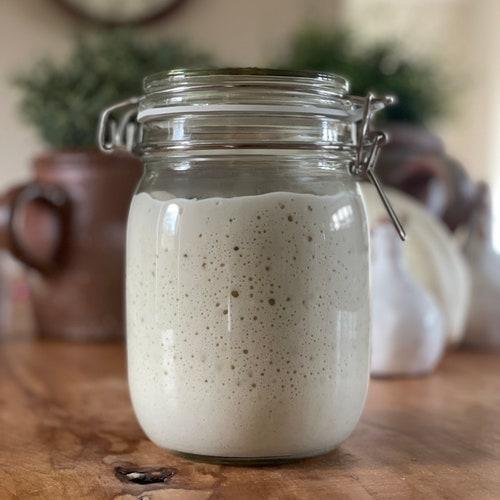
Your starter is ready when it:
- Doubles in size within 4–8 hours after feeding
- Has lots of bubbles throughout
- Smells pleasantly tangy
- Passes the float test (optional)
Float Test
Drop a small spoonful of starter into water.
If it floats, it usually contains enough gas to help leaven bread.
Signs of a Healthy Starter
✅ Doubles or triples after feeding
✅ Lots of visible bubbles
✅ Mild sour smell
✅ Thick, airy texture
✅ Consistent rise and fall pattern
Feeding Schedule After It’s Mature
If Baking Frequently
Feed daily:
- 60g starter
- 60g flour
- 60g water
If Baking Occasionally
Store in the refrigerator.
Feed once per week.
Remove and feed 1–2 times before baking.
Common Problems & Solutions
Starter Isn’t Bubbling
Possible causes:
- Room is too cold
- Chlorinated water
- Starter is too young
Solution:
- Move to a warmer location
- Use filtered water
- Continue feeding consistently
Pink or Orange Color
Discard immediately.
This indicates contamination.
Start over with a clean jar.
Liquid on Top (Hooch)
A grayish liquid means the starter is hungry.
Simply pour it off or stir it in and feed the starter.
Sour or Alcohol Smell
Usually normal.
Feed more frequently.
Sourdough Starter Discard Uses
Don’t throw away all that discard!
Use it for:
- Pancakes
- Waffles
- Crackers
- Pizza dough
- Biscuits
- Muffins
- Banana bread
- Cinnamon rolls
Storage
Room Temperature
Feed every day.
Refrigerator
Feed once weekly.
Keep covered but not airtight.
Tips for Success
Use a Scale
Weight measurements are much more accurate than cups.
Be Patient
Most starters take 7–10 days to become fully active.
Keep It Warm
A temperature around 75°F (24°C) encourages strong fermentation.
Use Unbleached Flour
Wild yeast thrives best on minimally processed flour.
Nutrition (Per Tablespoon)
- Calories: 15
- Protein: 0.5g
- Carbohydrates: 3g
- Fat: 0g
