
Ingredients
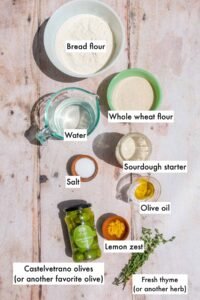
For the Dough
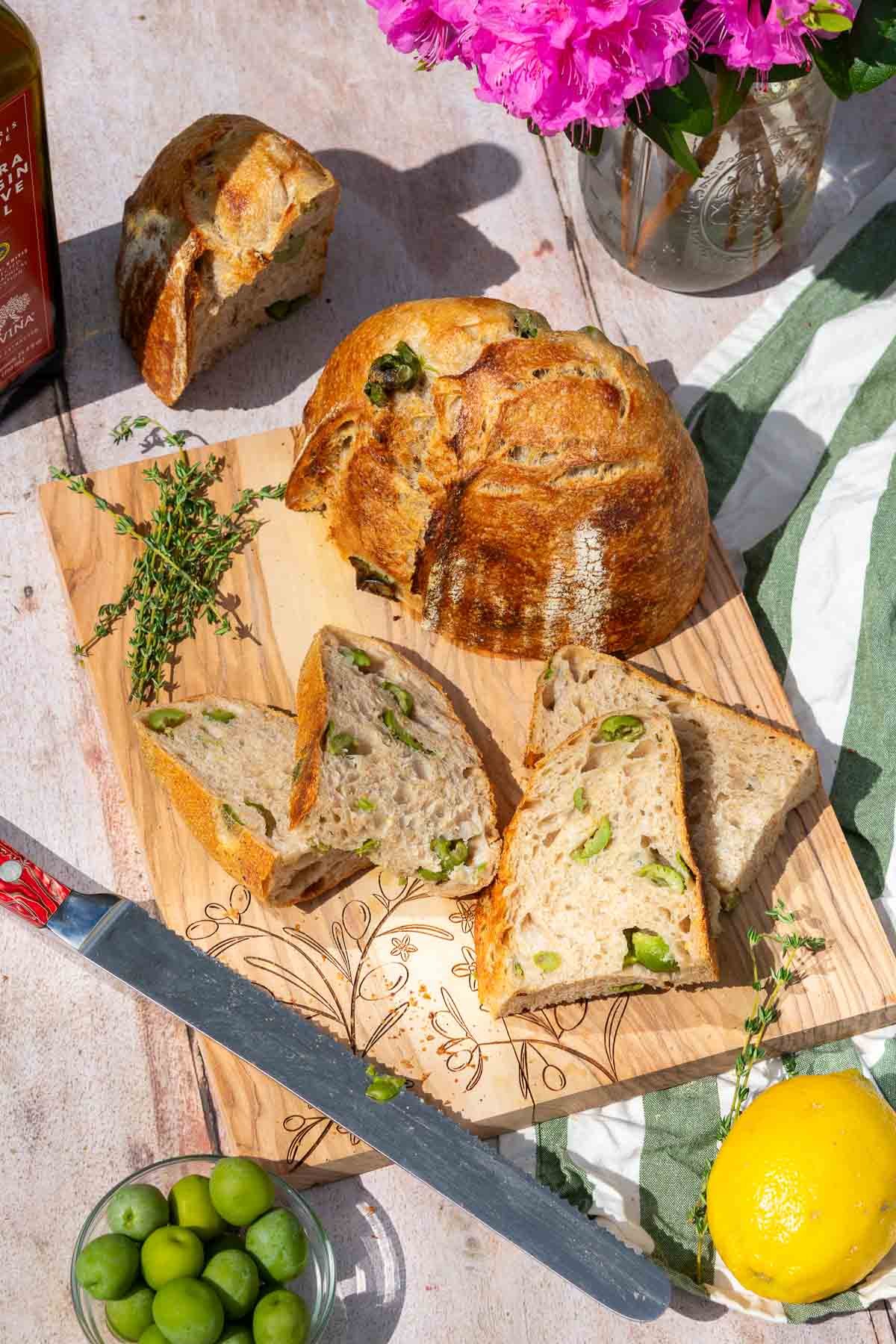
- 500g bread flour
- 350g water, room temperature
- 100g active sourdough starter (fed and bubbly)
- 10g sea salt
- 150g pitted olives, roughly chopped (Kalamata, green olives, or mixed)
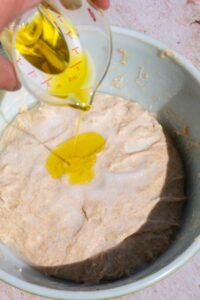
- 1 tablespoon olive oil (optional)
Optional Add-Ins
- 1 tablespoon chopped fresh rosemary
- 1 teaspoon dried oregano
- 1 tablespoon roasted garlic
- 2 tablespoons grated Parmesan cheese
Equipment
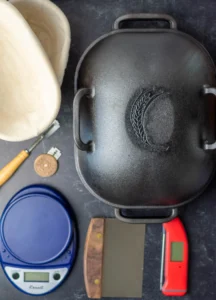
- Large mixing bowl
- Dutch oven or baking stone
- Banneton basket or bowl lined with a towel
- Bench scraper
- Kitchen scale
- Sharp bread lame or knife
Instructions
Step 1: Prepare the Starter
Feed your sourdough starter 4–6 hours before mixing the dough. It should be active, bubbly, and capable of passing the float test.
A strong starter is essential for achieving good rise and open crumb structure.
Step 2: Mix the Dough
In a large bowl, combine:
- Bread flour
- Water
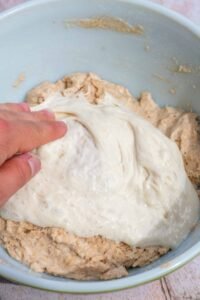
Mix until no dry flour remains.
Cover and let rest for 45–60 minutes. This process, called autolyse, helps develop gluten and improves dough elasticity.
After the rest period, add:
- Active sourdough starter
- Salt
Mix thoroughly until incorporated.
Step 3: Add the Olives
Gently fold the chopped olives into the dough.
Distribute them evenly throughout without overworking the dough.
If using herbs, garlic, or Parmesan cheese, add them at this stage.
The dough may become slightly wetter because olives release moisture during fermentation.
Step 4: Bulk Fermentation
Cover the bowl and let the dough ferment at room temperature for 4–6 hours.
During the first 2 hours, perform a series of stretch-and-folds:
- Stretch and fold every 30 minutes.
- Complete 4–5 rounds.
With each fold, the dough will become stronger and smoother.
Continue fermenting until the dough has increased by about 50%, appears puffy, and shows visible fermentation bubbles.
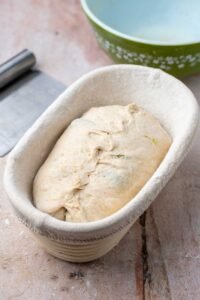
Step 5: Pre-Shape the Dough
Lightly flour your work surface.
Turn out the dough and gently shape it into a round.
Allow it to rest uncovered for 20–30 minutes.
This bench rest relaxes the gluten and makes final shaping easier.
Step 6: Final Shape
Shape the dough into a tight round boule or oval batard.
Use gentle tension to create a smooth outer surface while preserving the gas bubbles developed during fermentation.
Place seam-side up in a well-floured banneton basket.
Step 7: Final Proof
You have two options:
Room Temperature Proof
Proof for 2–3 hours until puffy.
Cold Proof (Recommended)
Cover and refrigerate for 8–12 hours.
Cold proofing enhances flavor, improves scoring, and creates a more caramelized crust.
Step 8: Preheat the Oven
Place your Dutch oven inside the oven.
Preheat to 475°F (245°C) for at least 45 minutes.
A thoroughly heated Dutch oven provides excellent oven spring and crust development.
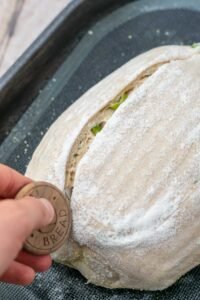
Step 9: Score the Bread
Carefully turn the dough onto parchment paper.
Dust lightly with flour if desired.
Using a bread lame or sharp knife, score the surface with one deep slash or decorative pattern.
Scoring allows controlled expansion during baking.
Step 10: Bake
Transfer the dough into the preheated Dutch oven.
Cover with the lid and bake for:
- 25 minutes covered
Remove the lid and continue baking:
- 20–25 minutes uncovered
Bake until the crust becomes deep golden brown and the internal temperature reaches approximately 205–210°F (96–99°C).
Step 11: Cool Completely
Transfer the loaf to a cooling rack.
Allow it to cool for at least 2 hours before slicing.
Cutting too soon may result in a gummy crumb.
Patience ensures the perfect texture.
Baker’s Tips for Success
Use Quality Olives
Kalamata olives provide rich, fruity flavor, while green olives add a brighter, saltier taste.
Drain Olives Well
Excess liquid can make the dough overly sticky and difficult to handle.
Watch the Dough, Not the Clock
Fermentation times vary depending on room temperature and starter strength.
Cold Fermentation Improves Flavor
An overnight refrigerator proof creates deeper sourdough flavor and a beautifully blistered crust.
Avoid Overloading the Dough
Too many olives can weaken gluten structure and reduce oven spring.
Store Properly
Keep bread wrapped in a paper bag or bread box for up to 3 days. Freeze sliced portions for up to 3 months.
Serving Suggestions
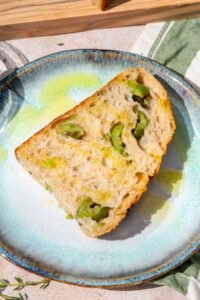
- Serve with olive oil and balsamic vinegar.
- Pair with soups and stews.
- Use for gourmet sandwiches.
- Add to a Mediterranean mezze platter.
- Toast and top with cream cheese or goat cheese.
- Serve alongside grilled chicken, fish, or pasta dishes.
