
Ingredients
For the Dough
- 100g active sourdough starter (fed and bubbly)
- 375g warm water
- 500g bread flour
- 10g fine sea salt
For Dusting
- Rice flour or all-purpose flour
Equipment
- Large mixing bowl
- Kitchen scale
- Dough scraper
- Banneton basket or bowl lined with a floured towel
- Dutch oven with lid
- Sharp bread lame or razor blade
- Cooling rack
Instructions
Step 1: Prepare the Dough
In a large mixing bowl, combine the active sourdough starter and warm water. Stir until the starter is mostly dissolved.
Add the bread flour and mix until no dry flour remains. The dough will appear shaggy and rough. Cover the bowl and let it rest for 30 minutes.
This resting period, known as autolyse, helps hydrate the flour and improves gluten development.
Step 2: Add Salt
Sprinkle the salt over the dough. Wet your hands slightly and work the salt into the dough by pinching and folding until fully incorporated.
Cover the bowl and let the dough rest for another 30 minutes.
Step 3: Stretch and Fold
Perform a series of stretch-and-folds to strengthen the dough.
To do this:
- Grab one side of the dough.
- Stretch it upward gently.
- Fold it over the center.
- Rotate the bowl and repeat on all four sides.
Cover and rest for 30 minutes.
Repeat this process 3–4 times over the next 2 hours.
You’ll notice the dough becoming smoother, stronger, and more elastic after each set.
Step 4: Bulk Fermentation
After the final stretch-and-fold, cover the bowl and allow the dough to ferment at room temperature for 4–6 hours.
The exact timing depends on the temperature of your kitchen.
The dough is ready when:
- It has increased in volume by about 50%.
- Small bubbles are visible.
- It feels airy and slightly jiggly.
Step 5: Pre-Shape the Dough
Lightly flour your work surface.
Turn the dough out onto the counter and gently shape it into a round ball.
Allow it to rest uncovered for 20–30 minutes.
This bench rest helps relax the gluten before final shaping.
Step 6: Final Shaping
Lightly flour the top of the dough.
Flip it over and shape it into a tight round or oval loaf by folding the edges toward the center and creating surface tension.
Place the dough seam-side up into a floured banneton basket.
Cover with a towel or plastic wrap.
Step 7: Cold Proof
Transfer the dough to the refrigerator and proof overnight for 12–18 hours.
This cold fermentation develops deeper flavor and makes the dough easier to score before baking.
Step 8: Preheat the Oven
The next day, place a Dutch oven with its lid inside the oven.
Preheat to 250°C (480°F) for at least 45 minutes.
A thoroughly heated Dutch oven helps create the steam needed for a beautiful crust and oven spring.
Step 9: Score the Dough
Remove the dough from the refrigerator.
Turn it onto a piece of parchment paper.
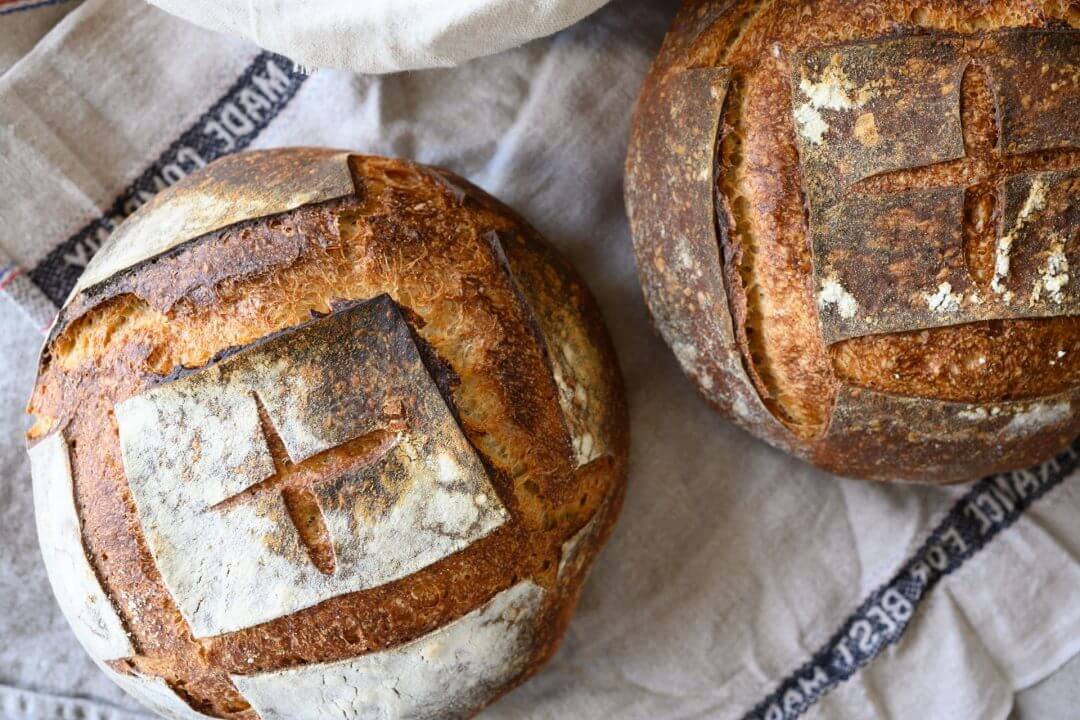
Using a sharp bread lame or razor blade, score the top of the loaf with one long slash about ½ inch deep.
This allows the bread to expand properly during baking.
Step 10: Bake
Carefully transfer the dough into the hot Dutch oven.
Cover with the lid and bake for 20 minutes.
Reduce the oven temperature to 230°C (450°F), remove the lid, and continue baking for 20–25 minutes until the crust is deep golden brown.
The internal temperature should reach approximately 96°C (205°F).
Step 11: Cool Completely
Remove the bread from the Dutch oven and place it on a cooling rack.
Allow it to cool for at least 1–2 hours before slicing.
Although it’s tempting to cut into it immediately, cooling helps the crumb finish setting and prevents a gummy texture.
Tips for Perfect Sourdough Bread
Use an Active Starter
Your starter should be bubbly, doubled in size, and pass the float test before mixing the dough.
Weigh Ingredients
Using a digital kitchen scale ensures consistent results and proper hydration.
Don’t Rush Fermentation
Temperature greatly affects fermentation speed. Focus on the dough’s appearance rather than strictly following the clock.
Create Steam
A Dutch oven traps steam and helps create the signature blistered crust.
Practice Scoring
Confident scoring helps direct oven spring and gives your loaf a professional artisan appearance.
Let It Cool
Waiting before slicing dramatically improves texture and flavor.
Storage
- Store at room temperature in a bread bag or wrapped in a clean kitchen towel for up to 4 days.
- Freeze sliced bread for up to 3 months.
- Refresh stale bread by warming it in a 180°C (350°F) oven for 5–10 minutes.
Nutrition Information (Approximate Per Slice)
- Calories: 180
- Carbohydrates: 36g
- Protein: 6g
- Fat: 1g
- Fiber: 2g
- Sodium: 190mg
